SpaceX, $1 a Year, and the Public Property Question

Louisiana has promoted SpaceX as a major economic opportunity. But as UL Lafayette faces budget cuts, a newly approved property arrangement raises a more immediate question: What is the public actually getting in return?
PECAN ISLAND, La. | October 28, 2026
For months, Louisiana residents have heard about the economic potential of SpaceX's planned Starbase Louisiana development in Vermilion Parish.
A proposed $100 billion project. New jobs. Infrastructure. Economic growth.
The kind of investment that public officials routinely describe as transformational.
But while those promises have dominated the discussion, a separate transaction involving five acres of publicly owned university property deserves considerably more attention than it has received.
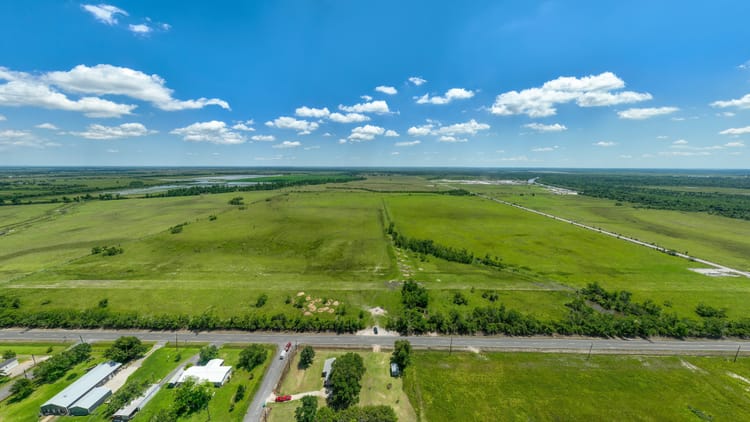
On October 22, the University of Louisiana System Board of Supervisors approved an arrangement allowing SpaceX to access the former Pecan Island High School property, which belongs to the University of Louisiana at Lafayette.
Under the arrangement, UL Lafayette leases the property to a university-affiliated nonprofit for $1 per year, plus other consideration. That nonprofit, Ragin' Cajun Facilities Inc., then subleases the property to SpaceX in exchange for improvements rather than conventional monetary rent.
The arrangement is intended to provide access before a potential sale in 2027.
And there is one particularly important detail.
The public has not been provided with a complete accounting of the improvements that supposedly justify this arrangement.
That's a problem when the property belongs to a public university experiencing substantial financial difficulties.
A $1 lease, but not directly to SpaceX
The structure of this transaction matters.
UL Lafayette is not simply leasing the property directly to SpaceX for one dollar.
The university's agreement is with Ragin' Cajun Facilities Inc., an affiliated nonprofit, which in turn subleases the property to SpaceX.
The university's annual rental amount is nominal. SpaceX's consideration comes primarily in the form of required property improvements.
Under the agreement, SpaceX could use the site for a broad range of purposes, including administrative offices, engineering and research, employee housing, equipment storage, warehousing, fabrication, assembly, testing and training facilities.
This is not necessarily a small or incidental use of the property.
The site could become an operational support facility for the larger Starbase Louisiana development.
University officials have described the arrangement as a way to allow work to begin before the property can be sold through a separate process.
Chris Herring, the UL System's vice president for facilities, capital planning and development, explained that the timing of SpaceX's immediate access needs did not align with the expected purchase process.
The agreement also provides for fair-market rent if required improvements are delayed.
Those provisions are relevant. They demonstrate that the transaction is more complicated than the headline rental figure.
But they do not resolve the underlying issue.
What is the actual financial value of the exchange?
The missing attachment
Reporting published October 23 by Piper Hutchinson of the Louisiana Illuminator identified a significant omission from the contract materials supplied to board members.
The required property improvements were described in an attachment to the sublease agreement.
That attachment was not included in the materials provided to board members before the October 22 meeting.
When the Illuminator requested the document, the publication was directed to file a public records request.
An independent examination of the posted lease forms by Vermilion Boom also identified an Exhibit A heading without an itemized schedule of improvements in the publicly posted copy.
That does not prove that the improvements were never negotiated.
It does not prove that the agreement is unlawful or that the university will receive nothing of value.
But it does mean the public cannot independently determine whether the proposed improvements represent reasonable compensation for the use of the property.
Are we talking about basic building repairs? Utility upgrades? Structural rehabilitation? New construction? Improvements designed specifically for SpaceX's operations?
How much will they cost?
And how much of that investment will retain value for the university if SpaceX leaves?
Without the complete schedule, these questions remain unanswered.
The university's financial problems make this particularly difficult to ignore
UL Lafayette has been experiencing significant budget difficulties.
According to October 22 reporting by Acadiana News First, the university had reduced a budget deficit from nearly $40 million to approximately $19.9 million.
The financial situation has resulted in layoffs and other cost-reduction measures.
Faculty members have also raised concerns about the impact of spending restrictions on university operations and research.
In fact, the campus chapter of the American Association of University Professors publicly questioned how the SpaceX property arrangement aligned with the university's need to increase revenue.
It's a reasonable question.
A public university facing financial difficulties has an obligation to evaluate its assets carefully.
That does not mean every university-owned property must generate maximum rental income, regardless of educational value or other considerations.
Universities frequently enter arrangements intended to support research, workforce development and public service.
But when a property is being made available to a private commercial enterprise, officials should be prepared to explain the financial calculation.
Particularly when the institution is simultaneously reducing spending elsewhere.
Five acres worth more than $340,000
According to the Illuminator, the Vermilion Parish assessor's website lists the parcel at more than $340,000 for the 2027 tax year.
That figure requires context.
An assessor's valuation is not necessarily an independent estimate of current market value, and it tells us very little about the property's potential commercial rental income.
The site includes the former Pecan Island High School, which closed following damage sustained during Hurricane Rita in 2005.
UL Lafayette obtained the property through a donation in 2025 for purposes associated with coastal restoration and environmental research.
That original purpose also deserves consideration as the property's intended use changes.
But the relevant financial question is not simply how much the land is assessed for.
It's how much a comparable property, made available for similar commercial uses under similar conditions, might reasonably command.
If the property had been offered through a competitive commercial leasing process, what would potential tenants have paid?
Was that possibility evaluated?
Was an independent appraisal commissioned?
Did university officials compare conventional rental income against the value of the improvements SpaceX agreed to provide?
Those answers may exist in records not yet publicly available.
Until they are produced, the public cannot adequately evaluate the transaction.
A 40-year agreement with an early exit
There is another provision worth examining.
The publicly posted sublease describes a 40-year term.
But as documented by Vermilion Boom, the proposed agreement also provides SpaceX with an early-termination option requiring at least three months' written notice, provided applicable conditions are satisfied.
The proposed terms also contemplate reimbursement of the unamortized costs of required improvements following certain early terminations.
That is not necessarily unusual in a commercial agreement involving tenant-funded capital improvements.
But it becomes important when those improvements are also the principal consideration provided in place of rent.
Depending on the circumstances, the value of those improvements and the applicable contractual provisions, the lessor could potentially face a reimbursement obligation.
Without an itemized improvements schedule and associated costs, the potential financial exposure cannot be quantified.
That is precisely why the missing documentation matters.
Then there's the anticipated sale
University officials have indicated that a sale of the property is anticipated in 2027.
The posted agreement forms contemplate a future conveyance and address how SpaceX-funded improvements may be treated in determining the eventual purchase consideration.
They also include provisions restricting negotiations with alternative purchasers, subject to the agreement's terms and applicable law.
The forms do not establish a completed sale.
Nor do they establish a final purchase price.
A future sale could provide UL Lafayette with meaningful revenue.
It could also change the financial significance of the initial lease substantially.
But without the proposed valuation methodology, purchase terms and treatment of improvement credits, the public cannot assess that possibility either.
For a transaction involving a public asset, those are not insignificant details.
They are the details that determine whether the arrangement represents a favorable exchange.
Economic development is not the same thing as public return
There is an important distinction between attracting private investment and ensuring that public entities receive appropriate value for what they contribute.
SpaceX may create jobs.
It may generate additional economic activity.
It may produce infrastructure investments and opportunities that benefit communities across Vermilion Parish and the surrounding region.
Those outcomes are possible, and they deserve to be measured as the project progresses.
But the possibility of future prosperity should not eliminate scrutiny of the individual agreements used to facilitate development.
The $1 university lease is separate from the larger Starbase Louisiana property arrangements and tax incentives. It should be evaluated on its own terms.
Public assets are not economically meaningless simply because officials believe a particular company will benefit the region.
And the value of a transaction cannot be established merely by pointing to the total investment a company has announced elsewhere.
A corporation's promised investment is not automatically a financial return to the institution providing the property.
Those are different things.
The first describes what a company says it intends to spend.
The second requires determining what the university will actually receive, what obligations it assumes and whether the agreement represents reasonable consideration.
337.news seeks the underlying records
This publication has prepared public records requests concerning the October 22 transaction, directed to UL Lafayette and the University of Louisiana System.
The requests seek the complete executed agreements, the missing improvements schedule, financial analyses, property valuations, proposed sale terms, and records documenting the negotiation and approval of the arrangement.
They also seek information concerning the potential reimbursement of improvement costs and how those costs would be treated in a future property sale.
Records status: Public records requests were submitted to UL Lafayette and the University of Louisiana System on October 28, 2026. This report will be updated with acknowledgments and agency responses.
The objective is straightforward.
To determine whether the property arrangement provides a documented, measurable benefit to the public university and whether the financial terms were adequately evaluated before approval.
The current documentation does not establish misconduct.
It also does not establish that the transaction is financially disadvantageous.
What it establishes is that significant information required to evaluate the arrangement has not been made publicly available in the materials examined for this report.
The question that remains
Louisiana officials have spent considerable time discussing what SpaceX might bring to the state's economy.
That makes the financial terms of this transaction all the more relevant.
If the anticipated investment is as significant as projected, negotiating a transparent return for public property should not be an unreasonable expectation.
The university may ultimately receive substantial value from the improvements, the anticipated sale or both.
But the public should not have to assume that.
It should be demonstrated.
Economic development should not require the public to surrender its ability to evaluate the economics.
And if the terms are favorable, producing the records should make that clear.
Sources and documentation
This article is preliminary and will be updated as additional primary-source records become available.
About the author and disclosure
Dalton Barron is the publisher of 337.news, an independent Louisiana publication examining public records, property rights, government decisions and issues affecting local communities.
Barron is also a Louisiana-licensed real estate agent affiliated with NextHome Bayou Pines and has a professional background in law enforcement.
Editorial disclosure: His real estate affiliation is disclosed because this report concerns the use and potential transfer of real property. This article is independent editorial reporting, not a brokerage solicitation, property advertisement or representation of NextHome Bayou Pines. Views and editorial judgments are those of the author and do not represent his brokerage or affiliated organizations.
337.news does not allege misconduct based solely on the existence of the transaction. Reported facts, contractual provisions, unanswered questions and editorial analysis are distinguished throughout. Public records are being sought to independently examine the financial terms. Any material corrections or relevant responses from the institutions involved will be incorporated into subsequent reporting.
© 2026 337.news. All rights reserved.




Member discussion
337.NEWS discussion
Join the conversation.
Sign up to comment on this story and follow the local reporting behind it.