Lake Charles Pollution Violations Lingered More Than 5 Years Before State Enforcement, Review Finds
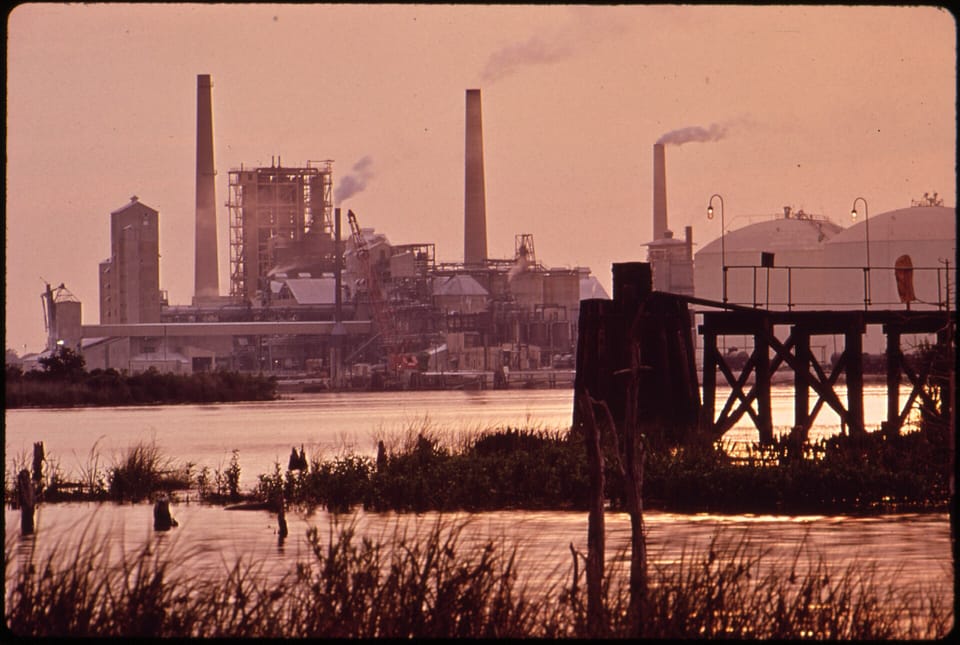
A review of state records covering 23 Southwest Louisiana industrial facilities found roughly 60% of formal air-enforcement cases involved violations dating back more than five years. LDEQ says the analysis does not adequately reflect recent reforms.
LAKE CHARLES, La. — Some industrial air-pollution violations in the Lake Charles region remained unresolved for years before Louisiana regulators took formal enforcement action, according to a new review of Louisiana Department of Environmental Quality records.
The analysis, conducted by the Environmental Integrity Project and Southwest Louisiana-based Micah 6:8 Mission, examined Clean Air Act enforcement records for 23 facilities between January 2021 and August 2026.
The organizations identified 28 formal enforcement actions during that period. In roughly 60% of those cases, the earliest cited violations occurred more than five years before the enforcement action, according to the review.
The findings raise a basic question for one of Louisiana's most heavily industrialized regions:
What does environmental enforcement accomplish when violations can remain unresolved for years?
Warning Letters Averaged 1.7 Years
The delays were not limited to formal enforcement.
Researchers reviewed 45 warning letters issued by LDEQ and calculated an average delay of approximately 1.7 years between the underlying incident or inspection and the warning letter.
In one case, the delay reached approximately 10 years.
The organizations argued that long enforcement timelines can do more than postpone accountability. Delays may make it more difficult for regulators to determine what caused a violation, require corrective measures and, in some circumstances, pursue financial penalties.
28 Formal Actions — No Required Root-Cause Investigation
The review identified 28 formal enforcement actions, a category that can include compliance orders, penalty notices, settlement agreements and emergency cease-and-desist orders.
According to the Environmental Integrity Project and Micah 6:8 Mission, none of the 28 actions they examined required the facility to conduct a root-cause investigation or imposed specific corrective measures intended to prevent the cited problem from happening again.
That distinction matters.
A regulatory action can document a violation. A monetary penalty can impose a financial consequence.
Neither necessarily requires an industrial facility to identify why the violation happened and demonstrate that the underlying problem has been corrected.
The groups recommended that LDEQ require enforceable corrective measures, including investigation of underlying causes, and conduct follow-up inspections when appropriate.
Penalties Proposed in Only About One-Third of Cases
Financial penalties were also relatively uncommon among the formal actions reviewed.
According to the analysis, LDEQ proposed monetary penalties in approximately one-third of the cases, with proposed penalties averaging about $66,300.
The Environmental Integrity Project contrasted those amounts with the scale of the corporations operating many of the facilities, some of which are large national or multinational companies.
But the more consequential issue identified by the review may be what happens when enforcement takes so long that a penalty itself becomes harder to pursue.
An Indorama Case Shows What Delay Can Mean
The review points to an LDEQ violation notice sent to Indorama Ventures Olefins in Westlake in March 2025 involving allegations dating from 2016 through 2019.
According to documents described in the review, an attorney for the company later argued that information concerning the events had been provided to LDEQ more than five years earlier and that the state's deadline for seeking penalties had expired.
That argument does not establish that the company's legal position will ultimately prevail.
But it demonstrates a potential consequence of delayed enforcement: enough time can pass that the dispute is no longer simply about whether a violation occurred. It can become a question of whether the government waited too long to impose a financial penalty.
Phillips 66 Order Included Violations Dating Back Years
The review also highlighted enforcement involving the Phillips 66 Lake Charles Refinery.
LDEQ issued a compliance order in November 2025 involving repeated exceedances of permit limits for multiple pollutants. Several of the violations addressed by the order dated back at least five years, according to the review.
The cases illustrate why the researchers focused heavily on enforcement timelines rather than simply counting the number of actions LDEQ completed.
A violation appearing in an enforcement database does not show how long regulators knew about it before acting.
Louisiana's Own Auditor Flagged Delays in 2021
Concerns about LDEQ's enforcement speed are not new.
A 2021 Louisiana Legislative Auditor report identified delayed enforcement as a significant weakness in the department's environmental enforcement program and recommended that LDEQ establish goals for completing enforcement actions.
That makes the timeline particularly important.
The Lake Charles review covers records extending through August 2026 — meaning much of the period examined occurred after the state auditor had already identified enforcement delays as a problem.
LDEQ, however, says its procedures have changed.
LDEQ Says the Review Doesn't Tell the Whole Story
The Louisiana Department of Environmental Quality disputes the implication that the cases highlighted in the review accurately represent its broader enforcement program.
In a response reported by the Louisiana Illuminator, LDEQ Assistant Secretary Jerry Lang pointed to an April 2026 follow-up by the Legislative Auditor that found the department had implemented a recommended 365-day deadline for certain air-quality enforcement actions.
The deadline does not apply identically to every case. High-priority incidents can require faster action, while citizen-complaint cases are treated differently.
LDEQ also emphasized the scale of its overall enforcement workload.
According to Lang, the department completed 3,456 enforcement actions between 2021 and 2026, including 975 involving air quality.
LDEQ's position is that most of those cases were identified, evaluated and processed without the extended timelines emphasized in the Lake Charles analysis.
The department also argued that enforcement cases vary substantially in complexity and that evaluating selected cases without considering the agency's broader workload can create an incomplete picture.
Two Different Pictures of Environmental Enforcement
The dispute ultimately comes down to what should be measured.
LDEQ points to thousands of enforcement actions statewide and says recent reforms have established clearer deadlines.
The Environmental Integrity Project and Micah 6:8 Mission point to individual Lake Charles-area cases where violations remained unresolved for years, warning letters took an average of 1.7 years, and formal enforcement actions did not require root-cause investigations or specific corrective measures.
Both sets of numbers matter.
The statewide totals describe how much enforcement work the agency performs.
The individual case timelines describe how long some regulated facilities can remain in the enforcement process before that work produces a formal action.
For residents of Lake Charles, Westlake, Sulphur and the surrounding industrial corridor, the latter is not an abstract distinction.
Southwest Louisiana contains one of the country's largest concentrations of refineries, chemical plants, LNG facilities and other major industrial operations.
When enforcement takes years, the question isn't simply whether LDEQ eventually closes a case.
It's what happened during the years before it did.
Sources
This report is based primarily on the September 2026 Clean Air Act enforcement review prepared by the Environmental Integrity Project and Micah 6:8 Mission, LDEQ enforcement information, Louisiana Legislative Auditor findings, and LDEQ's written response as reported by the Louisiana Illuminator.
Primary review: Environmental Integrity Project, Louisiana Failing to Require Cleanup of Industrial Air Pollution Violations in Lake Charles Region, Sept. 23, 2026.
State response: Louisiana Illuminator, Groups criticize state for late, lenient pollution enforcement in Lake Charles, Sept. 29, 2026.
Editorial Disclosure: 337.news is independently published by Dalton Barron. Reporting, analysis, and commentary published by 337.news represent the author's independent work and do not represent the views or positions of NextHome Bayou Pines.
Dalton Barron
NextHome Bayou Pines
416 N. Pine St.
DeRidder, LA 70634
C: 337.764.1754
O: 337.202.1018
Licensed by the LREC
Each office is independently owned and operated.

Member discussion