Two Federal Energy Decisions Put Southwest Louisiana Back at the Center of U.S. Energy Security
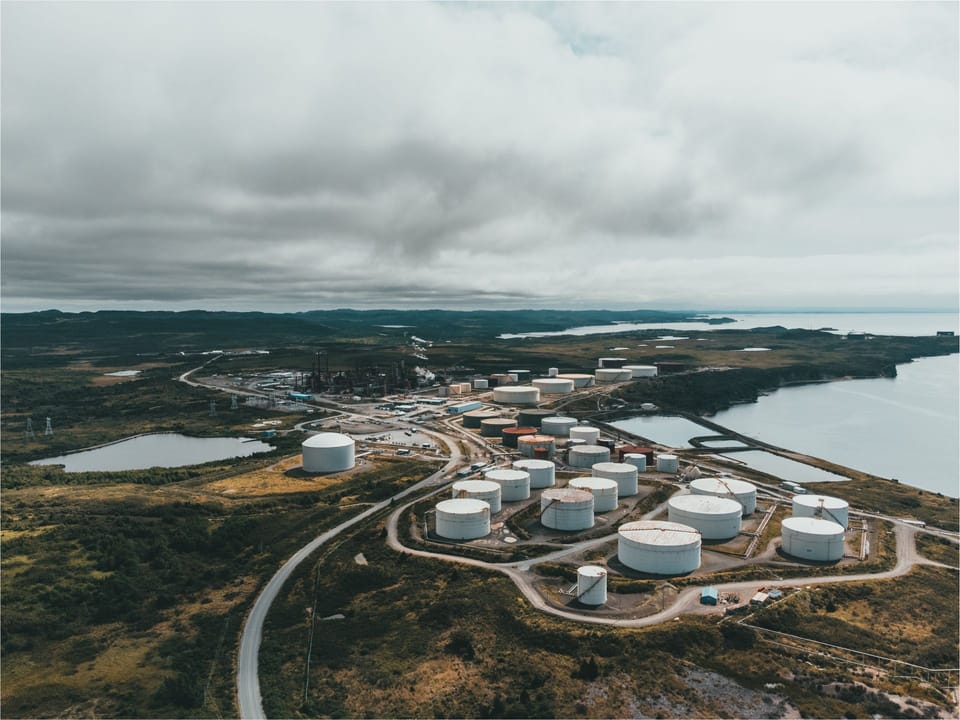
DOE authorized an emergency crude-oil exchange for Phillips 66’s Lake Charles refinery Friday. Three days earlier, FERC cleared initial construction on another major energy-storage project in Cameron Parish.
Southwest Louisiana spent this week doing something the rest of the country rarely sees.
It became part of the nation’s emergency energy supply system in real time.
On Friday, October 23, the U.S. Department of Energy authorized an emergency exchange of up to 400,000 barrels of crude oil from the Strategic Petroleum Reserve for Phillips 66’s Lake Charles refinery.
The crude will come from West Hackberry, the federal reserve site in Cameron Parish.
DOE says a temporary disruption to crude deliveries prompted the exchange and that the oil is available for immediate delivery. Phillips 66 will eventually return the borrowed crude along with additional barrels as a premium.
There is one significant detail DOE has not publicly explained:
What interrupted the refinery’s normal crude supply?
DOE described the situation as an emergency exchange needed to support refinery operations and regional fuel availability.
Phillips 66 has said it does not anticipate an operational impact at Lake Charles, but the specific cause of the supply disruption and its expected duration have not been publicly identified.
The authorized 400,000 barrels are roughly equivalent to a day and a half of the refinery’s approximately 264,000-barrel-per-day processing capacity.
This is also an exchange, not a permanent withdrawal. The refinery borrows crude from the federal reserve and later returns crude along with additional barrels under the exchange terms.
Three days earlier, another Cameron Parish storage project moved forward
The timing is notable.
On October 20, the Federal Energy Regulatory Commission granted Black Bayou Gas Storage LLC’s October 5 request, supplemented October 9, to begin construction of certain facilities associated with its Cameron Parish gas-storage project.
The authorization appears in FERC Docket CP24-494-000 as accession 20261020-3049.
It is not the first federal approval for the project. FERC authorized construction and operation of the larger Black Bayou salt-dome natural-gas storage project in 2025. The October 20 action allows specified construction activity to move forward.
Black Bayou has been described as part of an approximately $1.6 billion Louisiana investment involving Cameron and Lafayette parishes.
The Cameron Parish component centers on underground salt-cavern natural-gas storage and related pipelines, wells, compression and supporting infrastructure.
These are different projects serving different commodities, but they illustrate the same larger reality.
Southwest Louisiana is not simply a place where energy is produced and processed.
Increasingly, it is where energy is stored, moved and held in reserve when the larger system needs it.
That role has already produced a local argument
Black Bayou did not arrive without questions from Cameron Parish residents.
Public discussion around the project has included concerns about wetlands, pipelines, industrial development and the cumulative effect of major energy infrastructure around Hackberry.
The debate became more concrete this summer when Black Bayou sought local support for an Industrial Tax Exemption.
At an August 13 special meeting, the Cameron Parish Police Jury considered a resolution recommending an ITEP for Black Bayou Gas Storage Hub LLC.
The parish’s published agenda listed approximately $685 million in estimated capital investment associated with the project.
The resolution ultimately passed.
But the tax question exposes a larger issue that is easy to lose when individual projects are covered separately.
It is not simply whether Southwest Louisiana should participate in energy development.
The region already does.
The harder question is how communities hosting infrastructure of national importance should evaluate the trade.
Cameron Parish is already part of the country’s emergency reserve system
West Hackberry makes the scale of that role particularly clear.
The site is one of only four Strategic Petroleum Reserve storage locations in the United States.
DOE reported approximately 23.7 million barrels stored at West Hackberry as of October 16.
Its purpose is not theoretical.
Friday’s Phillips 66 exchange is the system functioning as intended: crude stored underground in Cameron Parish can be moved when another part of the supply system experiences a disruption.
Black Bayou proposes adding a different form of flexibility to the same regional energy corridor.
Natural gas can be injected into underground storage when available and withdrawn later as demand or market conditions change.
For LNG exporters, utilities, manufacturers and power generators, that flexibility has substantial value.
Which raises a local question:
What is the value of being the place where the larger energy system comes for flexibility?
Jobs are part of that calculation.
Tax revenue is part of it.
Private investment is part of it.
So are public incentives, land use, infrastructure demands, emergency response, environmental risk and the obligations that remain locally after construction is finished.
Those are not arguments against development.
They are questions about the terms of the bargain.
337.NEWS is requesting the records behind both decisions
337.NEWS filed two records requests Friday seeking information that is not contained in the public announcements.
A Freedom of Information Act request was sent to the U.S. Department of Energy seeking Phillips 66’s original request for the emergency SPR exchange, DOE’s authorization, the exchange terms, records identifying the cause and expected duration of the crude-supply disruption, and communications concerning the potential effect on refinery operations.
A separate Louisiana public-records request was sent regarding Cameron Parish’s consideration of Black Bayou’s Industrial Tax Exemption. That request seeks the documents provided to jurors before the vote, estimated taxes exempted and retained, employment and payroll projections, economic-impact material, communications surrounding the request and any infrastructure or community commitments presented to the parish.
Responses are pending.
The public source material already collected for this reporting, along with copies of the records requests, is being maintained in the 337.NEWS Louisiana Public Records Archive: Become a free subscriber to get access to the raw source materials linked below.
Black Bayou — FERC records:
https://github.com/337-NEWS/louisiana-public-records/tree/main/federal/ferc/cp24-494-black-bayou-gas-storage
Black Bayou — Cameron Parish records and public-records request:
https://github.com/337-NEWS/louisiana-public-records/tree/main/parish/cameron-parish/police-jury/black-bayou-gas-storage
Phillips 66 / Strategic Petroleum Reserve records and DOE FOIA request:
https://github.com/337-NEWS/louisiana-public-records/tree/main/federal/doe/strategic-petroleum-reserve/phillips-66-lake-charles-2026-10-23
The archive will be updated as additional responsive records are received.
For now, two federal actions in four days make one thing unusually visible:
Southwest Louisiana is providing something more valuable to the national energy system than simply barrels of oil or cubic feet of gas.
It is providing flexibility when the system needs somewhere to turn.
The next question is what that flexibility is worth to the communities providing it.
Member discussion
337.NEWS discussion
Join the conversation.
Sign up to comment on this story and follow the local reporting behind it.