The House Wouldn't Sell for $1.99 Million. Then a New LLC Paid $2.9 Million in Cash.
337.NEWS | November 23, 2026
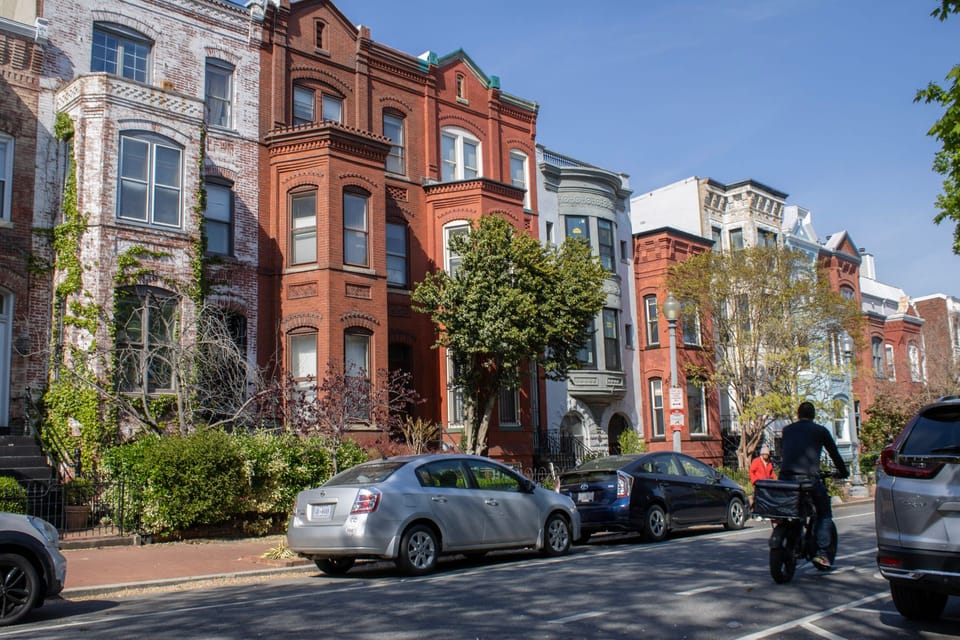
A Capitol Hill rowhouse owned by the family of Rep. Elise Stefanik, Republican of New York, sat on the market for months. The asking price came down. Eventually the listing disappeared.
Then, in June 2026, the house sold for $2.9 million in cash, $910,000 above its last asking price, according to property records examined by The Washington Post. The buyer was AFS Real Estate Holdings, a Delaware limited liability company formed about a month before the transaction. A public-records search reported by the Post did not reveal who owned it.
That is a striking real-estate transaction. It is not, on its own, evidence of corruption. An anonymous LLC is not a secret crime syndicate simply because its owners cannot be found in a routine search. But the numbers are unusual enough to deserve an explanation supported by something more substantial than a press statement.
Start with the listing
The property is 610 Independence Avenue SE, Washington, D.C., around six blocks from the U.S. Capitol, near Eastern Market. Listing descriptions put it at three bedrooms, 3.5 bathrooms, and approximately 2,700 square feet, with three fireplaces and no garage or private parking.
Bright MLS history carried by Compass shows the house listed on September 19, 2025, for $2.195 million. By November 3, it had been reduced to $1.99 million. The listing was withdrawn February 24, 2026, after sitting on the market without a reported sale. The listed agents were Robert Hryniewicki, Adam Rackliffe, Christopher Leary, and Micah Smith of HRLS Partners at TTR Sotheby's International Realty.
Stefanik and members of her family acquired the property in 2010 through EMS DC Properties, an LLC. The Post reported a purchase price of a little over $1.2 million. A Homes.com record put the 2010 sale at $1,226,000 on August 20, 2010. Stefanik's office told the Post she was a minority owner. Her 2014 campaign disclosures had placed her interest at 20%, valued between $250,001 and $500,000, according to the paper.
The sale that changed the arithmetic
The Post reported that property records show a $2.9 million all-cash sale recorded June 24, 2026. Homes.com listed a June 17 closing date and identified EMS DC Properties LLC as seller and KVS Title as title company. Those dates may reflect different stages of the transaction; the underlying recorded instrument was not independently obtained for the draft reviewed here.
Do the subtraction. $2,900,000 minus $1,990,000 equals $910,000. That's approximately 45.7% above the final asking price on a house that had just spent months failing to sell at that asking price.
A bidding war can push a home over list price. So can an unusual property, a buyer with a specialized use, or a negotiated transaction not captured by the listing history. But those are possibilities, not established explanations for this sale. The Post said it found no apparent renovations or work permits accounting for the price change during the months between withdrawal and sale, and no mortgage recorded against the property at the time of purchase.
The newspaper consulted roughly half a dozen Washington-area real-estate agents and estate attorneys. Among them, broker Tom Faison, with more than three decades in the Capitol Hill market, said a buyer or appraiser looking at recent comparable sales would struggle to justify $2.9 million and that a purchaser could be overpaying for reasons that might not show up in the ordinary sales history. Settlement attorney Patrick Tangney also found the purchase price unusual from the information available, while allowing that unknown circumstances could affect the price.
Stefanik's office called the deal a “commercially reasonable transaction.” It offered a list of 34 supposedly comparable Capitol Hill sales, said the property had been offered at $2 million to $4 million, and pointed to the area's market activity. The Post examined the comparisons and reported that most higher-priced examples were materially different: more bedrooms, more square footage, desirable parking or garages, or other features. An asking price is not a professional appraisal. Neither, however, is an unusual sale price proof of an illicit payment.
Who owns the company that wrote the check?
The recorded buyer was AFS Real Estate Holdings, formed in Delaware roughly a month before closing. The Post said its public-records checks revealed no information identifying the company's owners.
Delaware's public formation records ordinarily identify the company and its registered agent. They generally do not publish a neat list of the members, managers, or ultimate beneficial owners behind every LLC. Knowing the registered agent is not the same as knowing who supplied the money.
The Post reported that Janis M. Penman, a lawyer at BakerHostetler's Washington office, filed the company's formation papers. She did not respond to its request for comment. A lawyer who files incorporation documents is not thereby shown to own or operate the business.
District of Columbia registration law raises a separate question. Companies formed outside D.C. that register to do business there can face additional ownership disclosures. The reporting reviewed for this draft did not establish whether AFS registered in D.C. or what it may have disclosed.
Nor is federal beneficial-ownership reporting an easy shortcut. FinCEN announced an interim final rule in March 2025 exempting U.S.-created entities and U.S. persons from certain Corporate Transparency Act beneficial-ownership reporting obligations. Assuming a domestic LLC must have an easily retrievable public FinCEN ownership filing would misstate the rules. In any event, those reports were not general public databases identifying every buyer.
Stefanik's office did not answer the Post's written questions about whether she knew who owned or operated AFS, according to the newspaper.
What happened afterward
The Post reported that EMS DC Properties purchased a newly built house in McLean, Virginia, for $3.3 million. Stefanik signed a document recording a $434,425 mortgage on that property and identifying her as a “managing member” of EMS. The mortgage and purchase were reported by the newspaper; the underlying documents were not independently obtained for this draft.
Stefanik announced in December 2025 that she would not seek reelection and would end her bid for New York governor. Her term ends in January 2027. The transaction must be evaluated on its evidence, not on an assumed connection between her office and an unidentified buyer.
The records that would answer more than a press release
The next steps are straightforward, if not always easy: obtain the June 2026 recorded deed and settlement date from the D.C. Recorder of Deeds; retrieve the Delaware formation record for AFS; search D.C. business registration and any ownership disclosure; review the complete Bright MLS listing history; and ask the buyer, its registered agent, counsel, and Stefanik's office for explanations of the purchase price and the people behind the buyer.
A competing offer, an appraisal, a development plan, a legitimate special-use buyer, or a documented independent valuation could change how the transaction looks. So could evidence establishing the buyer, source of money, and a connection to an official act. None of that evidence was established in the reporting reviewed here.
The record supports a narrower story, but a perfectly good one: a house failed to sell at $1.99 million, was withdrawn, and then sold for $2.9 million in cash to a newly formed company whose owners have not been publicly identified. The responsible question is who paid the premium, and why. Anyone claiming to know the answer owes readers the documents.
Sources and public records
- The Washington Post: Stefanik family's D.C. home sells to mystery buyer for $900K over list price, November 20, 2026
- Washingtonian: Stefanik lists Capitol Hill rowhouse, September 22, 2025
- Homes.com property listing and sale history
- Compass / Bright MLS listing history
- Reuters: Stefanik withdrawal from governor race, December 19, 2025
- FinCEN: Beneficial ownership interim final rule, March 2025
- Delaware Division of Corporations entity search
- D.C. Recorder of Deeds public search portal
- 337.NEWS public records repository
No allegation of corruption or other wrongdoing is established by the property sale alone. Source findings and outstanding document requests are distinguished above.




Member discussion
337.NEWS discussion
Join the conversation.
Sign up to comment on this story and follow the local reporting behind it.