Why Calcasieu Rejected the Moss Bluff Solar Farm While Approving Another One

Calcasieu Parish has not rejected utility-scale solar.
That is what makes the fight over the proposed Cajun Crescent Energy Center north of Moss Bluff more interesting.
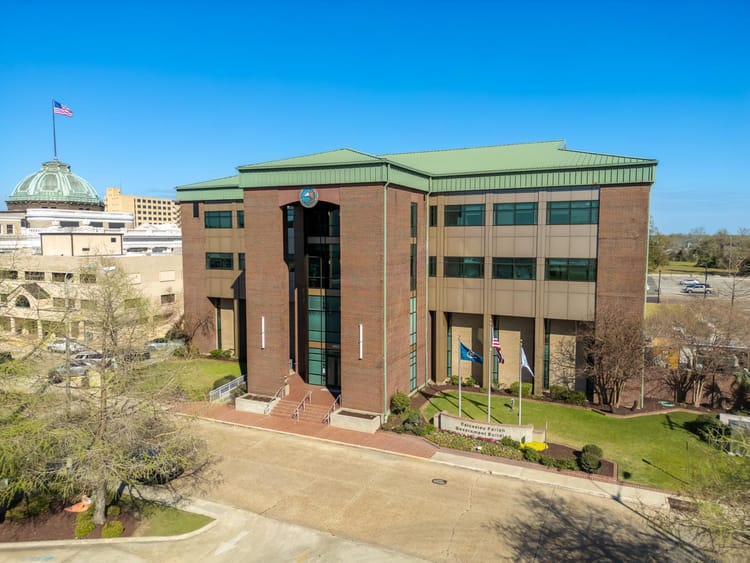
In November 2024, the Calcasieu Parish Planning and Zoning Board rejected a zoning exception for the 375-megawatt Cajun Crescent project after months of public opposition. Less than two years later, that same board approved another major solar development near Bell City by an 8-1 vote.
The difference raises a harder question than whether Southwest Louisiana is “for” or “against” solar:
Why did one project trigger a political and legal war while another received overwhelming approval?
The answer appears to involve location, community opposition, project scale, land-use concerns, political pressure and, eventually, the courts.
What Is the Cajun Crescent Energy Center?
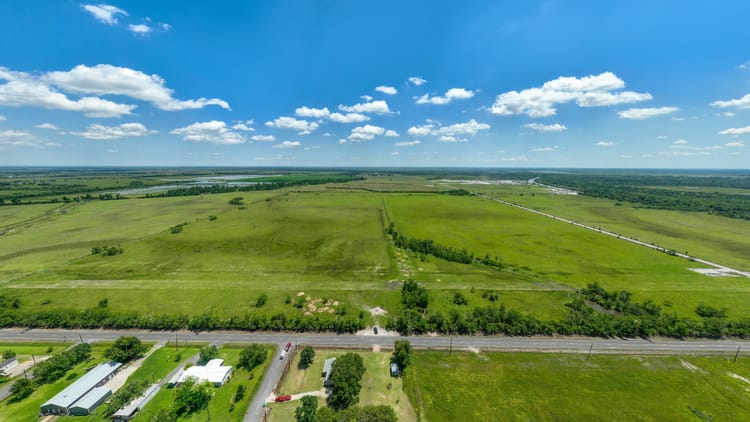
Aypa Power proposed the Cajun Crescent Energy Center, a 375-megawatt utility-scale solar facility on rural land north of Lake Charles and Moss Bluff, generally between Highway 171 and the Calcasieu River. The project spans portions of Calcasieu and Jefferson Davis parishes.
Court records describe the Calcasieu portion of the application as covering approximately 3,656 acres of A-1 Agricultural property and representing an investment of roughly $440 million.
Aypa says the project could generate more than $87 million in local net tax revenue over 30 years and create as many as 300 jobs during peak construction.
The company says its revised design would place solar equipment at least 300 feet from neighboring residences and use substantial vegetative buffers, including mature pine trees, to reduce visibility.
On paper, those numbers make the project look like a significant economic-development proposal.
On the ground, many nearby residents saw something very different.
Why Residents Opposed the Moss Bluff-Area Solar Project
Public opposition began building in the Moss Bluff, Gillis and Topsy areas before the parish's first major hearing.
Residents raised concerns about:
- Property values
- Drainage and runoff
- Hurricane damage
- Wildlife
- Fire and emergency-response capacity
- Loss of rural character
- Removal of trees
- The number of permanent jobs after construction
KPLC interviewed residents who described the area specifically as quiet rural country and questioned whether the benefits of the development would outweigh its effect on surrounding property owners.
The concern was not merely that solar panels existed.
The concern was where thousands of acres of industrial-scale energy infrastructure would be placed relative to existing rural homes.
But why deny Cajun Crescent only to approve another solar project later in Bell City?
Brett Geymann Entered the Fight Early
State Representative Brett Geymann, whose House District 35 includes portions of Calcasieu and Beauregard parishes, became involved before the parish made its final decision.
Geymann currently chairs the Louisiana House Committee on Natural Resources and Environment.
In August 2024, he joined State Senators Mark Abraham, Mike Reese and Jeremy Stine and Representative Troy Romero in asking the Calcasieu Parish Police Jury to delay action on solar projects while new state regulations were being implemented.
The delegation pointed to new Louisiana requirements involving state permitting and decommissioning plans and argued that local decisions should wait until the Louisiana Department of Natural Resources had fully implemented those rules.
That same year, Geymann sponsored House Study Request 2, asking the House Committee on Natural Resources and Environment to study wind and solar development in Louisiana. The House approved the study request in May 2024.
That places Geymann's involvement in a broader state policy debate rather than making Cajun Crescent an isolated political intervention.
The Parish Delayed the Decision
The Calcasieu Parish Planning and Zoning Board first held a public hearing on the project on August 20, 2024.
Opposition was substantial enough that the board did not vote that night.
Instead, it deferred the application until November, giving the developer additional time to respond to concerns raised by residents.
Aypa subsequently emphasized changes to the project design, including increased setbacks, vegetative buffering and preservation of portions of the property as wildlife or agricultural areas.
The company also began holding community drop-in sessions at the Moss Bluff Public Library.
Calcasieu Rejected Cajun Crescent in November 2024
On November 19, 2024, the Planning and Zoning Board voted on the zoning exception.
The result was unusual:
3 in favor.
3 opposed.
3 members did not vote.
Because the proposal failed to receive the required majority, the zoning exception was denied.
The denial was particularly significant because, according to the later appellate record, Calcasieu Parish had previously approved every solar-facility zoning exception submitted for A-1 Agricultural property before Cajun Crescent.
That fact eventually became central to Aypa's lawsuit.
Aypa Sued Calcasieu Parish
The project companies filed suit in December 2024.
They argued that the parish had applied its zoning ordinance inconsistently, failed to adequately justify the denial and did not properly follow its own voting procedures.
Their basic argument was straightforward:
If similar solar projects had previously been approved under the same zoning rules, why was this one rejected?
A district court initially agreed with the developers.
In July 2025, the Fourteenth Judicial District Court granted summary judgment in their favor and reversed the Planning and Zoning Board's denial.
That looked like a major victory for Cajun Crescent.
Then the appeals court reversed it.
The Appeals Court Reinstated Calcasieu's Denial
On July 15, 2026, Louisiana's Third Circuit Court of Appeal reversed the district court and reinstated Calcasieu Parish's denial of the zoning exception.
The appellate court focused heavily on the developer's burden of proof at the summary-judgment stage.
Aypa's companies argued that prior solar projects had been treated differently. But the appellate court concluded that the developers had not introduced sufficient admissible evidence of comparable prior applications to establish that the parish had applied its ordinance in a non-uniform or arbitrary manner.
The court therefore reversed the summary judgment, reinstated the parish denial and sent the case back for further proceedings.
The appeals court did not settle every underlying policy argument about solar farms, property values or whether Cajun Crescent should ultimately be built.
It ruled that the developers had not met the evidentiary burden necessary to win the case through summary judgment.
Then Calcasieu Approved Another Huge Solar Farm
On June 16, 2026, the Calcasieu Parish Planning and Zoning Board approved another utility-scale solar development.
This time the vote was:
8-1 in favor.
The Southern Prairie Solar project is proposed near Lionel Derouen and Fruge roads in the Bell City area.
The development would use approximately 1,100 acres and generate about 200 megawatts of solar power, accompanied by 55 megawatts of battery storage.
The project is being developed through Southern Prairie Solar, a subsidiary of Westbridge Renewable Energy, on property associated with locally owned Sweet Lake Land and Oil Company.
Planning staff supported it.
Nearby residents expressed support.
A major utility supported it.
The Southwest Louisiana Economic Development Alliance supported it.
The same parish and same Planning and Zoning Board supported another major solar project.
So Is Calcasieu Parish Anti-Solar?
The Bell City vote strongly suggests that the answer is no.
The more accurate interpretation is that Calcasieu Parish appears willing to approve utility-scale solar when the site, surrounding land uses and community response line up differently.
That makes the Cajun Crescent fight less about renewable energy in the abstract and more about a longstanding land-use question:
How much control should surrounding property owners have over what happens on somebody else's land?
One landowner may see thousands of acres of leased solar panels as productive use of private property.
A neighboring homeowner may see an industrial development fundamentally changing the environment they bought into.
Both are exercising arguments rooted in property rights.
And those rights collide at the property line.
The Property-Value Question Is Harder Than Either Side Makes It Sound
Opponents repeatedly raised the possibility that neighboring homes could lose value.
Aypa disputes that concern.
The company says a property-value study performed by a national valuation expert licensed in Louisiana concluded that the proposed setbacks and visual buffering should prevent adverse impacts to nearby property values.
That is evidence supporting the developer's position.
It is not the same thing as proving that every home near every utility-scale solar development will experience zero effect.
Likewise, anecdotal concern from residents is not proof that every nearby property will decline in value.
Property impact depends on the specific project, visibility, setbacks, neighboring land uses, sale data and how buyers react to the development.
For homeowners and real estate buyers near any proposed utility-scale project, the issue deserves property-specific analysis rather than a political slogan from either side.
Aypa Says It Changed the Project in Response to Residents
The developer says it made significant design changes after hearing local opposition.
According to Aypa:
- Most publicly visible areas would have setbacks exceeding 150 feet
- Residences would be at least 300 feet from panels
- Vegetative buffers would reduce visibility
- Wildlife corridors would remain
- Less than 1% of the project would consist of impervious surface
- Stormwater management would have to comply with parish drainage requirements
- The project would operate for approximately 30 years
Those are meaningful concessions.
They also illustrate why the debate did not disappear.
For opponents, the issue was not necessarily whether a solar panel could be hidden behind a row of pine trees.
It was whether thousands of acres around their community should become a utility-scale energy facility in the first place.
The Economic Argument Is Significant
Aypa's most powerful argument may not be environmental.
The company projects more than $87 million in local net tax revenue over the project's operating life.
Court records also describe the development as approximately a $440 million investment.
For a parish government, school system and sheriff's office, that level of projected tax revenue is difficult to ignore.
But the construction-employment claim deserves further investigation.
Aypa estimates as many as 300 workers during peak construction.
Construction jobs and permanent operating jobs are not the same thing.
Residents specifically raised the limited number of long-term jobs during the zoning proceedings, and those objections appear in the appellate record.
Who receives that value, for how long, and is it enough to justify the land-use tradeoffs for nearby residents?
Brett Geymann's Position Looks More Nuanced in Retrospect
Geymann's involvement can easily be reduced to a headline saying a Republican legislator opposed renewable energy.
The actual record is more specific.
He joined other Southwest Louisiana lawmakers in asking the parish to wait until new state permitting and decommissioning regulations were implemented.
He also formally requested a legislative study of wind and solar development statewide.
That does not automatically make his position correct.
But it does make the debate more substantive than a simple fossil-fuel-versus-solar fight.
And Calcasieu's later approval of the Bell City project further complicates any claim that local resistance was simply ideological hostility toward renewable energy.
Why Bell City May Have Been Different
The Southern Prairie project received support from planning staff, nearby residents, economic-development interests and a utility before winning its 8-1 approval.
Cajun Crescent faced intense organized opposition from people living near the proposed site.
That suggests one of the most important variables in utility-scale development may have nothing to do with the technology itself.
A technically compliant project can still become politically impossible when enough neighboring residents believe they are bearing the costs while somebody else receives the benefits.
Conversely, a similar development can move rapidly when adjacent property owners and institutions see the project as compatible with the surrounding area.
This Is Really a Land-Use Story
Solar gets the headlines.
But the underlying argument is familiar throughout Southwest Louisiana.
It is the same tension that appears around:
- Industrial plants
- Subdivisions
- Manufactured-home developments
- RV parks
- Pipelines
- Carbon sequestration
- Transmission lines
- Commercial developments
- Large agricultural operations
People generally support private-property rights until the neighboring property owner's intended use changes their own property's environment.
That contradiction does not have an easy solution.
If the government blocks too much development, it limits what landowners can do with their own property.
If government approves everything, neighboring owners effectively have no protection from incompatible uses.
Zoning exists in the uncomfortable space between those two principles.
What Happens Next With Cajun Crescent?
The July 2026 Third Circuit decision reinstated the Planning and Zoning Board's denial and remanded the litigation for further proceedings.
That means the appellate ruling should not be interpreted as necessarily ending every possible legal or permitting path for the project.
Aypa's own project website remains active and continues to describe Cajun Crescent as a proposed development.
For now, however, the zoning exception remains denied.
The Bigger Question for Moss Bluff
The Cajun Crescent dispute forces Moss Bluff and northern Calcasieu Parish to confront an issue likely to become more common.
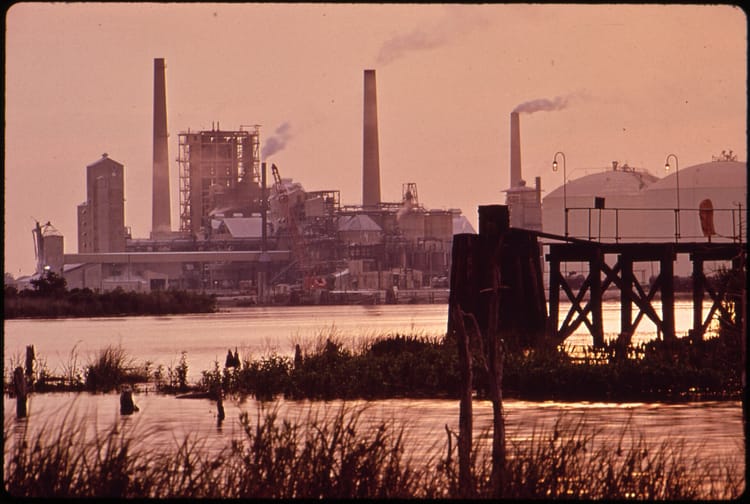
Southwest Louisiana already hosts massive energy infrastructure.
The region has built much of its economy around producing, processing and exporting energy.
Solar, battery storage and other emerging energy infrastructure are increasingly entering that same landscape.
The question is no longer whether those projects will be proposed.
They already are.
The question is where they belong.
And Calcasieu Parish has now created two very different examples:
One solar project generated years of opposition, litigation and political intervention.
Another won an 8-1 approval.
Understanding why may matter far more than deciding whether someone is simply “for solar” or “against solar.”
Sources and Further Reading
- Cajun Crescent Energy Center official project information
- Louisiana Third Circuit Court of Appeal decision: Cajun Crossroads Energy Center, LLC et al. v. Calcasieu Parish Police Jury
- KPLC: SWLA lawmakers ask for hold on solar farm project
- KPLC: Board rejects proposed solar farm in rural Calcasieu
- Louisiana Legislature: Brett Geymann House Study Request 2
- The Current: Calcasieu solar farm sails through approval
337.news covers the decisions, development and local issues shaping Southwest Louisiana. Learn more about 337.news.
About the Author
Dalton Barron is an investigative reporter and Louisiana-licensed real estate salesperson affiliated with NextHome Bayou Pines.
His reporting focuses on public records, real estate, development, infrastructure, business, government, and local data across Southwest Louisiana.
Dalton Barron
NextHome Bayou Pines
Jeremy Jones, Broker/Owner
416 N. Pine St.
DeRidder, LA 70634
C: 337.764.1754
O: 337.202.1018
Licensed by the LREC
Each office is independently owned and operated.
Dalton’s real estate activities are separate from the editorial operations of 337.NEWS. The brokerage information above is included for transparency where reporting may intersect with real estate, development, property ownership, land use, infrastructure, or related industries.

Member discussion
337.NEWS discussion
Join the conversation.
Sign up to comment on this story and follow the local reporting behind it.