Pennsylvania Voted 202–1 to Keep Data Centers From Taking Private Land. Louisiana Already Has a Different Problem.
337.NEWS | November 22, 2026
In Pennsylvania, lawmakers looked at the booming data center business and saw a problem worth stopping before somebody lost a piece of land over it.
On October 19, the state House voted 202–1 to keep large commercial data centers from being classified as public utilities. The practical concern was eminent domain: give a private development the legal standing of a utility, and it may gain access to powers ordinary businesses don't have.
A developer can make an offer on your property. You can refuse it. A utility, under the right conditions, can go to court and ask to put its infrastructure there anyway.
Pennsylvania's bill is not law yet. It has cleared the House and gone to the Senate. But the vote presents an uncomfortable contrast with Louisiana, where property owners are already facing expropriation proceedings over transmission lines intended in part to serve Meta's enormous data center project.
Here, the data center doesn't have to become a utility. There's already a utility willing to build the lines.
Pennsylvania saw the legal opening
House Bill 2674, introduced by Democratic Rep. Chris Pielli with Rep. Paul Friel and other co-sponsors, would amend Pennsylvania's public utility definition to exclude a commercial data center with peak electricity demand of at least 25 megawatts and the connections to utility systems specified in the bill.
It is not a moratorium on data centers. It does not forbid them from buying land, connecting to the grid, or building facilities. It addresses a narrower issue: whether certain data center operators could claim the legal status that might eventually allow them to condemn property for utility infrastructure.
That wouldn't happen automatically. Pennsylvania utility condemnation involves regulatory requirements, public-convenience certification, and, for certain facilities, additional Public Utility Commission findings. But once a developer enters that legal category, a property owner's right to say no can become a much longer and more expensive argument.
Pielli warned that utility designation could allow developers to override local land-use controls and pursue property rights normally associated with regulated utilities. Friel raised similar concerns about land acquisition and public oversight. Those were warnings about a legal possibility, not evidence that a Pennsylvania data center had already seized anyone's property.
The House passed the bill October 19. It was referred to the Senate Consumer Protection and Professional Licensure Committee on October 26. As of this article's November 22 reporting cutoff, it had not become law.
It's worth dwelling on the vote. A chamber that can struggle to agree on the color of the sky found just one dissenting vote on keeping this particular power away from data centers.
Louisiana's version comes with transmission towers
Drive far enough through rural Louisiana and the landscape is easy to read. Timber, cattle, family homes, a gate that's been patched a dozen times, and property that's survived longer than most companies ever will.
Then somebody shows up with a map. A new transmission corridor has been drawn across land the owner never offered for sale.
That's the situation emerging in north Louisiana around Meta's planned Hyperion data center in Richland Parish.
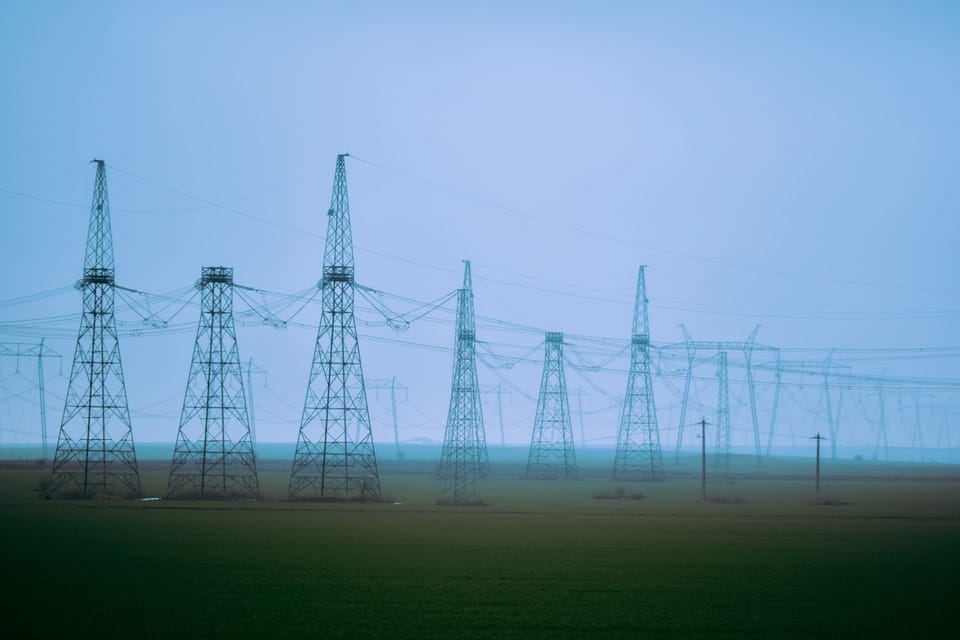
According to Gulf States Newsroom's November 12 reporting, Entergy Louisiana filed an expropriation lawsuit in Lincoln Parish on October 14, 2026, involving 14 tracts along a proposed nearly 58-mile, 500-kilovolt line between Mount Olive and Sarepta.
The project is intended to support new demand, including Meta's data center. Entergy argues it also serves the broader electrical system: improving reliability, accommodating future growth, and supporting transmission requirements. The utility says the line was included in the Midcontinent Independent System Operator's 2025 transmission expansion plan and that the Louisiana Public Service Commission found the project to be in the public interest.
Those are material claims, and they belong in the story. A transmission line can serve more than one customer. A private company's demand can also be the reason a line gets built in the first place. Neither observation settles the legal question by itself.
The landowners facing expropriation do not have to surrender ownership of the entire property. Entergy seeks servitudes, Louisiana's version of easements, to construct and maintain electrical facilities. But an owner can lose the practical ability to build in the corridor, dig a pond, place a barn, or leave trees standing where they interfere with the line. Crews may gain access for maintenance and repairs.
Call it a servitude on paper. To a family looking at a new line of towers across a pasture, it's a lasting restriction on land they still own and still pay taxes on.
Entergy says it attempted negotiations, supplied appraisals, and offered more than the appraised amounts before filing suit. The filing, as reported, does not disclose the individual offers. The owners' refusal to accept them is why a judge may now be asked to decide what the utility can take and what compensation is owed.
A private project. A public-power argument.
There is another fight farther west, in Calhoun Brake in Ouachita Parish. Landowners, including the Perry family, have resisted transmission rights-of-way associated with Entergy's plans. NOLA.com's September 11, 2026 reporting describes disputes involving several dozen owners and at least 15 tracts.
Parnell Perry's objection gets to the core of it: the family believes private land is being taken for private gain.
Entergy's position is different. The utility says these facilities address broader grid needs, not simply Meta's electricity bill. The courts will have to evaluate the specific rights, facts, and public-necessity arguments in the cases brought before them.
There's also the question of cost. The Gulf States Newsroom report cites earlier reporting that, although Meta would directly finance billions in other electrical infrastructure, ratepayers could be responsible for at least $470 million in facilities that include the Mount Olive–Sarepta line. That reported allocation deserves examination alongside the final regulatory orders, not treatment as a settled bill already sent to every household.
A corporation announces a spectacular investment. Politicians count jobs. Utilities count megawatts. Somewhere between those announcements, a landowner gets a letter explaining that the public interest may require a permanent strip of somebody else's property.
Who gets to define that interest is the real story.
The law Louisiana already has
Under Louisiana Revised Statute 19:2(7), an electric public utility or qualifying affiliate can seek to expropriate property for specified electrical infrastructure when the statutory conditions are met. Those conditions include certain transmission-planning and in-state electricity-delivery tests.
Louisiana Revised Statute 45:121 defines an electric public utility and contains an exclusion for certain self-generation arrangements. That helps explain why a data center running its own equipment is not necessarily a utility itself.
But Meta doesn't have to file the expropriation suit. Entergy can pursue a servitude under powers that belong to an existing utility, subject to the law and judicial review.
That's the distinction a Pennsylvania-style bill alone would not resolve here. Preventing data centers from claiming utility status is one thing. Deciding when an established utility can use its condemnation authority to build infrastructure substantially driven by one private industrial customer is another.
The difference isn't academic when there's a transmission corridor marked across your place.
And Louisiana is still writing the rules for private power networks
The legislature considered a separate idea earlier this year. Senate Bill 490, introduced by Sen. Bob Hensgens, would have established rules for private-use electrical networks serving customers such as data centers and other large industrial loads. The engrossed bill expressly stated that a qualifying private network would not be treated as a public utility simply by meeting the bill's conditions.
It did not pass.
Meanwhile, the Louisiana Public Service Commission opened Docket R-37905 to examine private-use electrical networks. A staff proposal filed in November contemplated networks serving qualifying new loads of 50 megawatts or more, with substantial portions of generating capacity and energy devoted to the identified customer.
The commission's November 18 discussion and possible vote were deferred to December 16, 2026, according to the docket status reflected in the original reporting. No final rule had been adopted as of that check.
That proceeding is important for electricity competition, private generation, and the extent of regulatory oversight. But it should not be confused with a rule granting data centers eminent domain, or with a solution to existing utilities' use of expropriation law. Those are different legal questions.
On November 9, landowner groups also sued the Commission over its so-called Lightning Directive, a fast-track approval process. They allege inadequate public notice and an opportunity for comment. That lawsuit concerns regulatory procedure rather than a direct taking of land, although the groups fear expedited approvals may strengthen the public-necessity case for infrastructure built around Meta.
The Louisiana Supreme Court has already drawn one line
In March, a separate Louisiana land fight reached the state's highest court.
In Plaquemines Port, Harbor and Terminal District v. Nguyen, the Louisiana Supreme Court rejected a port authority's attempt to expropriate approximately 29 acres intended for exclusive use by Venture Global LNG in the Delta LNG project.
The court held that the proposed taking did not satisfy the Louisiana Constitution's public-purpose requirements where the property would be used predominantly by a private company. Economic development, higher tax receipts, and incidental public benefits are not enough on their own.
That decision does not mean Entergy automatically loses its cases. Nguyen concerned a port authority acquiring land to lease for a private industrial project. Entergy's lawsuits concern a utility's rights-of-way for electrical transmission infrastructure, governed by different statutory provisions and facts.
But the constitutional questions deserve attention. Under Article I, Section 4(B)(4), an authorized private expropriator must show a public and necessary purpose and provide just compensation. Whether that purpose is public and necessary is a question for a court.
The disagreement is plain enough: Entergy points to grid reliability, planning approvals, and the utility system as a whole. Property owners question whether those benefits are sufficient when an extraordinary private customer's demand drives the expansion.
That's a dispute for evidence, not slogans.
A yes from the state doesn't erase a landowner's no
The data center industry has become expert at presenting development in numbers too large to picture. Tens of billions of dollars. Thousands of construction workers. Electricity demand measured in hundreds or thousands of megawatts.
Land ownership operates on a smaller scale. An acre handed down. A tract bought with decades of work. A house positioned deliberately away from the road. A pasture somebody intended to leave alone.
A promise of regional economic growth doesn't tell that owner whether a right-of-way is necessary, whether another route was available, or why their property should bear a permanent restriction for somebody else's project.
Pennsylvania lawmakers voted overwhelmingly to prevent large data centers from entering one route toward eminent domain. Louisiana's concern is already more complicated: an established utility is asking courts for property rights to support an electrical expansion associated with a massive private development.
Nobody needs to pretend a reliable power grid isn't a public good. Nobody should pretend that labeling a project public infrastructure ends the inquiry, either.
If the public is being asked to surrender property rights, the public is entitled to more than a press release about jobs. It is entitled to proof of necessity, a serious examination of alternatives, transparent accounting of costs, and a fair hearing before a judge.
Pennsylvania's legislators are debating how to stop a legal door from opening. In Louisiana, families are already standing on the other side of one, waiting to see what the courts will allow through.
What happens next
- December 16, 2026: Scheduled LPSC consideration of the proposed private-use electrical-network rule in R-37905, following the November deferral.
- Pennsylvania: HB 2674 remains pending in the Senate Consumer Protection and Professional Licensure Committee as of the November 22 reporting cutoff.
- Lincoln Parish: Entergy's October 14 expropriation litigation concerning the Mount Olive–Sarepta transmission corridor remains a key case to watch for the public-necessity arguments and landowner responses.
Sources and public records
- Pennsylvania HB 2674, official bill history: https://www.palegis.us/legislation/bills/2025/hb2674
- Pennsylvania HB 2674, amended bill text (Printer's No. 3951): https://www.palegis.us/legislation/bills/text/HTM/2025/0/HB2674/PN3951
- Rep. Chris Pielli, October 19 House passage statement: https://www.pahouse.com/InTheNews/NewsRelease/?id=145738
- Rep. Paul Friel, October 20 statement: https://www.pahouse.com/SouthEastDelegation/InTheNews/NewsRelease/?id=145748
- Pennsylvania public utility condemnation law, 15 Pa.C.S. §1511: https://www.legis.state.pa.us/WU01/LI/LI/CT/HTM/15/00.015.011.000..HTM
- Pennsylvania utility eminent-domain notice requirements, 52 Pa. Code §57.91: https://www.law.cornell.edu/regulations/pennsylvania/52-Pa-Code-SS-57-91
- Louisiana expropriation law, R.S. 19:2: https://www.legis.la.gov/legis/LawPrint.aspx?d=81784
- Louisiana electric-public-utility definition, R.S. 45:121: https://www.legis.la.gov/legis/LawPrint.aspx?d=99873
- Louisiana SB 490, engrossed bill: https://www.legis.la.gov/Legis/ViewDocument.aspx?d=1462829
- Louisiana Public Service Commission, Docket R-37905: https://lpscpubvalence.lpsc.louisiana.gov/portal/PSC/DocketDetails?docketId=32758
- Gulf States Newsroom, Entergy/Meta land-rights litigation, November 12, 2026: https://www.krvs.org/louisiana-news/2026-11-12/entergy-says-meta-power-lines-serve-public-purpose-in-lincoln-parish-land-rights-lawsuit
- Louisiana Supreme Court, Plaquemines Port v. Nguyen, March 6, 2026: https://law.justia.com/cases/louisiana/supreme-court/2026/2025-c-00827.html
- Louisiana Constitution, Article I, Section 4: https://en.wikisource.org/wiki/Louisiana_State_Constitution_%281974%29
- Sam Karlin, NOLA.com, Entergy wants to build power lines for Meta's data center. These landowners are fighting back., September 11, 2026: https://www.nola.com/news/entergy-meta-data-center-expropriation-eminent-domain/article_23b903c4-ec08-421d-b00f-1ec0b4f7ef95.html
337.NEWS Public Records Repository: https://337-news.github.io/louisiana-public-records/
Related: Read our explainer on Louisiana expropriation and landowner rights.





Member discussion
337.NEWS discussion
Join the conversation.
Sign up to comment on this story and follow the local reporting behind it.