The $3.6 Billion Data Center That Arrived in Boyce Before the Public Knew
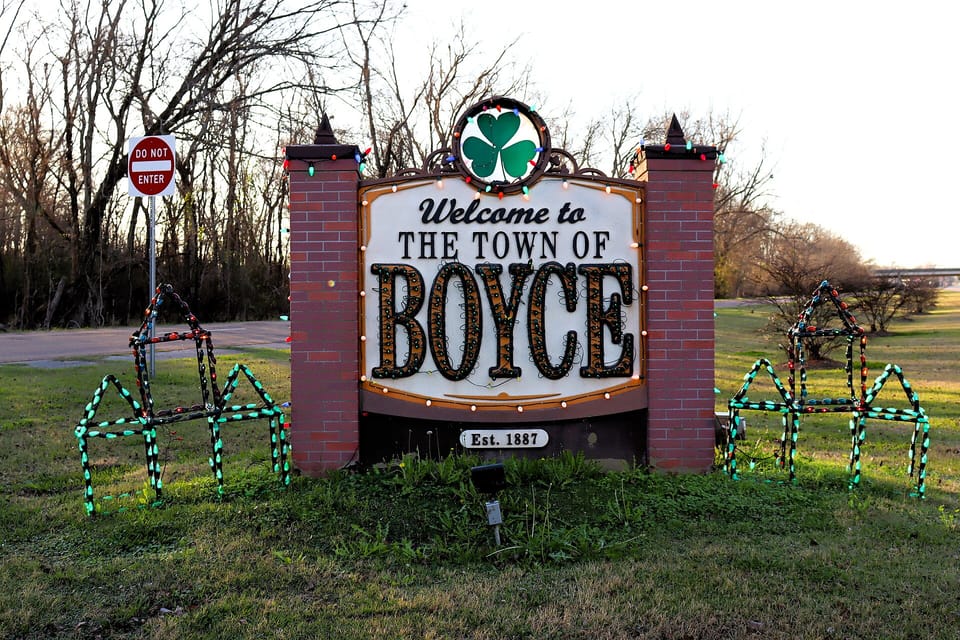
An editorial on confidential development deals, public accountability, and the $3.6 billion data center that arrived in Boyce before many residents understood what was happening.
Louisiana has become remarkably good at keeping secrets.
Not military secrets. Not criminal investigations. Not information that would compromise public safety.
Economic development secrets.
We're talking about politicians and public officials signing nondisclosure agreements with private corporations, negotiating billion-dollar projects, and leaving the people they represent to find out what happened after much of the groundwork has already been laid.
And apparently, we're supposed to applaud when the governor finally holds a press conference.
Welcome to Boyce, Louisiana
In Rapides Parish, a company called Applied Digital is building a $3.6 billion artificial intelligence data center on approximately 300 acres near the small town of Boyce.
The project, known as Delta Forge 1, is expected to support 200 permanent on-site jobs and more than 1,000 construction jobs at peak activity.
Those are substantial numbers. They deserve attention.
But so does the process that brought the project to Louisiana.
According to an August 27 investigation by journalist Drew Hawkins for NPR and the Gulf States Newsroom, at least five state senators, the Rapides Parish assessor, and every member of the England Economic and Industrial Development District board involved in negotiating the deal signed nondisclosure agreements.
The project operated under confidential code names, including Project Lightning and Project Pixel.
Residents reported struggling to obtain information while rumors circulated about what was being built.
By the time Louisiana publicly announced the project on May 26, 2026, site development had already begun.
Think about that.
A $3.6 billion development capable of fundamentally changing the infrastructure demands of a rural community was already advancing before the state formally introduced it to the public.
And the people elected or appointed to represent the community had signed agreements restricting what they could disclose.
Read Drew Hawkins' original NPR investigation
Public Officials Should Not Be Corporate Confidentiality Officers
To be clear, nondisclosure agreements are not inherently illegal.
Companies have legitimate reasons to protect trade secrets, confidential financing arrangements, and commercially sensitive negotiations.
Applied Digital CEO Wes Cummins told NPR that securities law concerns were a major reason for using NDAs. Publicly traded companies have obligations involving material nonpublic information, and those concerns should not be dismissed.
But there is a fundamental difference between protecting a company's legitimate confidential information and allowing private confidentiality agreements to restrict the public's understanding of government decisions.
A corporation has shareholders.
A public official has constituents.
Those obligations are not interchangeable.
Nobody is suggesting Louisiana should publish confidential engineering plans or reveal corporate trade secrets.
But when negotiations involve public infrastructure, tax arrangements, government approvals, and decisions that can affect an entire community, the public has a legitimate interest in understanding what its government is doing.
The question is not simply whether officials were legally permitted to sign these agreements.
The question is whether they should have agreed to such sweeping confidentiality in the first place.
The Records Tell a Story of Their Own
On April 20, 2026, the England Economic and Industrial Development District board entered an executive session concerning Project Lightning.
The meeting minutes document nearly two hours behind closed doors discussing economic development negotiations and receiving legal advice.
Three days later, on April 23, the board's public agenda included a motion to approve a Payment in Lieu of Taxes, or PILOT, term sheet related to Project Lightning, subject to final approval of a cooperative endeavor agreement incorporating those terms.
A PILOT arrangement generally allows a company to make negotiated payments instead of paying conventional property taxes under the usual structure.
Such agreements can be valuable economic development tools.
They can also change how public revenue is collected and distributed.
That makes the terms extraordinarily important.
Who receives the payments? How do they compare with ordinary property-tax obligations? What happens if the facility changes ownership, its tenant leaves, or the promised jobs do not materialize?
And at what point did taxpayers have a meaningful opportunity to examine those questions?
The public records establish that negotiations and formal consideration of the tax-payment arrangement occurred before the state's public announcement.
They do not, by themselves, establish that anyone violated Louisiana's Open Meetings Law or Public Records Law.
But legality is a minimum standard.
Accountability demands more.
April 20 England Authority meeting minutes
April 23 England Authority meeting agenda
The Public Gets a Press Release. The Company Gets a Head Start.
This is the part of Louisiana's economic development strategy that deserves considerably more scrutiny.
Officials routinely announce projects by emphasizing investment totals, construction employment, economic impact projections, and promises of future prosperity.
And those benefits may be real.
But the press release usually comes after months, sometimes years, of private negotiations.
The public gets to hear what has been accomplished.
It often has far less opportunity to influence what is being negotiated.
In Boyce, residents raised concerns about electricity demand, water consumption, and environmental impacts.
According to NPR, officials and company representatives discussed a third-party environmental study at a June town hall but indicated that the study would not be publicly released.
Consider the position that puts residents in.
They are being asked to accept assurances about a project whose potential consequences they will live with, without access to some of the information used to justify those assurances.
That's not public engagement.
That's asking the public to trust a conclusion without being allowed to examine the evidence.
The Electricity Question Is Far From Settled
Delta Forge 1 is expected to initially require 300 megawatts of critical information technology load.
That's a major industrial electricity demand.
Cleco Power has a pending application before the Louisiana Public Service Commission under Docket U-38035, involving contracts, transmission infrastructure, and new electricity generation for a large-load customer.
The docket remains open.
Utility officials and state leaders have emphasized that data centers should pay their own infrastructure costs.
Good.
Then the public should be able to examine the arrangements that make that promise enforceable.
What protections exist if the customer defaults? How are costs allocated if the anticipated electricity demand never materializes? What prevents ordinary customers from eventually absorbing costs associated with underused infrastructure?
These questions are not accusations that such costs have already been shifted.
They are precisely the questions regulators should answer before approving a substantial new utility investment.
The hearing process matters because promises made at a press conference do not necessarily carry the same protections as enforceable utility contracts.
Louisiana Public Service Commission Docket U-38035
And Yes, Boyce Is Getting Something Out of It
In October, Applied Digital announced a $4 million community benefit agreement with the Town of Boyce.
For a small municipality struggling with infrastructure and financial challenges, that amount is meaningful.
It would be irresponsible to pretend otherwise.
The town deserves improvements. Residents deserve economic opportunities. A development of this magnitude should create tangible benefits for the surrounding community.
But a community benefit agreement announced months after the project became public does not automatically resolve questions about the original negotiation process.
Both things can be true.
The project may produce meaningful economic benefits.
And the public may still have been excluded from decisions it deserved to understand.
We should not have to choose between economic opportunity and accountable government.
This Is Bigger Than Boyce
The NPR investigation identified at least 54 nondisclosure agreements signed by Louisiana elected officials concerning various projects since Governor Jeff Landry took office in 2024.
That is not proof that every agreement was improper.
It is, however, evidence that confidentiality agreements are more than an isolated feature of one development.
And that raises a question for every Louisiana community being courted by industrial developers, energy companies, and technology corporations:
At what point does protecting a development opportunity become protecting the government from public scrutiny?
We've encountered related transparency concerns while examining major infrastructure projects in Southwest Louisiana, including SpaceX-related development proposals and large-scale data center investments.
These are not identical projects, and the existence of an NDA in Boyce does not establish that the same agreements or circumstances exist elsewhere.
But the larger accountability issue is familiar.
Public officials are often closely involved in negotiations long before residents receive enough information to ask informed questions.
Then, when those questions finally arrive, the development may already have significant financial, political, or physical momentum.
That is a remarkably convenient arrangement for everyone at the negotiating table.
Except the people who weren't invited.
Economic Development Is Not a Blank Check
I'm not opposed to data centers.
I'm not opposed to industrial growth, investment, private property rights, or companies bringing jobs to Louisiana.
And I'm certainly not suggesting every confidential negotiation conceals wrongdoing.
What I oppose is the growing expectation that the public should accept secrecy as the price of economic progress.
If a company needs confidentiality to protect legitimate commercial information, fine. Establish clear limits, deadlines, and disclosure requirements.
If public money, tax arrangements, utility infrastructure, or government approvals are involved, provide meaningful public oversight before critical decisions are finalized.
If elected officials believe signing an NDA serves their constituents, they should be prepared to explain why, what information was withheld, and when the public would regain access to it.
And if officials cannot answer those questions without consulting the corporation first, we have a much larger problem.
The people of Louisiana do not work for Applied Digital, SpaceX, Meta, or any other private company.
Neither should their elected representatives.
The Question Louisiana Needs to Start Asking
When the next multibillion-dollar announcement arrives, don't just ask how many jobs it promises.
Ask who negotiated it.
Ask who signed confidentiality agreements.
Ask when the public first had access to meaningful information.
Ask which financial commitments were made before the announcement.
Ask who bears the financial risk if the project fails.
And perhaps most importantly, ask whether the people making those commitments were acting primarily as representatives of the public or as partners in securing the deal.
Because a project can be economically beneficial and still expose serious weaknesses in government accountability.
A company can have legitimate reasons for confidentiality without being entitled to unlimited secrecy from the people affected by its development.
And a public official can comply with the law while still failing to meet the public's expectations of transparency.
Louisiana should be open for business.
But the government belongs to the people who live here, not the corporations doing business here.
That's not anti-growth.
That's the entire point of representative government.
Sources and public records
- NPR / Gulf States Newsroom / Drew Hawkins, August 27, 2026: Investigation of Louisiana development NDAs
- Louisiana Economic Development, May 26, 2026: Delta Forge 1 announcement
- England Authority: April 20, 2026 executive-session minutes
- England Authority: April 23, 2026 public meeting records
- Louisiana Public Service Commission: Cleco Docket U-38035
- KALB, October 14, 2026: Boyce's $4 million community benefit agreement
- 337.NEWS Louisiana Public Records Repository
Editorial | 337.NEWS | November 11, 2026
Related 337.NEWS reporting
Congress examines secret data center deals involving Louisiana
The separate data center and energy proposals north of Moss Bluff
What Project Osprey records reveal about Louisiana’s SpaceX negotiations

Member discussion
337.NEWS discussion
Join the conversation.
Sign up to comment on this story and follow the local reporting behind it.