Congress Targets Meta's Secret Data Center Deals. Louisiana Is Named in the Investigation.

337.NEWS | November 7, 2026 | Government Accountability / Energy / Technology
Congress is asking Meta why Louisiana officials signed secrecy agreements about a $50 billion data center, and whether those agreements kept the public from learning how the project could affect power bills, water use, and tax money.
Louisiana is not just mentioned in passing. The state is named in the evidence of a federal investigative letter sent to Meta CEO Mark Zuckerberg.
On September 29, Rep. Jamie Raskin, the ranking Democrat on the House Judiciary Committee, sent Zuckerberg a five-page letter demanding records and answers about Meta's use of nondisclosure agreements, or NDAs, in data center development. The committee publicly announced the inquiry on September 30. Raskin sent letters the same day to Amazon, Google, and Oracle as well. The Louisiana example is in the Meta letter.
On November 6, The Washington Post reported that congressional Democrats, after winning majorities in the House and Senate, are preparing a wave of investigations into major companies, with Meta an early target over its demands that local governments sign NDAs for data center projects. That reporting is based on people familiar with the plans. It is not a filed action, and it does not establish wrongdoing.
Read Raskin's letter to Zuckerberg (September 29, 2026) | House Judiciary Democrats' announcement | Washington Post, November 6
Louisiana is in the evidence, not just the headlines
Raskin's letter cites more than 100 Louisiana state employees who signed confidentiality agreements, and Gov. Jeff Landry's own agreement with a Meta subsidiary over its Richland Parish data center.
Reporting by the Gulf States Newsroom and Type Investigations documented at least 121 employees of Landry's office who signed employee confidentiality agreements. Landry also signed a mutual NDA, effective April 23, 2024, on behalf of the Office of the Governor with Laidley LLC, Meta's data center subsidiary.
Those are separate categories. The employee NDAs bind state personnel to the governor's office. The Laidley agreement concerns discussions with a private company. They should not be presented as 121 Meta agreements.
The same reporting found at least 54 elected officials had signed NDAs related to large-scale industrial projects since Landry took office in early 2024. State economic development officials have defended confidentiality during recruitment as a way to protect sensitive negotiations, and Meta has characterized such agreements as customary during competitive site selection. The issue under congressional scrutiny is whether confidentiality goes beyond protecting negotiations and prevents disclosure of information affecting the public.
Read the Gulf States Newsroom investigation into Landry administration NDAs | Read reporting on Landry's Meta agreement
What Congress wants Meta to turn over
The September 29 letter requested answers by 5 p.m. on October 13, 2026. It sought:
- A complete list of Meta-linked U.S. data center projects, including subsidiaries, locations, development status, investments, power and water forecasts, and project code names.
- Copies of every relevant NDA with a government, public official, public employee or utility, including whether Meta requested or required the agreement.
- Justifications for keeping information confidential, particularly about electricity, water, tax incentives, environmental effects and public health.
- Disclosure of any occasion when Meta invoked, threatened to invoke, or reserved the ability to invoke an NDA to prevent, delay or narrow a public-records response or other public inquiry.
- An explanation of why Meta continues to seek confidentiality from public officials after Microsoft announced in March 2026 that it would stop using NDAs with local governments for data center development and work to end existing ones.
The fourth request is especially consequential. Congress is not simply asking whether the contracts exist. It is asking whether they have been used to restrict the public's access to government information.
The letter is a congressional information demand, not a judicial finding that Meta violated the law, and it is not proof that the company withheld records unlawfully. As of this report, we have not verified a publicly released Meta response to the October 13 deadline. That unanswered question is an immediate reporting priority.
Read the full five-page congressional demand
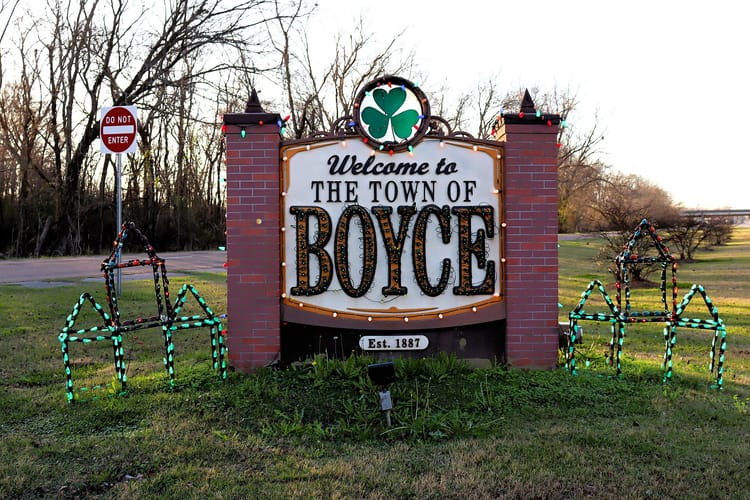
Boyce: the other Louisiana case cited by Congress
Raskin also cited the dispute over a proposed 300-acre, $3.6 billion data center in the Boyce area of Rapides Parish, developed by Dallas-based Applied Digital Corp. and now named Delta Forge 1. The first phase is planned to draw 300 megawatts of electricity. According to the letter, residents learned details only after fencing and ground clearing had begun. When residents pressed officials at a town hall, they were told a third-party study had found the environmental impact negligible, then told the study itself could not be released for contractual reasons.
That Boyce-area development is not the Richland Parish Meta project. The congressional letter uses the Boyce experience as an example of wider secrecy practices; citing it in a letter addressed to Meta does not establish that Meta owns or operates the Boyce project.
For affected residents, the questions are practical: How much water will the facility use? What power equipment will be needed? Who pays for infrastructure? Will property owners receive adequate notice before consequential decisions are made?
Read the NPR investigation cited by Raskin
Meanwhile, Louisiana regulators vacated a subpoena seeking Meta records
A separate dispute over access to information has already unfolded before the Louisiana Public Service Commission.
In Docket U-37882, Entergy Louisiana seeks certification of additional generation and transmission infrastructure associated with the Meta-linked Evest development in Richland Parish. The commission's official docket lists Meta as an involved company.
On July 10, an administrative law judge granted a subpoena for production of documents for requests 1 and 2 and denied it for requests 3 through 5. At its August 12, 2026 session, the LPSC voted 3-1 to reverse the ruling and vacate the subpoena, with Commissioner Lewis opposing and Commissioner Campbell absent. Its written Order U-37882-A, dated September 17, formally denied the subpoena motion and vacated the subpoena.
This sequence matters: The September order documented the August decision. It was not a second subpoena reversal. Nor did vacating the subpoena amount to final approval of Entergy's underlying generation and transmission application, which remained an open proceeding.
The federal NDA inquiry and the Louisiana subpoena dispute are separate processes with different powers, records and legal questions. They nonetheless converge on one issue: how much project information should be available when major private developments may have public consequences for electricity infrastructure, rates and land use?
LPSC Docket U-37882 | Official LPSC Order U-37882-A
Louisiana has defended secrecy as economic-development practice
Companies have legitimate reasons to protect proprietary technology, unannounced site negotiations and competitively sensitive pricing. Public officials also have a duty to negotiate in ways that protect taxpayers.
But secrecy becomes harder to defend when the withheld information concerns future electricity demand, potential utility costs, public incentives, water consumption or environmental effects. Those are not simply internal business questions. They can influence household bills, local infrastructure and government decisions for years.
Louisiana Economic Development has said it uses both general and project-specific NDAs, some of which expire when a project is announced. Agency officials have argued that confidentiality allows legislators and other officials to take part in recruitment discussions before proposals become public. Meta has similarly said confidentiality helps prevent speculation about developments that may never materialize.
The congressional question is not whether every NDA is improper. It is whether a public official can meaningfully represent constituents while contractually prevented from discussing material terms of a proposed development.
For additional Southwest Louisiana context, 337.NEWS has separately reported on NDA signers identified in Louisiana Economic Development's response concerning Project Osprey. That records matter illustrates why project-specific documentation deserves scrutiny, but it is not evidence that Project Osprey is a Meta data center or a subject of Raskin's investigation.
What happens next
There are several developments worth following. First, whether Meta supplied the requested records by October 13, sought an extension or refused any portion of the request. Second, whether the House inquiry proceeds to hearings, subpoenas or broader demands after the change in congressional control. Third, whether additional information about Louisiana projects becomes public through federal oversight that was not made available through state proceedings.
No such disclosure should be presumed in advance. A lawmaker's letter does not guarantee records will be produced or published, and the congressional inquiry has not established wrongdoing by Meta, Landry or the LPSC.
Still, the political significance is unmistakable. Louisiana's nondisclosure practices have become evidence in a national congressional examination of how technology companies negotiate with government officials.
The central question is straightforward: If an industrial development will affect public resources, public infrastructure or public finances, how much can an elected official promise to keep secret from the people who elected them?
Related reporting
Louisiana’s Biggest New Industries Are Moving Faster Than Public Scrutiny
Louisiana Wanted $65.50 for Public Records It Could Send by Email
Primary documents and reporting
- September 29, 2026: Rep. Jamie Raskin's letter to Meta CEO Mark Zuckerberg (PDF)
- September 30, 2026: House Judiciary Democrats' investigation announcement
- November 6, 2026: Washington Post report on forthcoming congressional oversight
- Louisiana Public Service Commission: Docket U-37882
- Louisiana Public Service Commission: Order U-37882-A, September 17, 2026
- Gulf States Newsroom / Type Investigations: Landry administration nondisclosure agreements
- Gulf States Newsroom: Landry's agreement with Meta subsidiary Laidley LLC
- NPR: Nondisclosure agreements and Louisiana data center controversy
Editorial disclosure: This article relies on publicly available congressional correspondence, Louisiana regulatory records, and attributed reporting. The federal information demand, Louisiana utility proceeding and individual NDA agreements are separate matters. No legal violation is asserted without an adjudicated finding.


Member discussion
337.NEWS discussion
Join the conversation.
Sign up to comment on this story and follow the local reporting behind it.