SpaceX Came to Build Rockets. Now It Wants a $24 Billion Power Plant and Data Center. Vermilion Parish Should Pay Attention.
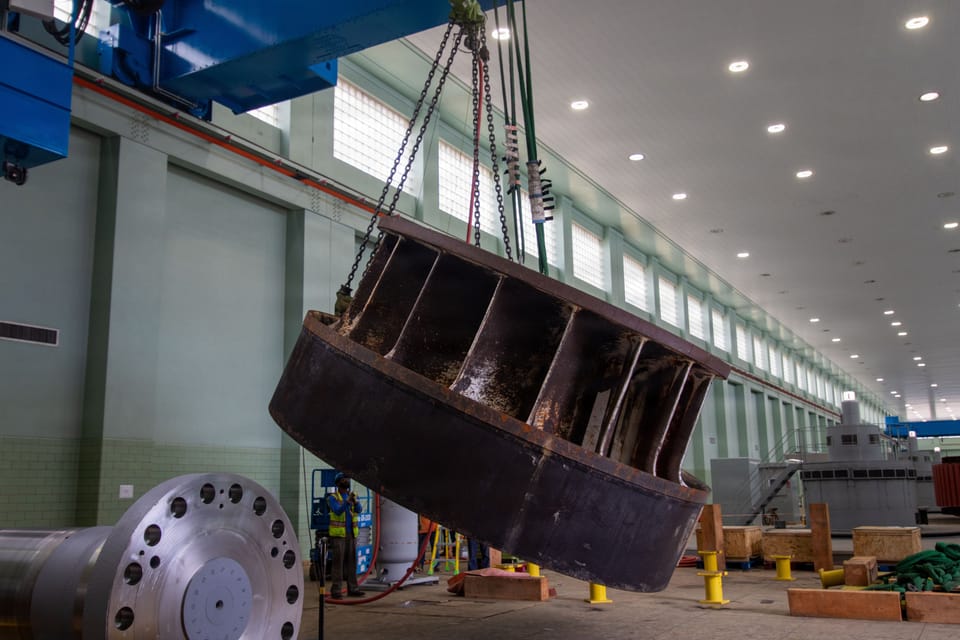
SpaceX's latest proposal in Texas raises questions about what might eventually accompany its announced $100 billion Louisiana spaceport, from industrial power generation to data-center infrastructure and environmental impacts.
November 10, 2026 | 337.NEWS
When Louisiana announced that Elon Musk's SpaceX would develop a $100 billion spaceport in Vermilion Parish, the pitch was extraordinary.
Rocket launches. Thousands of jobs. An aerospace industry rising out of the coastal marshes near Pecan Island.
The project was presented as an opportunity for Louisiana to help humanity reach the Moon, Mars, and beyond.
Less than three months later, an announcement in Texas offers Vermilion Parish a reason to look more closely at how SpaceX's industrial footprint could grow.
SpaceX is proposing a $24 billion project pairing a natural-gas power plant with what an official Starbase development notice calls a "super-compute facility" near the Port of Brownsville.
A supercomputing facility is a specialized type of data center. Instead of primarily hosting ordinary business servers, it can house high-performance systems for computationally intensive work such as scientific simulations, engineering, and artificial intelligence. The public notice does not establish exactly what workloads SpaceX plans to run, so it would be premature to say the facility is exclusively for AI training.
But it is a data center, and its proposed supporting power infrastructure is enormous.
According to reporting on a Texas environmental filing, SpaceX's initial generation plan calls for 35 natural-gas turbines with approximately 748 megawatts of combined capacity. That's nearly three-quarters of a gigawatt.
Not another launchpad. Not a rocket factory. A large computing complex and a utility-scale generating operation.
There is no verified announcement of an equivalent terrestrial data center in Vermilion Parish. Texas now provides a concrete example of how SpaceX may expand beyond the uses most prominently described when a community first welcomes it.
What SpaceX is proposing in Texas
A public hearing notice from the City of Starbase describes a proposed natural-gas-fired power plant and "super-compute facility" on approximately 444 acres near the Port of Brownsville. It estimates an initial investment of $24 billion and identifies SpaceX as the owner and operator of both facilities.
SpaceX is seeking a property-tax abatement and a separate economic-development agreement. A public hearing is scheduled for December 9, 2026. Those proposed agreements should not be confused with a final authorization of the entire project.
Separate reporting on a Texas Commission on Environmental Quality filing describes a proposed starting configuration of 35 gas turbines producing approximately 748 MW, followed by a configuration involving eight larger turbines producing approximately 708 MW. Those are proposed generating configurations, not evidence that the units have been installed or are running.
The change in scale and use is the news. SpaceX's existing Starbase activities center on Starship development and flight. The newly described project would add a major data-center operation with its own large power-generating component.
Why Vermilion Parish has a stake in a Texas development
Louisiana Economic Development announced SpaceX's proposed $100 billion investment near Pecan Island on August 25, 2026. The state's plans describe a sprawling spaceport with multiple launch complexes, vehicle processing, propellant infrastructure, and other supporting facilities.
The Louisiana announcement already included power generation. So it would be inaccurate to claim that all computing-related possibilities were kept out of the original public narrative.
Still, references to future computing technology are not the same thing as a detailed proposal for a terrestrial data center powered by dozens of gas turbines.
The public deserves clear answers about which uses are actually contemplated at Pecan Island, which would require additional permits or public approvals, and which are covered by existing economic agreements.
Texas cannot answer those questions for Louisiana. But it shows why Louisiana should ask them now.
Rockets make noise. A gas power plant presents a different kind of exposure.
A rocket launch is exceptionally loud, but the launch itself is brief. A natural-gas power plant supplying a computing campus could operate for prolonged periods, potentially around the clock depending on demand and its operating plan.
Gas turbines generate noise from air intake, compressors, machinery, exhaust, and auxiliary equipment. Cooling systems can add another persistent source. Acoustic enclosures, intake and exhaust silencers, and site layout can reduce those sounds substantially, but their effectiveness must be demonstrated for the particular installation.
Noise also accumulates. For 35 independent turbines contributing the same sound level at a home, the total would be about 15.4 decibels higher than any one turbine alone. For illustration, if each turbine contributed 45 dBA at that same home, their combined level would be about 60.4 dBA. That is a mathematical example, not a prediction for Starbase or Vermilion Parish. Real exposure depends on equipment specifications, distances, barriers, operating patterns, and weather.
The relevant question for nearby residents is not how loud a turbine sounds next to its enclosure. It's how much sound reaches a property line or bedroom window, including at night and at low frequencies.
No independently verified site-specific acoustic assessment for the proposed Texas facility is established by the records cited here. Nor does the Texas turbine proposal tell us which equipment Louisiana might use.
Before any comparable Louisiana generating facility is approved, residents should be able to see an acoustic study showing projected levels at nearby homes, simultaneous-operation scenarios, nighttime conditions, and enforceable mitigation and testing requirements.
Follow the permits, not just the press releases
An industrial project this large rarely appears fully formed in a single announcement. Its evolution may show up first in applications for emissions, land development, utilities, roads, docks, and tax incentives.
For Vermilion Parish, the records worth watching include:
- Louisiana Department of Environmental Quality: air permits for combustion turbines and generators; emissions inventories; cooling systems; and major modifications to existing authorizations.
- Louisiana Office of Coastal Management and U.S. Army Corps of Engineers: coastal-use, wetlands, fill, dredging, access-road, and waterfront-infrastructure applications.
- Louisiana Public Service Commission and relevant utility providers: major load requests, interconnection agreements, generation proposals, transmission construction, and who pays for shared infrastructure, where those matters fall under the appropriate regulator's jurisdiction.
- Vermilion Parish public bodies: planning actions, infrastructure agreements, public meetings, property transactions, and amendments to tax or development agreements.
- Recorded property documents: easements, servitudes, rights-of-way, and land transfers that may reveal new access, fuel, or electrical corridors.
A permit application does not automatically establish that a data center is being built. A new transmission line might support launch operations, propellant production, or other industrial activity. The value comes from reading the documents together and asking what the complete project is becoming.
Who pays, and what has actually been promised?
Louisiana has announced a Payment in Lieu of Taxes arrangement associated with the SpaceX development, including an upfront payment and annual local payments. The state has also said SpaceX will bear the costs of new power generation and infrastructure upgrades needed for the project rather than passing adverse financial impacts to existing utility customers.
Those are consequential commitments. They deserve to be measured against the signed agreements, utility filings, construction plans, and the actual mechanisms for cost recovery.
Residents should ask whether the agreements define permitted activities narrowly or broadly. Would a future terrestrial data center be treated as part of the same development? Would a new industrial power plant require separate review? Could an expansion change the tax calculations, infrastructure obligations, or environmental safeguards?
The answers depend on the contracts and governing law. Neither a press release nor a general project description is a substitute for those documents.
A reported legal challenge to the handling of local meetings and the project's tax agreement makes public access to the underlying records especially important. Allegations in litigation are not findings of wrongdoing, but they underline why residents need the actual terms in front of them.
The footprint is bigger than a launchpad
Even a project genuinely focused on rockets requires extensive support: roads, marine transport, heavy-haul access, fuel systems, housing, power, and industrial buildings.
Reporting on development plans near Freshwater City has described proposed cargo-handling infrastructure and a heavy-haul connection to the spaceport area. Local reporting has also described consideration of publicly owned marshland near the development.
These activities are consistent with the needs of a very large aerospace project. They are not proof of a secret Louisiana data center.
They do, however, show that the impacts of a spaceport are not confined to the place where a rocket lifts off. That is precisely why an evolving project needs an evolving public accounting of its land use, infrastructure, and environmental effects.
What Vermilion Parish should demand before the next expansion
Louisiana residents don't need to oppose space exploration to insist on transparent development.
They need to know what is approved today, what remains conceptual, and what would trigger a new public review. They need a clear inventory of planned electricity generation and expected loads. They need to understand noise, air emissions, water use, coastal impacts, and the long-term obligations tied to public incentives.
And they should be able to examine the original agreements to determine whether new business lines would require new negotiations.
SpaceX's Texas plans do not establish that a similar data center is coming to Louisiana. They do establish that the company is pursuing a business configuration that combines rocket operations, major computing infrastructure, and large-scale gas generation.
Vermilion Parish was promised a future built around rockets and space exploration. The public deserves to know how much else might come with it, before the next set of agreements is signed.
About the Author
Dalton Barron is an investigative reporter and Louisiana-licensed real estate salesperson affiliated with NextHome Bayou Pines.
His reporting focuses on public records, real estate, development, infrastructure, business, government, and local data across Southwest Louisiana.
Dalton Barron
NextHome Bayou Pines
Jeremy Jones, Broker/Owner
416 N. Pine St.
DeRidder, LA 70634
C: 337.764.1754
O: 337.202.1018
Licensed by the LREC
Each office is independently owned and operated.
Dalton's real estate activities are separate from the editorial operations of 337.NEWS. The brokerage information above is included for transparency where reporting may intersect with real estate, development, property ownership, land use, infrastructure, or related industries.
About 337.NEWS
337.NEWS is an independent Southwest Louisiana publication focused on the parts of local stories that deserve a closer look. We cover public records, real estate, development, infrastructure, business, government, and local data.
This publication is still new. More is coming.
Sources and public records
- Louisiana Economic Development: SpaceX announces $100 billion Louisiana campus (August 25, 2026)
- Louisiana Economic Development: SpaceX project information and FAQs
- Reuters: SpaceX plans $24 billion gas power plant and data center project in Texas (November 9, 2026)
- City of Starbase public hearing notice, December 9, 2026 (via Gateway to Mars coverage)
- The 956 Report: reporting on SpaceX's gas-turbine filing (via Construction Review Online)
- Texas Commission on Environmental Quality: air permit resources (registration AIRNSR 185303, received September 8, 2026, pending)
- Associated Press: legal challenge concerning the Vermilion Parish agreement
- Acadiana News First: proposed SpaceX cargo facility in Vermilion Parish
- The Vermilion Times: school board land appraisal reporting
- 337.NEWS Louisiana Public Records Repository
Editor's note: The 35-turbine and 748 MW figures describe a proposed Texas configuration reported from regulatory filings, not a Louisiana installation. The City of Starbase's term "super-compute facility" describes a specialized data center, but the publicly cited notice does not confirm the intended share of AI workloads. No equivalent terrestrial data center in Vermilion Parish has been verified.

Member discussion
337.NEWS discussion
Join the conversation.
Sign up to comment on this story and follow the local reporting behind it.