Google Holds $83.7 Billion in SpaceX Stock. Louisiana Offered the Company $27.5 Billion in Incentives.
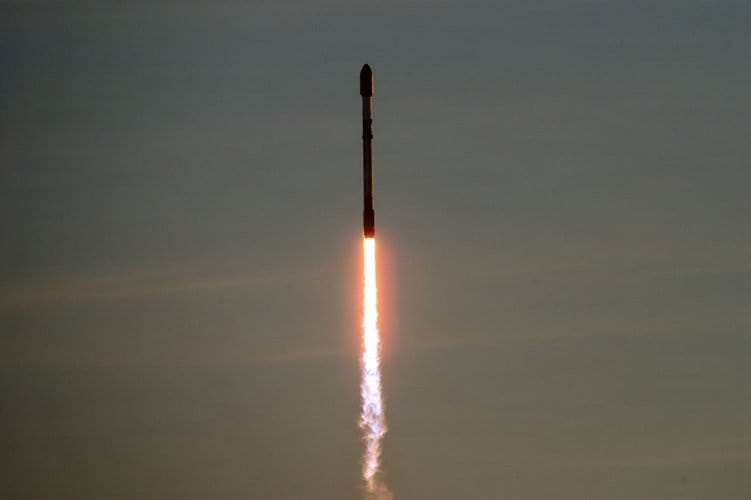
Alphabet's latest SEC filing puts a new financial figure beside one of the largest economic development agreements in Louisiana history. The numbers raise a question for Acadiana: what is the public receiving in return?
VERMILION PARISH, La. — Google's parent company, Alphabet, reported holding approximately $83.7 billion in SpaceX shares at the end of September, according to a quarterly securities filing submitted in November.
That disclosure lands just months after Louisiana announced a proposed $100 billion SpaceX launch complex in Vermilion Parish, backed by an economic development incentive package with an estimated potential value of $27.5 billion.
The two figures measure very different things. Alphabet's investment is the market value of shares it owns. Louisiana's incentive figure is largely an estimate of taxes SpaceX could avoid over decades, not a cash payment the state is handing over today.
But putting those numbers alongside each other raises a legitimate question: What public benefit justifies the scale of Louisiana's concessions to a company already capable of attracting substantial private investment?
What Google's latest filing actually shows
Alphabet's Form 13F-HR, covering the quarter ended September 30, 2026, lists 555,043,560 shares of SpaceX Class A common stock valued at $83,733,871,462. The position accounted for about 94.8% of the $88.35 billion in securities reported in that filing.
A comparison with Alphabet's previous-quarter filing shows its SpaceX holding increased by approximately 3.85 million shares during the third quarter. That is an increase in reported holdings, not necessarily proof of a particular cash purchase price or of why Alphabet acquired the additional shares.
The reported value of the position actually fell during the quarter, from about $94.2 billion at June 30 to $83.7 billion at September 30, because the per-share price fell, from $170.86 to $150.86, even as the share count rose.
Alphabet's original investment in SpaceX dates to 2015, when Google and Fidelity jointly invested about $1 billion. Reports at the time put Google's portion near $900 million. Dividing today's reported holding value by that initial amount produces a figure of roughly 93 times, but that is not a verified investment return: subsequent transactions, share changes and the company's current cost basis matter.
Crucially, Alphabet's $83.7 billion stake is not money sitting in SpaceX's bank account. A shareholder's market valuation cannot be treated as the company's available construction budget. It does, however, establish the scale of private capital tied to SpaceX.
Source: Alphabet's September 30 Form 13F-HR filing, SEC · Q2 and Q3 holdings comparison
A Google executive left the SpaceX board the same week
On November 4, 2026, Google executive Donald Harrison resigned from SpaceX's board, effective immediately, after serving since February 2015. SpaceX disclosed the departure in a Form 8-K on November 6, 2026, stating only that it was not due to any disagreement over the company's operations, policies or practices.
Elon Musk said on X that Harrison stepped down because there were "too many conflicts of interest with Alphabet," a reason no filing or company statement has elaborated on. No specific conflict has been identified anywhere.
The departure changes SpaceX's board, not Alphabet's holding, which the September 30 filing lists at 555,043,560 shares.
Source: SpaceX Form 8-K, November 6, 2026, SEC · SpaceX investor update, November 6, 2026
What Louisiana put on the table
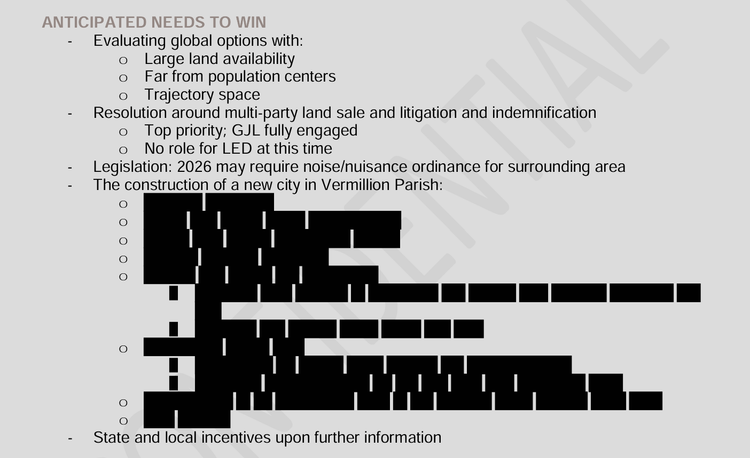
In a July 10, 2026 letter of intent for Project Osprey, Louisiana Economic Development outlined incentives potentially worth $27.544 billion, conditioned on investment, employment and other requirements. The letter describes the offer as nonbinding, with individual benefits subject to applicable approvals and contractual terms.
The estimated package included:
- $23.852 billion in potential value from a 25-year local property-tax abatement arranged through a payment-in-lieu-of-taxes agreement, or PILOT.
- $3.663 billion in potential state and local sales-and-use-tax rebates for qualifying aerospace purchases.
- Up to $25.5 million under the High Impact Jobs program, contingent on wages and job creation.
- Approximately $2.8 million in customized recruitment and training support through LED FastStart.
- A project-specific permitting coordination initiative whose cost had not yet been determined in the letter.
These are estimates of potential benefits over different periods, not proof that all $27.5 billion has been awarded, paid or realized.
Under the announced PILOT arrangement, local taxing bodies would receive $20 million upfront plus at least $25 million annually over 25 years, with scheduled increases. LED projects more than $825 million in direct local payments over the agreement's life.
State officials also project 3,000 direct jobs over ten years, averaging $92,600 annually, and approximately 8,100 indirect jobs. Those figures are forecasts and project commitments, not jobs already created.
Source: LED's Project Osprey letter of intent, July 10, 2026 (PDF) · Source: Louisiana Economic Development's SpaceX project FAQ
The difference between a project worth having and a deal worth signing
An investment on the scale SpaceX has announced could create valuable jobs, purchases from local contractors, increased economic activity and new revenue for public bodies. Louisiana has reason to compete for major employers, particularly when a project could establish an entirely new industry in Acadiana.
The question is not whether those benefits exist. It is whether they outweigh the public revenue forgone and the costs communities must absorb.
The largest element of the incentive package is not a state grant. It is estimated property-tax revenue that local authorities would otherwise potentially collect under the assumptions used to value the exemption. That distinction matters because property taxes ordinarily support local government, schools and other services. It also matters because a long-term estimate of foregone taxes depends on how the project's property would otherwise be assessed and taxed.
The public therefore needs more than an investment announcement and a job forecast. It needs an accessible fiscal analysis showing the assumptions behind the $23.852 billion abatement estimate, the alternative tax scenarios, the cost of roads and services, and the enforceable remedies if construction, jobs or payroll fail to materialize on schedule.
Transparency is already being challenged in court
The economic debate arrives amid a separate legal dispute over how the local agreement was approved.
Three Vermilion Parish residents and a nonprofit have sued parish officials, alleging violations of Louisiana's open meetings law in the run-up to the SpaceX deal. The plaintiffs seek relief that could affect the PILOT agreement. The allegations have not been established as findings of fact, and the lawsuit does not itself invalidate the agreement.
According to reporting distributed by the Associated Press, the lawsuit challenges meeting notices and procedures involving the Vermilion Parish Police Jury and Industrial Development Board. The plaintiffs say they are seeking transparency rather than an end to the spaceport project.
Source: The Current reporting distributed by the Associated Press
What Acadiana should ask next
The latest Alphabet filing does not prove SpaceX could finance its Louisiana facility without incentives. Nor does it prove Louisiana negotiated a bad deal. There is no responsible way to draw either conclusion from a shareholder's portfolio alone.
It does make the public-interest questions harder to dismiss:
- What is the independent, publicly accessible analysis showing why this level of tax relief was necessary to secure the project?
- How much of the estimated $27.5 billion will ultimately be realized, and which benefits are subject to performance requirements or clawbacks?
- What are the enforceable commitments for local hiring, payroll, infrastructure and environmental protections, and who verifies compliance?
- How will Vermilion Parish's schools, sheriff and other taxing bodies compare financially under the PILOT versus a reasonably modeled alternative tax arrangement?
- What costs or risks remain with residents and taxpayers, even if SpaceX pays for its own electricity generation and other project-specific infrastructure?
Alphabet's reported holdings demonstrate that SpaceX operates in a financial ecosystem with access to substantial private capital. Louisiana's incentive proposal demonstrates how much public revenue the state and parish are prepared to forgo to compete for the project.
The question for Acadiana is not whether SpaceX is valuable to its investors. It is whether the agreement is equally valuable to the people who will live with it for the next 25 years.
Related reporting
The Starbase Land Rush: Who Gets to Profit From Louisiana's Next Industrial Frontier?
Project Osprey: What Happened Before Starbase Louisiana Was Announced
Sources and primary records
- U.S. SEC: Alphabet Inc., Form 13F-HR, quarter ended September 30, 2026 — original filing and holdings table.
- Alphabet's Q2/Q3 SpaceX holdings comparison, FourWeekMBA, November 7, 2026 — share count comparison.
- Louisiana Economic Development: July 10, 2026 Project Osprey letter of intent (PDF) — incentive estimates, conditions and employment schedule.
- Louisiana Economic Development: SpaceX in Louisiana FAQ — local payments, job projections and project timeline.
- Louisiana Illuminator: SpaceX sweeteners, September 1, 2026 — reporting on LED's proposed incentive package.
- The Current / Associated Press: Louisiana residents sue to unwind SpaceX tax deal — allegations and procedural controversy.
- U.S. SEC: SpaceX, Form 8-K, November 6, 2026 — Donald Harrison board resignation disclosure.
- SpaceX investor update: SpaceX Thanks Don Harrison for His Service on the Board, November 6, 2026 — company statement on the departure.

Member discussion
337.NEWS discussion
Join the conversation.
Sign up to comment on this story and follow the local reporting behind it.