Elon Musk Says SoftBank Is Defaulting on Turbine Orders. Why Should Louisiana Care?
UPDATE: November 10, 2026 | SoftBank Reports $7 Billion Loss as U.S. Data-Center Costs Mount
The financial risks behind America's artificial intelligence infrastructure expansion are becoming harder to ignore.
On November 10, Japanese investment giant SoftBank reported a quarterly net loss of approximately $7 billion, compared with a roughly $15.8 billion profit during the same period last year.
Particularly significant was a $3.7 billion loss tied to advance equipment payments for American data-center projects, including a massive development in Pike County, Ohio.
According to Reuters, SoftBank committed to purchasing power-generation equipment before long-term project specifications were finalized. When those plans changed, some payments could not be recovered. The company says future equipment purchases could generate rebates of up to $2.1 billion.
Meanwhile, SoftBank's quarterly financing costs more than doubled to approximately 462 billion yen.
Why Louisiana Should Pay Attention
This development adds an important financial dimension to Louisiana's rapidly expanding conversation about artificial intelligence, private power generation, and industrial infrastructure.
The companies proposing enormous data centers need electricity, turbines, transmission infrastructure, financing, and customers willing to pay enough to justify those investments.
SoftBank's experience demonstrates that even extraordinarily well-capitalized companies can incur multibillion-dollar losses when infrastructure commitments outpace finalized project plans.
That does not establish that Louisiana's proposed projects will fail. Nor does it mean SoftBank has abandoned its AI strategy.
It does, however, raise questions that Louisiana regulators, utilities, and local officials should be asking before making long-term commitments:
- Who absorbs the losses if a planned facility is downsized, delayed, or canceled?
- Who owns equipment purchased specifically to serve a project that never materializes?
- Are proposed power-generation investments supported by enforceable customer commitments?
- Could local ratepayers or taxpayers become exposed to infrastructure costs if projected demand fails to materialize?
These questions are especially relevant as Louisiana evaluates large-load electricity demand, privately developed generation facilities, and the economic promises accompanying proposed data centers.
The central issue is no longer whether companies are willing to spend billions building AI infrastructure. It is whether the eventual economic returns will justify those commitments, and who bears the financial consequences when they do not.
Sources
- SoftBank Group: November 10, 2026 Earnings Results
- Reuters: SoftBank Books $7 Billion Quarterly Loss
- 337.NEWS Louisiana Public Records Repository
Elon Musk posted on X on Friday, Nov. 6, 2026: "SoftBank is defaulting on their turbine orders."
Musk gave no evidence with the post. He did not name a turbine manufacturer, a project, a supplier, or an amount. SoftBank has not commented on the claim. No turbine maker has confirmed it.
The post was a reply to a post by Katie Miller, a conservative podcast host who previously worked as an adviser to Musk. Miller's post revived Musk's long-running doubts about financing for Stargate, the $500 billion data center venture announced with OpenAI and Oracle at the White House in January 2025.
Miller also shared a report that ING Groep NV is trying to sell about $500 million of loans it made to data center developers, including about $25 million tied to a Stargate site in New Mexico backed by SoftBank, OpenAI, and Oracle. Oracle has sent that site's developer a force majeure notice seeking to put off rent payments if the project misses its planned 2028 opening. Oracle says the project remains on schedule.
That loan sale and that force majeure notice are separate facts. Neither confirms a turbine default.
The Ohio project Musk did not name
Musk did not say the turbine orders were for Ohio. The Ohio project is relevant because it is the SoftBank-linked project most directly tied to gas turbines.
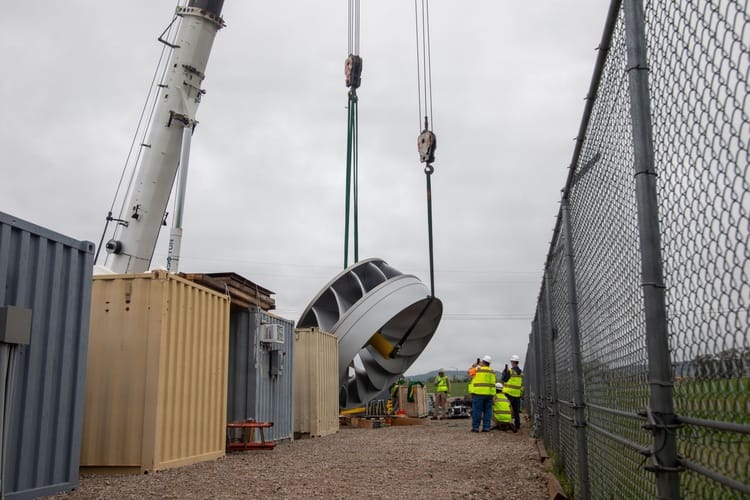
SoftBank's U.S. energy business, SB Energy, is planning a 9.2-gigawatt gas-fired power project in Piketon, Ohio, to power a 10-gigawatt data center. The project was announced March 20, 2026, with a reported $33 billion investment. SB Energy said all turbines for the project had been ordered, with the first deliveries expected within a year and the remaining turbines delivered by the end of the decade.
In May 2026, SoftBank confirmed it had reserved turbines from manufacturers including GE Vernova Inc. The first buildings, leased to OpenAI, are due to open in 2028. A filing by SB Energy warned that delays in getting electricity could push back openings, cost rental income, and possibly lead to financial penalties.
Turbines are one of the tightest bottlenecks in the AI buildout. Wait times for new gas turbines can stretch to seven years, according to S&P Global.
Musk's own companies compete for the same equipment. They have scrambled for turbines to run the Colossus data centers in Memphis, Tennessee, and in September 2026 Musk said gas turbines were sold out through 2030.
What happened in the market on Nov. 6
SoftBank shares fell 10.8 percent in Tokyo on Friday, Nov. 6. The cost of insuring SoftBank's debt against default rose to 466 basis points on Friday, its highest level since October 2022. SoftBank founder Masayoshi Son lost about $3.9 billion in the day, cutting his fortune to about $29 billion, according to the Bloomberg Billionaires Index.
Those moves happened on the same day as Musk's post, during a broader sell-off in AI and chip stocks that began on Wall Street on Thursday, Nov. 5. The Nasdaq Composite fell 5.5 percent on Thursday and the Philadelphia Semiconductor Index lost more than 12 percent. The share move alone does not establish that a default occurred.
Musk has questioned Stargate financing before. In January 2025, shortly after the $500 billion announcement, Musk said the partners did not have the money and that SoftBank had well under $10 billion secured. OpenAI CEO Sam Altman disputed him publicly at the time.
The Louisiana connection: SoftBank, DigitalBridge, and the LPSC
SoftBank completed its acquisition of DigitalBridge on Sept. 30, 2026, paying approximately $3.1 billion for all outstanding common stock. DigitalBridge became a controlled subsidiary of SoftBank and continues to operate as a separately managed platform led by Marc Ganzi.
The original announcement on Dec. 29, 2025, described an approximately $4.0 billion enterprise value. Enterprise value and the equity purchase price are different measures.
Months before the closing, Louisiana's utility regulator opened a proceeding directly related to the ownership structure.
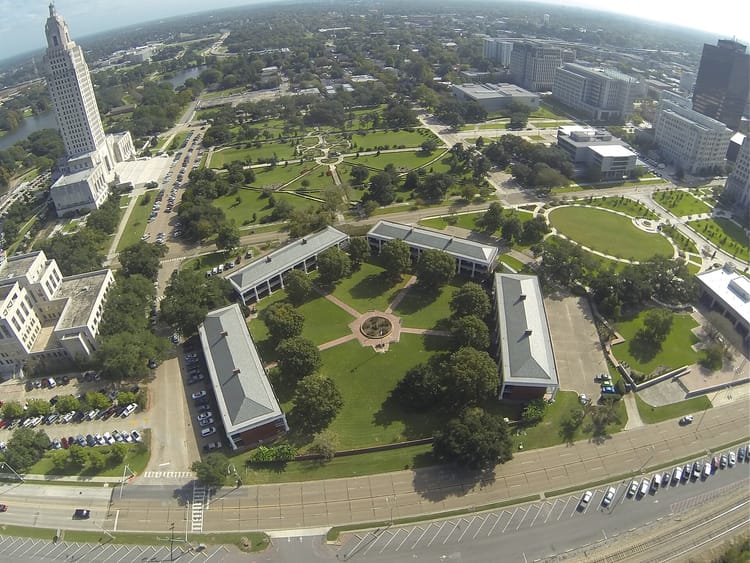
Louisiana Public Service Commission Docket S-37865 opened March 9, 2026, and is now closed. The docket was published March 13, 2026. It concerned a Section 301(M) notice of an indirect transfer of control of the Zayo licensees from DigitalBridge to Duncan Holdco LLC.
The companies listed in the docket are DigitalBridge Group, Inc., Fiber AssetCo LLC, Zayo Group, LLC, Zayo Network Services, LLC, and Duncan Holdco, LLC. Duncan Holdco is an indirect wholly owned subsidiary of SoftBank Group Corp., established as a vehicle for SoftBank investments in the United States.
Zayo operates telecommunications network infrastructure, including services subject to Louisiana regulation. The proceeding documents the Louisiana regulatory relevance of the ownership transaction.
The key point is specific. SoftBank's acquisition intersects with a telecommunications ownership matter filed at the LPSC. That does not mean the company is buying turbines for Louisiana, operating a Louisiana AI campus, or defaulting on obligations to any Louisiana utility.
Elon Musk's Louisiana connection
Musk's connection to Louisiana is more visible.
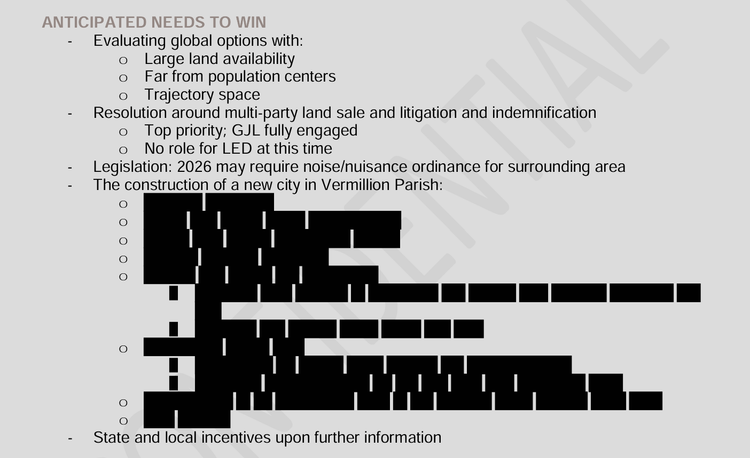
SpaceX and Louisiana officials announced plans on Aug. 25, 2026, for Starbase Louisiana, a launch complex on approximately 125,000 acres near Pecan Island in Vermilion Parish. SpaceX plans to invest $100 billion. Louisiana Economic Development projects 3,000 direct jobs over ten years, with an average annual salary of $92,600, plus about 8,100 indirect jobs.
Construction is expected to begin by the end of 2027, with the first Starship launch targeted for as early as 2029. Those are projections, not completed improvements.
The SpaceX proposal and SoftBank's investments are separate. There is no established link between Musk's allegation about SoftBank turbine orders and power equipment planned for Starbase Louisiana.
What connects the two companies in a Louisiana news story is their scale, their reliance on industrial infrastructure, and their direct presence in the state's economic and regulatory conversation.
What Louisiana officials should be watching
Louisiana is actively courting major investments in data centers, industrial facilities, energy infrastructure, telecommunications, and aerospace. The proposed spending often reaches billions of dollars, with projected jobs and tax revenue used to justify public policy decisions.
Those projections are not the same as completed construction or guaranteed economic returns.
A company's financial obligations, the availability of generation equipment, the schedule for utility expansion, and the allocation of financial risk all deserve scrutiny when public officials evaluate a development.
Residents can reasonably ask:
- What evidence establishes that a proposed developer can finance the complete project?
- Who pays if new generation or transmission infrastructure is built and the project is delayed or canceled?
- What protections prevent costs from shifting to utility customers or taxpayers?
- Which announced commitments are legally binding, and which remain projections?
Those questions apply regardless of whether Musk's allegation ultimately proves accurate.
The bottom line
Musk's statement is newsworthy because it comes from a major industry figure and names one of the largest financial backers of the American AI buildout. It remains an allegation, not an established default.
For Louisiana, the story has two concrete points of relevance: SoftBank's acquisition of DigitalBridge is reflected in a Louisiana Public Service Commission telecommunications proceeding, and Musk's SpaceX has proposed a development requiring enormous supporting infrastructure in Vermilion Parish.
The companies' projects are not interchangeable. But both reinforce the same question now confronting public officials across Louisiana: when private developments make extraordinary infrastructure promises, who bears the consequences if the money, equipment, or timelines fail to materialize?
Related reporting
If a Data Center Builds Its Own Power Grid, Who Pays When Things Go Wrong?
Sources
- Elon Musk post on X, Nov. 6, 2026, in reply to Katie Miller: "SoftBank is defaulting on their turbine orders."
- Bloomberg, via Billionaires Africa, Nov. 6, 2026: "Billionaire Elon Musk says SoftBank defaulting on turbines"
- Reuters, Nov. 5, 2026: "ING puts $500 million of data-center loans up for sale, Bloomberg News reports" (Bloomberg original, Nov. 6: "ING Said to Be Seller of $500 Million Data Center Loans")
- SoftBank Group Corp., Sept. 30, 2026: "Completion of Acquisition of DigitalBridge"
- Louisiana Public Service Commission, Docket S-37865, opened March 9, 2026, closed, published March 13, 2026: LPSC Docket S-37865
- OpenAI, Jan. 21, 2025: "Announcing the Stargate Project"
- Louisiana Economic Development, Aug. 25, 2026 announcement of Starbase Louisiana, as reported by 337.news and other outlets
- S&P Global, via Bloomberg: wait times for new gas turbines can stretch to seven years
Editorial disclosure: Musk's reported statement is presented as an allegation. No Louisiana turbine default is alleged or established. The LPSC connection concerns telecommunications ownership, not turbine procurement. The Ohio project is included because it is the SoftBank-linked project tied to gas turbines in public reporting. Musk did not name Ohio, a supplier, a project, or an amount.

Member discussion
337.NEWS discussion
Join the conversation.
Sign up to comment on this story and follow the local reporting behind it.