Washington Just Loaned $480 Million to Revive 22 Oil Platforms Off Louisiana. Who Carries the Risk?
November 10, 2026 | 337.NEWS | Energy & Industry
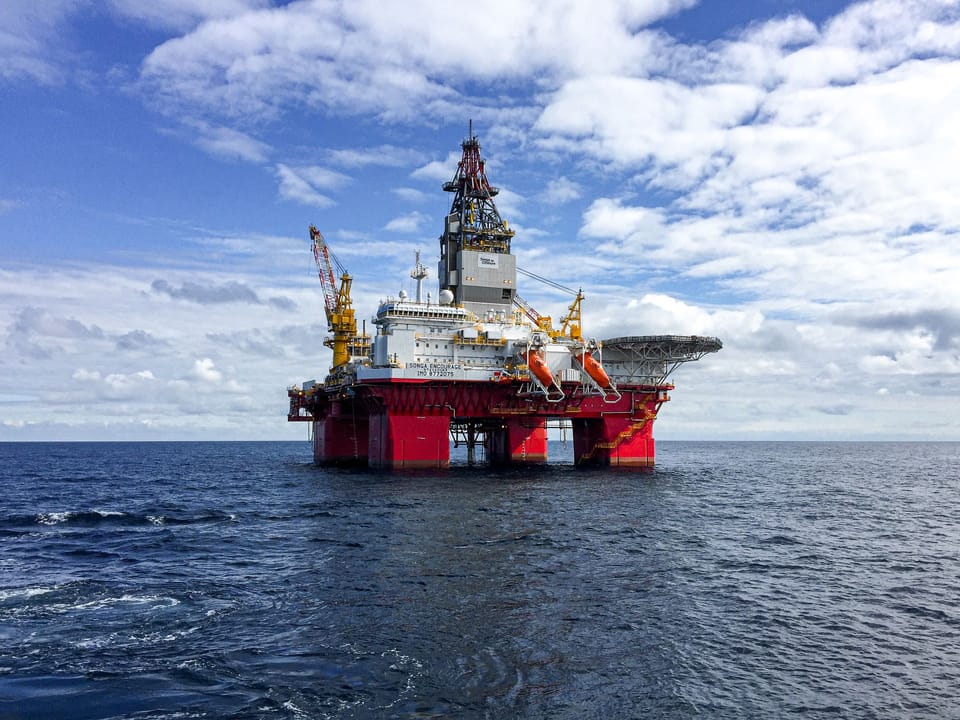
The federal government has finalized a $480 million loan to a private energy company to restore and expand offshore oil and natural gas production off Louisiana's coast.
The U.S. Department of Energy announced Tuesday that Arena Energy's Project Elkhorn will modernize 22 offshore platforms in the Southern Eugene Island area of the Gulf of Mexico.
The project could eventually add as much as 38,600 barrels of oil and 77 million cubic feet of natural gas per day to domestic production.
Federal officials are presenting the investment as a victory for American energy independence, job creation, and government revenue.
But the announcement also raises a question worth asking whenever hundreds of millions of federal dollars are committed to a private industrial project:
If the investment is expected to generate billions of dollars, why did it need a $480 million federal loan to move forward?
What the federal government is financing
The recipient is Elkhorn Offshore, LLC, a wholly owned subsidiary of Texas-based Arena Energy.
Rather than building an entirely new offshore development, Arena intends to redevelop existing infrastructure in the Southern Eugene Island area.
The work includes restoring inactive production platforms, upgrading processing equipment, increasing oil and gas handling capacity, and constructing natural gas pipeline connections.
The objective is to extend the productive life of mature offshore fields that Arena believes still contain commercially recoverable reserves.
According to the Department of Energy, the investment is expected to produce approximately 125 million additional barrels of oil and 250 billion cubic feet of natural gas over the project's operating life.
Those are projections, not guaranteed production volumes.
Arena currently produces approximately 30,000 barrels of oil daily from its Gulf operations, according to the department.
Project Elkhorn could therefore represent a substantial expansion of the company's existing offshore production.
Why does a private oil company need federal financing?
This is where the story becomes more complicated.
The Department of Energy's financing office was originally established to help energy projects overcome barriers to private financing.
Under the Trump administration, the office, now operating as the Office of Energy Dominance Financing, has expanded its emphasis on conventional energy production and existing infrastructure.
Project Elkhorn represents the department's first completed loan specifically supporting domestic oil and natural gas production.
Arena CEO Mike Minarovic said the project needed long-term capital to match the opportunity, and that the DOE financing delivers that capital.
That does not necessarily mean the projects are unprofitable.
Mature offshore infrastructure can require substantial upfront expenditures, while future revenues depend on commodity prices, production performance, operating costs, and the remaining productive life of the fields.
Private lenders may consider those risks unattractive even when operators believe the underlying resources remain valuable.
Federal financing can make redevelopment possible by providing capital on terms that commercial lenders may be unwilling to offer.
But that introduces another consideration.
When the government steps in because private capital is reluctant, taxpayers deserve to know precisely which risks the government has agreed to accept.
The $1.6 billion royalty projection needs context
Arena Energy estimates that Project Elkhorn will generate approximately $1.6 billion in additional federal royalties over its operating life.
The company describes that projected amount as more than three times the value of the federal loan.
At first glance, that sounds like an extraordinary return.
But federal royalty revenue and loan repayment are two different financial transactions.
Royalties are payments associated with producing oil and natural gas from federal mineral leases. They are generally owed regardless of whether a company financed its development through a private bank or a government-backed arrangement.
The federal government may receive those royalties because the resources are produced, not simply because it provided the loan.
Consequently, the projected $1.6 billion cannot automatically be treated as a $1.6 billion financial return on the $480 million financing.
Evaluating the actual lending arrangement requires additional information, including its interest rate, repayment schedule, credit protections, and the likelihood of repayment.
It also requires determining how much of the projected production would have occurred without federal financing.
The project may ultimately prove financially beneficial to the government.
But projected royalties alone do not establish that the loan is profitable or free of taxpayer risk.
What happens if the platforms stop producing?
There is another issue associated with extending the operating lives of mature offshore facilities.
Eventually, oil and natural gas wells must be plugged, and offshore infrastructure must be decommissioned.
Those obligations can be expensive.
Arena says it has decommissioned more than 300 wells and 45 platforms and other structures since its founding in 1999.
That history demonstrates that the company has experience performing such work.
However, Project Elkhorn is intended to prolong production from existing facilities, making the project's eventual retirement obligations relevant to any evaluation of long-term financial risk.
Industry reporting indicates that future drilling, routine operations, plugging and abandonment, and decommissioning are outside the scope of the federally financed improvements.
The Bureau of Ocean Energy Management and Bureau of Safety and Environmental Enforcement retain their regulatory authority over offshore operations.
That separation is important.
The federal loan finances infrastructure improvements. It does not, by itself, eliminate the operator's environmental or decommissioning responsibilities.
The relevant questions are whether the appropriate financial assurances remain in place, how those obligations are secured, and what happens if an operator becomes unable to pay.
There is no evidence in Tuesday's announcement that Arena is currently unable to meet those obligations.
But federal financing makes the structure of those protections a legitimate matter of public interest.
What does Louisiana actually receive?
The Department of Energy says the project will support 2,800 jobs.
That figure consists of approximately 2,400 construction-related positions and 400 operations jobs.
Those categories matter.
Construction employment is generally associated with the development and rehabilitation phase of a project, while operations employment is associated with its continuing activity.
Neither the federal announcement nor Arena's release establishes that all 2,800 positions will be permanent Louisiana jobs.
Both the location of employment and the duration of the positions would need to be verified.
The project could nevertheless benefit Louisiana's offshore workforce, marine transportation businesses, industrial suppliers, fabrication contractors, and service companies.
Arena has identified White Fleet Drilling and Rosefield Pipeline as affiliated partners involved in executing the work.
But the proportion of spending that ultimately remains in Louisiana has not been established by the announced project totals.
There is also an important difference between federal and state revenue.
Much of the projected $1.6 billion in royalties is described as federal revenue. That does not mean Louisiana will receive $1.6 billion in state revenue.
Federal offshore revenue-sharing arrangements may provide benefits to eligible coastal states, but the actual amounts and their relationship to this project require separate analysis.
A project located off Louisiana's coast is not automatically equivalent to an investment whose full economic value remains in Louisiana.
A broader change in federal energy policy
Project Elkhorn also signals a shift in how Washington is using federal energy financing.
For years, much of the public discussion surrounding the Department of Energy's lending programs focused on renewable energy, electric vehicles, batteries, and emerging technologies.
The department is now using that financing capacity to support additional oil and natural gas production.
Supporters argue that mature energy fields should not remain idle simply because traditional lenders are reluctant to finance redevelopment.
They point to domestic production, energy security, employment, and royalties as potential public benefits.
Critics can reasonably question whether financially viable private oil and gas developments should receive federal financing, particularly when the industry already operates in a profitable commercial market.
The relevant policy question is not whether oil and natural gas production benefits the economy.
It is whether this particular financing arrangement produces public benefits sufficient to justify its costs and risks, compared with alternatives.
That question cannot be answered by production forecasts alone.
What the public still needs to know
The Department of Energy and Arena have confirmed the loan's financial closing, project scope, anticipated production, and employment projections.
However, their November 10 announcements do not provide a complete public accounting of the financing terms.
Several questions remain important:
- What interest rate, maturity date, and repayment schedule govern the $480 million loan?
- What collateral and financial guarantees protect the federal government if Elkhorn Offshore defaults?
- How much of the financing is expected to be disbursed, and under what conditions?
- What assumptions support the $1.6 billion royalty projection, including oil and natural gas prices?
- How much of the projected employment and contract spending will actually benefit Louisiana workers and businesses?
- What financial assurances cover the eventual plugging, abandonment, and removal of offshore facilities?
Those questions do not establish wrongdoing or suggest that the loan was improperly awarded.
They are basic questions about public financing.
The bottom line
Washington has committed $480 million in financing to a private energy company's effort to revive aging offshore infrastructure near Louisiana.
The project promises additional domestic energy production, thousands of construction and operations jobs, and substantial federal royalty revenue.
Those benefits could be significant.
But the size of the projected economic impact should not substitute for scrutiny of the agreement itself.
A $480 million federal loan is not the same as a $480 million grant, and it is not automatically a $480 million taxpayer loss.
It is a financial obligation that must be repaid under terms the public deserves to understand.
Until those terms and the underlying risk protections are examined, claims about the project's return to taxpayers remain incomplete.
Louisiana has spent generations supplying the nation's energy needs.
It is reasonable to ask how much of the value from this latest investment will reach the state, its workers, and its coastal communities.
And it is equally reasonable to ask who pays if the projections fall short.
Sources and public records
- U.S. Department of Energy: $480 Million Project Elkhorn Loan Announcement, November 10, 2026
- Arena Energy: Official Project Elkhorn Financing Announcement, November 10, 2026
- Offshore Magazine: Project Elkhorn Development Scope and Financing Structure
- 337.NEWS Louisiana Public Records Repository
Editorial note: Financial, production, royalty, and employment estimates are projections attributed to the Department of Energy and Arena Energy. The available announcements do not independently establish their eventual realization. This report will be updated as additional financing and regulatory records become available.




Member discussion
337.NEWS discussion
Join the conversation.
Sign up to comment on this story and follow the local reporting behind it.