Congress Wants to Make Industrial Projects Easier to Approve. Louisiana Landowners Should Be Paying Attention.
Opinion & Analysis | 337.NEWS | November 20, 2026
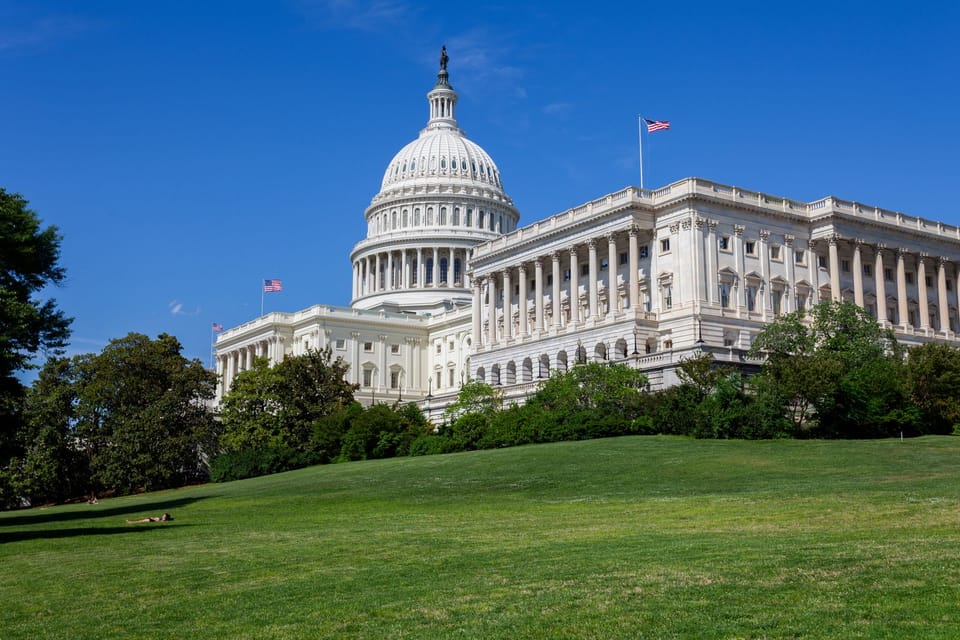
Louisiana is already wrestling with industrial expansion, proposed data centers, pipelines, solar developments, and questions about how much influence ordinary citizens have over projects coming to their communities. Now Congress is considering legislation that could change how some of those projects receive federal approval.
On November 19, the United States Senate passed H.R. 2347, as amended, by a vote of 62–33. Louisiana Senator John Kennedy voted yes. Senator Bill Cassidy did not vote.
The Senate passed the bill through a substitute amendment, S.Amdt. 6883, which replaced the original text with the Bipartisan American Affordability and Jobs Act of 2026. The bill's official title on Congress.gov still reads as the Survivor Justice Tax Prevention Act.
The legislation promises faster infrastructure development and greater certainty for businesses seeking federal permits.
But I have a different concern.
I believe this is a substantial victory for big industry, potentially purchased at the expense of the citizens and landowners who will have to live with the consequences of those projects.
And in Louisiana, that deserves considerably more attention than it is receiving.
The bill has not yet become federal law.
What H.R. 2347 could change
The Senate-approved proposal would change federal permitting procedures for certain infrastructure and energy projects. Its potential implications include shorter environmental review timelines, changes to judicial challenges, and greater stability for some federal authorizations.
That might sound like bureaucratic housekeeping.
It isn't.
Environmental reviews and judicial challenges are among the mechanisms communities can use to examine whether a proposed project complies with federal law. They do not guarantee residents will prevail, but they provide opportunities to identify risks, question decisions, and seek judicial review when an agency allegedly fails to follow the law.
For developers, faster approvals can mean fewer delays and lower costs.
For neighboring landowners, shorter timelines and narrower legal remedies may mean fewer opportunities to contest decisions before construction begins.
My objection is not to faster government. It is to making government faster by reducing the public's ability to hold it accountable.
Louisiana is already living this debate
Across Louisiana, residents are confronting questions surrounding solar developments, industrial facilities, data centers, electrical infrastructure, and projects requiring extensive land and natural resources.
These projects can bring investment and employment opportunities. They can also raise legitimate concerns involving water consumption, noise, land use, environmental effects, utility bills, and neighboring property interests.
For residents, understanding a project's footprint may require reviewing multiple applications, permits, and technical studies. The documents can be difficult to find, and their significance is not always immediately obvious.
That is why procedural protections matter.
A developer may have engineers, attorneys, consultants, and regulatory specialists working for months or years.
A neighboring landowner may have only a public notice, an unfamiliar permit number, and limited time to determine what it means.
Those two parties are not entering the permitting process with equal resources.
H.R. 2347 would not automatically govern every Louisiana industrial project. Its direct effects would depend on the applicable federal authorizations and the final statutory language. State and local requirements do not simply disappear.
But where federal approvals are involved, changes to the federal process deserve careful scrutiny.
When did a landowner's right to object become an obstacle?
Developers need certainty. Investors need predictability. Projects cannot be delayed indefinitely.
I understand those arguments.
I also understand that someone may own property for generations before a corporation decides the surrounding land would make an ideal location for a pipeline, transmission corridor, industrial facility, or power plant.
That landowner did not necessarily ask for the development. They may receive no direct benefit from it. They may have concerns about their property, water, surroundings, or ability to enjoy the land they own.
Yet the national conversation frequently describes permitting delays primarily as a business problem.
What about the resident who needs time to understand an application? What about the landowner who believes an agency overlooked something? What about the community seeking to examine environmental effects before a permit is granted?
Are those people creating unnecessary delays, or exercising rights that exist for a reason?
There is a distinction between eliminating redundant paperwork and making it harder for citizens to challenge government decisions.
We should not pretend they are always the same thing.
Senator Kennedy voted yes. Louisiana deserves an explanation.
Senator John Kennedy voted for H.R. 2347 as amended on November 19, 2026. Senator Bill Cassidy was recorded as not voting. The Senate passed the measure 62–33.
The vote establishes Kennedy's support for the legislation. It does not, on its own, establish his personal motivations.
But Kennedy represents a state where industry is economically important, and where farmers, homeowners, and rural landowners may live beside the projects that industry proposes.
Those responsibilities are not mutually exclusive.
Still, his vote raises questions Louisiana constituents are entitled to ask:
- What safeguards protect landowners who believe a project threatens their property?
- How much time will affected residents have to examine federal decisions and challenge alleged violations?
- When a federal permit is issued on incomplete or flawed information, what remedies remain?
- When industry demands certainty, what prevents that certainty from undermining meaningful public accountability?
Those questions deserve substantive answers.
Consumers should know about potential benefits, too
The legislation has also been described as including measures intended to address the infrastructure costs associated with large data centers, so that those costs are not simply shifted onto residential electricity customers.
That objective is important in Louisiana, where utilities and regulators are considering how to accommodate large industrial electrical loads.
Supporters also argue that faster development of generation and transmission infrastructure can improve capacity and reliability.
Those potential benefits deserve fair consideration. But a provision aimed at protecting ratepayers does not automatically resolve concerns about environmental review, property impacts, or access to the courts.
A bill can contain worthwhile consumer protections and still warrant serious criticism.
Permitting reform is not the same as eliminating property rights
H.R. 2347 should not be described as automatically authorizing corporations to seize private property. Federal permitting reform and eminent domain are separate legal issues, although they may intersect in certain projects.
Likewise, changes to federal environmental review would not automatically eliminate constitutional property protections or independent state-law remedies.
But the ability to enforce a right can depend on adequate notice, access to documents, enough time to act, and the resources to seek relief.
A legal remedy may remain available on paper while becoming harder for an ordinary person to use.
That is a legitimate issue for lawmakers to address.
My position: Economic development should not require citizens to surrender leverage
I am not opposed to industrial growth.
Louisiana needs investment, competitive industries, reliable infrastructure, and economic opportunities.
But I reject the idea that those objectives should automatically require narrowing the public's ability to scrutinize government and industry.
Corporations already hold substantial advantages in the development process. They have capital. They hire professional representatives. They commission studies and negotiate agreements long before many residents know what is proposed.
Ordinary citizens rarely have comparable resources.
Public notice requirements, environmental review, and judicial oversight provide some measure of accountability within that imbalance. They are not designed solely for the convenience of developers.
In my opinion, H.R. 2347 puts too much emphasis on making development easier and not enough on ensuring that affected people retain meaningful ways to protect their interests.
That is why I see it as a win for major industry that could come at the expense of citizens.
Not because every project is harmful. Not because every developer is dishonest. And not because Louisiana should stop developing its economy.
But because accelerating approvals while narrowing opportunities for challenge risks amplifying an existing imbalance in resources and influence.
We should be able to build infrastructure without treating meaningful public oversight as an inconvenience to be legislated away.
The legislative process is not finished
As of November 20, 2026, the Senate's passage does not make H.R. 2347 federal law. The House must act on the Senate-amended legislation, and the measure must complete the constitutional legislative process.
For Louisiana residents, the question is not simply whether industrial development should happen. It is whether Congress can make development more efficient without undermining the public's capacity to examine, question, and challenge federal decisions.
A corporation's need to build something quickly is not the same thing as the public's obligation to accept it without meaningful scrutiny.
And when Louisiana's elected representatives vote to change that balance, Louisiana deserves to know what its citizens may be giving up.
Sources and public records
- U.S. Senate Roll Call Vote No. 270, November 19, 2026
- H.R. 2347, Congress.gov
- 337.NEWS Louisiana Public Records Repository
Editor's note: This article combines legislative reporting with the author's opinion about industrial development, property rights, and public accountability. The effects on individual Louisiana projects depend on applicable federal authorizations and any final enacted language.




Member discussion
337.NEWS discussion
Join the conversation.
Sign up to comment on this story and follow the local reporting behind it.