FERC Approves Major LNG Expansion in Cameron Parish, With Pipeline Infrastructure Extending Into Beauregard and Southeast Texas
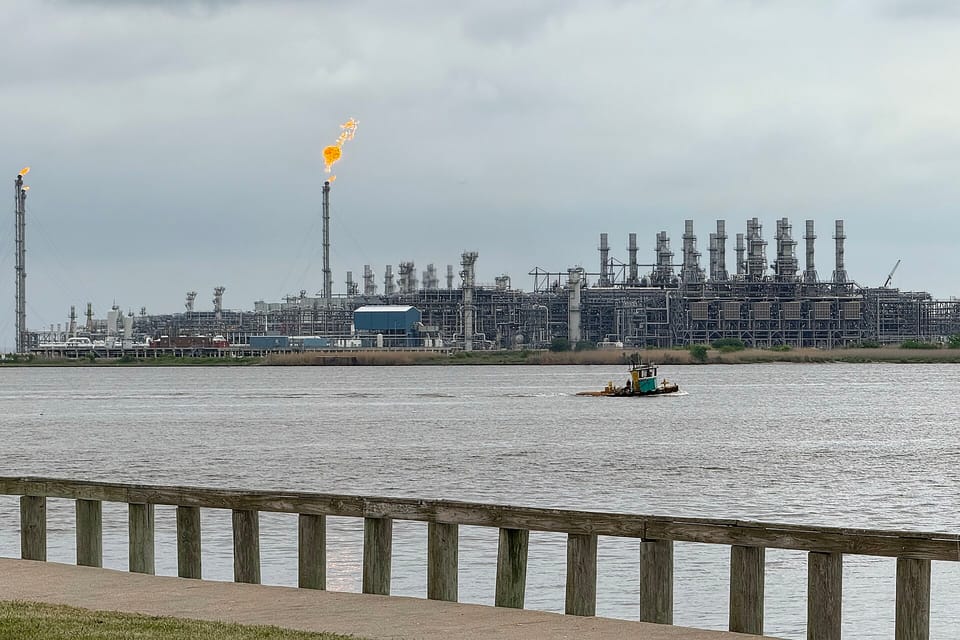
CAMERON PARISH, La. | November 19, 2026
The federal government has cleared another major hurdle for Louisiana's expanding liquefied natural gas industry.
On Thursday, November 19, the Federal Energy Regulatory Commission (FERC) announced its approval of the Sabine Pass Stage 5 expansion and associated natural gas pipeline infrastructure.
The authorization covers three additional LNG liquefaction trains at the existing Sabine Pass export facility, an expansion of the Creole Trail Pipeline system, and the proposed Sabine Crossing Pipeline.
For Southwest Louisiana, the significance extends well beyond the LNG terminal itself.
The project involves infrastructure stretching through Cameron Parish, into Beauregard Parish, and across the Louisiana-Texas state line.
And while much of the public conversation surrounding LNG development focuses on investment and jobs, the federal permitting documents reveal something equally important: the physical infrastructure required to move enough natural gas to support that expansion.
The LNG terminal is only part of the project
Liquefied natural gas facilities cannot operate without an enormous supply of natural gas.
Before that gas can be cooled, liquefied, stored, and loaded onto export vessels, it must travel through an extensive network of pipelines and compressor stations.
The Sabine Pass expansion involves more than constructing additional processing equipment at an existing industrial facility.
The associated infrastructure includes a proposed 55.6-mile, 48-inch-diameter natural gas pipeline crossing portions of Southeast Texas and Louisiana.
Federal environmental-review materials also identify the proposed Tarpon Compressor Station in Cameron Parish and expansion of the Gillis Compressor Station in Beauregard Parish.
These facilities are essential components of the larger natural gas transportation system.
They also introduce considerations that do not necessarily receive the same attention as the LNG terminal: pipeline rights-of-way, land disturbance, construction traffic, compressor-station operations, and the long-term industrial use of affected properties.
For landowners along the proposed corridor, the location and configuration of that infrastructure may be considerably more relevant than the headline investment associated with the export terminal.
Beauregard Parish is part of the expansion, too
One of the more consequential details for inland Southwest Louisiana is the planned expansion of the existing Gillis Compressor Station.
According to the September 30 Federal Register notice, the project includes two additional compressor packages rated at 23,470 horsepower each at the Gillis facility.
That represents 46,940 horsepower of additional compressor equipment at a facility in Beauregard Parish.
The proposed Tarpon Compressor Station in Cameron Parish would contain another 52,500-horsepower compressor package.
Across the state line, the proposed Hamshire Compressor Station in Texas would include four compressor packages rated at 52,500 horsepower each, totaling 210,000 horsepower.
These figures describe equipment capacity, not electricity consumption or measured noise levels. But they illustrate the scale of the infrastructure required to support additional LNG exports.
For surrounding property owners, compressor stations can raise questions about operational noise, air emissions, maintenance activity, and future industrial development.
Those questions deserve examination through the project's environmental documents and applicable permits rather than assumptions about what the facilities will ultimately produce.
Federal regulators acknowledged permanent environmental effects
The final environmental impact statement, publicly noticed September 30, reached a conclusion that deserves attention.
FERC staff determined that most environmental effects would be temporary or short-term during construction.
However, the agency also acknowledged that some long-term and permanent effects would occur involving wetlands, forested lands, visual resources, and air quality.
The agency concluded that the overall effects would be less than significant with the implementation of proposed avoidance, minimization, and mitigation measures and recommended environmental and engineering conditions.
That is an important qualification.
The federal environmental review did not conclude that the project would have no environmental consequences. It concluded that the identified consequences could be managed to an acceptable level under the proposed safeguards.
Whether those safeguards are implemented as required will become a matter of regulatory compliance and oversight.
And the September environmental review was not itself an authorization.
That came on November 19.
What changed on November 19?
The critical development is the project's transition from environmental review to federal authorization.
The September final environmental impact statement provided regulators with an assessment of the proposed facilities, potential consequences, alternatives, and recommended mitigation measures.
The November 19 decision represents a subsequent regulatory milestone: federal approval of the LNG expansion and associated pipeline facilities.
The authorization advances the project, but it should not be confused with a corporate final investment decision, completion of all remaining authorizations, or permission to begin every phase of construction immediately.
Those are separate milestones.
The specific conditions attached to the November 19 authorization also warrant close examination. The final order, rather than the agency's announcement alone, will determine the precise obligations imposed on the applicants.
What happens to the landowners?
Large pipeline projects can affect private property even when the owners have no direct involvement with the LNG industry.
Depending on the final route, construction requirements, and applicable property agreements, affected landowners may encounter temporary construction easements, permanent pipeline rights-of-way, restrictions on certain activities within those corridors, or negotiations over compensation.
A federal certificate can also have implications for eminent-domain authority under the Natural Gas Act, although the existence of a certificate does not establish that condemnation proceedings have occurred against any particular landowner.
That makes the project's route maps and property-specific filings especially important.
The public deserves to know not merely where the LNG terminal will expand, but where the supporting infrastructure will be located and which properties may be affected.
The larger question: Who benefits, and who bears the burden?
Louisiana's LNG industry represents a significant component of the state's industrial economy.
Projects of this scale can create construction opportunities, support industrial employment, generate business for contractors, and contribute to local tax revenues.
But the benefits and burdens are not necessarily distributed equally.
The companies operating the export facilities stand to benefit from expanded capacity and commercial opportunities. Construction workers and suppliers may benefit from the investment. Local governments may receive additional taxable property value.
Meanwhile, the communities hosting pipelines and compressor stations must account for the physical footprint of that infrastructure.
Those considerations are not arguments against industrial development.
They are reasons to examine development more carefully.
A project can be economically valuable while still creating legitimate questions about land use, environmental impacts, property rights, and public accountability.
And approving a project does not eliminate the obligation to answer those questions.
What 337.NEWS will be watching
The November 19 authorization establishes a new regulatory milestone, but the paper trail does not end here.
The next documents worth examining include the final authorization conditions, construction and compliance filings, revised pipeline alignment maps, wetland mitigation requirements, air-permit modifications, and any outstanding federal or state approvals.
Particular attention should be paid to the Gillis Compressor Station expansion in Beauregard Parish and the proposed Tarpon Compressor Station in Cameron Parish.
For residents, the question is no longer simply whether federal regulators will approve the expansion.
It is how the approved project will be built, what conditions must be satisfied, and how the communities hosting its infrastructure will be affected.
That is where the next phase of public oversight begins.
Primary sources and public records
- FERC, November 19, 2026: Approval announcement for major natural gas infrastructure.
- FERC, November 19, 2026: Commission agenda-item document, CP24-75-000 (PDF). Full contents not independently verified.
- Federal Register, September 30, 2026: Notice of Availability of the Final Environmental Impact Statement. Includes project components, equipment capacities, locations, and environmental conclusions.
- FERC eLibrary: Search official proceedings using docket numbers CP24-75, CP25-505, and CP25-506.
- 337.NEWS: Louisiana Public Records Repository. Independent public-records resource; the November 19 authorization has not been confirmed as archived there.
Editorial note: The November 19 approval is reported from FERC's announcement. Engineering specifications and environmental findings are drawn from the September 30 federal notice. No claim is made that the newly issued authorization contains changes to the previously reviewed pipeline alignment, mitigation acreage, or equipment specifications.



Member discussion
337.NEWS discussion
Join the conversation.
Sign up to comment on this story and follow the local reporting behind it.