Data Centers Can Avoid Millions in Electric Charges by Cutting Power for One Hour. Who Pays the Difference?
337.NEWS | Investigative Analysis | November 18, 2026
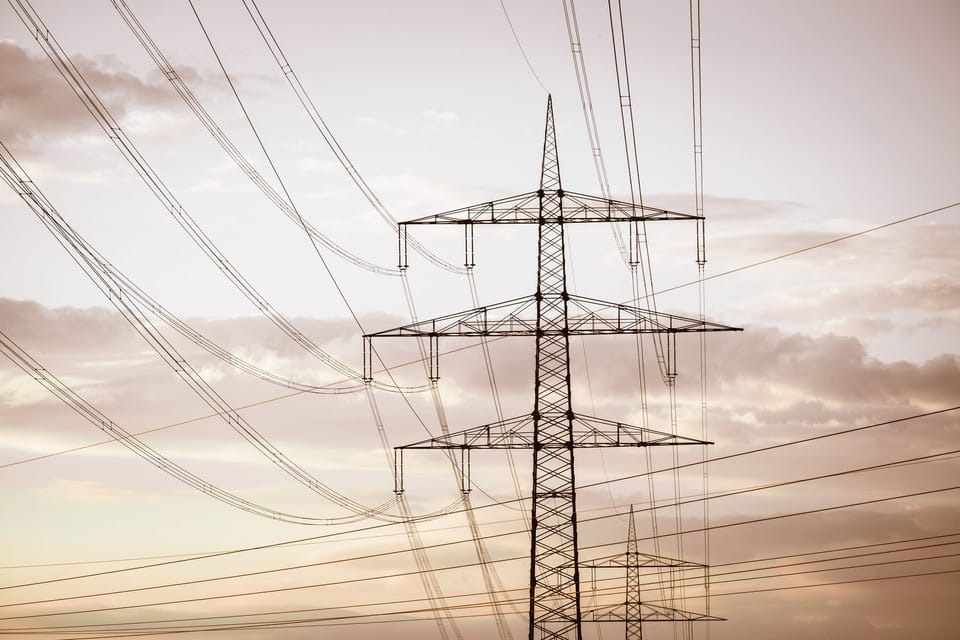
A data center in Texas could potentially avoid $33.4 million in annual transmission charges by staying off the electrical grid for just one hour.
Not one hour every day. Not one hour every week.
One hour in an entire year.
That figure comes from NRG Energy and was reported by Reuters on November 17, 2026, in an investigation into how some of the nation's largest electricity consumers can reduce their financial obligations by briefly cutting their demand during critical periods.
The practice is legal. In many electricity markets, it is deliberately encouraged.
But it raises an uncomfortable question for states like Louisiana, where utilities and regulators are preparing billions of dollars in infrastructure to support enormous industrial developments.
If a company can substantially reduce its share of the electrical grid's costs without eliminating the infrastructure built to serve it, who is responsible for the remaining bill?
How one hour can be worth $33 million
Electricity bills for large industrial customers do not necessarily work the same way as residential bills.
Homeowners generally pay for electricity consumed, along with various fixed charges, riders, and adjustments.
Large commercial customers may also face substantial charges related to their contribution to the electrical system's highest periods of demand.
Some electricity markets allocate transmission costs based partly on how much power a customer uses during a handful of peak-demand intervals.
This creates an opportunity.
If a data center accurately predicts when those intervals will occur, it can temporarily reduce the electricity it purchases from the grid.
It might accomplish this by shifting computing workloads, using batteries, reducing operations, or activating on-site generators where permitted.
The practice is known as peak shaving.
Because the resulting charges can be calculated using those short periods of demand, a relatively brief reduction can translate into substantial savings.
According to Reuters, an NRG Energy analysis found that a large Texas data center could avoid approximately $33.4 million in transmission costs by remaining off the grid for a single critical hour.
That is a potential saving under the applicable Texas rules, not evidence that a particular Louisiana data center has received such a benefit.
And the savings are not automatically transferred dollar-for-dollar to residential customers. The actual outcome depends on the tariff, cost-allocation rules, and whether reduced demand also reduces the infrastructure the system needs.
But the financial incentive is significant.
The question becomes whether a company is genuinely reducing costs for everyone or simply reducing the portion it is required to pay.
Virginia offers a warning
The issue is no longer theoretical.
Virginia, home to one of the largest concentrations of data centers in the world, is already confronting disputes over how the cost of electrical infrastructure should be distributed.
Reuters reported that Andrew Major, an attorney with the Virginia State Corporation Commission, testified in July that residential customers were assigned 48% of the cost of a transmission project serving a data center.
Residential customers were assigned the largest share of that particular project's cost.
That does not mean residential customers pay 48% of all Virginia data center infrastructure costs.
It does demonstrate that a transmission project associated with a major industrial customer can have costs allocated across other customer classes.
Virginia regulators and utilities have responded with new protections.
Dominion Energy has introduced a rate classification largely covering data centers, including requirements for long-term contracts and minimum payments intended to protect other customers when large facilities consume less electricity than anticipated.
The new framework includes 14-year contractual commitments.
Those provisions address an additional problem: what happens when a utility builds expensive infrastructure for a projected electrical demand that never materializes?
A power plant, transmission corridor, or substation cannot simply be returned to the store because a technology company changes its plans.
Someone still has to pay for the investment.
Louisiana is preparing an enormous electrical expansion
Louisiana has a direct reason to pay attention.
According to Entergy Corporation's September 30, 2026, quarterly filing with the Securities and Exchange Commission, Entergy Louisiana is seeking approval to construct seven new combined-cycle natural gas generating units totaling approximately 5,278 megawatts.
The estimated cost of those generating facilities is approximately $12.9 billion.
The application also includes a proposed 500-kilovolt transmission line from West Fork Creek to St. Landry, estimated at another $1.4 billion, along with additional transmission infrastructure and energy storage projects.
The proposed generating units would be located in Richland and Pointe Coupee parishes.
The projects are associated with Entergy's plans to serve additional major electrical demand, including a second Meta-related data center development in northern Louisiana.
Entergy expects to recover the incremental costs of serving that customer through direct financial contributions and revenues from the customer's electricity service agreement.
Importantly, Entergy's SEC filing describes proposed customer protections, including minimum monthly payments, advance contributions, contractual termination obligations, collateral, and a guarantee from Meta Platforms.
Ahead of the October 2026 hearing on the proposal, Entergy reached a settlement with LPSC staff and one intervenor that recommends the commission certify the proposed resources.
Those protections should not be ignored. They are directly relevant to whether other customers would be exposed to the project's financial risks.
But neither should they end the discussion.
The public deserves to know exactly which costs those protections cover, which costs remain shared, and how changes in industrial demand could affect future charges.
The Louisiana Public Service Commission is expected to consider the major generation proposal in December 2026, according to Entergy's filing.
That makes these questions timely.
Louisiana regulators are already examining large-load rules
The Louisiana Public Service Commission opened Docket X-37921 in May 2026 as a repository for comments concerning its Large Load Additions Non-Binding Guidelines.
The proceeding involves utilities, electric cooperatives, industrial users, and public-interest organizations.
The guidelines are not themselves an approval of an individual project. They are part of the broader regulatory discussion about how Louisiana should accommodate unusually large electricity customers.
And the issue reaches beyond Louisiana's borders.
Louisiana is part of the Midcontinent Independent System Operator, commonly known as MISO, which coordinates wholesale electricity markets and transmission operations across much of the central United States.
MISO's structure differs materially from the Texas and PJM markets discussed in the Reuters investigation. Louisiana customers therefore should not assume the same one-hour billing opportunity applies to them.
However, MISO is also considering arrangements involving large electricity loads, flexible demand, and transmission service.
In September 2026 stakeholder comments on MISO's Large Load Working Group proposal for conditional non-firm transmission service, the Entergy operating companies told MISO the proposal should identify all potential cost shifts among the large load, the transmission customer, existing transmission customers, and other market participants, and that the final design should align service rights, cost responsibility, and curtailment obligations.
That is the issue Louisiana regulators need to examine before major infrastructure commitments become permanent.
A company reducing its grid demand during an actual shortage can benefit everyone. A company reducing its bill while leaving unchanged infrastructure obligations may present an entirely different economic outcome.
The regulatory challenge is determining which situation actually exists.
What happens when the electricity comes from somewhere else?
There is another complication worth examining.
Some industrial developments propose using on-site natural gas generation, battery systems, or private electrical networks to supplement or replace utility service.
That may reduce demand on the public grid.
But it does not necessarily eliminate the customer's need for grid access, backup capacity, or the transmission infrastructure required to serve the facility when its private generation is unavailable.
Imagine a facility capable of demanding hundreds of megawatts from the grid.
It installs its own power generation equipment and purchases comparatively little utility electricity during normal operations.
Should that company pay for only the electricity it actually purchases?
Or should it also contribute toward the infrastructure the utility must maintain to serve it during equipment failures, maintenance outages, or other emergencies?
The answer depends on the service agreement and the reliability obligations the utility has accepted.
Louisiana's Public Service Commission is separately examining private-use electrical networks under Docket R-37905. Staff's final proposed rule was due November 4, 2026, and the commission was scheduled to take up the matter at its November 18 business session.
As industrial customers explore alternatives to conventional utility service, both proceedings deserve public attention.
The important questions are not limited to whether companies generate their own electricity.
They include whether those arrangements change the costs, risks, and reliability obligations carried by everyone else.
There is a legitimate argument for allowing these reductions
Utilities and data center operators have a reasonable defense of peak shaving.
Reducing electricity consumption when the grid is under its greatest strain can genuinely lower costs.
If enough customers reduce demand during peak periods, utilities may avoid purchasing expensive generation, constructing additional facilities, or making some infrastructure upgrades.
The Data Center Coalition told Reuters that operators' reductions can be included in grid planning and potentially benefit other customers.
That argument has merit.
A customer who reliably reduces its need for electricity during critical periods can be less expensive to serve than a similarly sized customer who demands uninterrupted service.
But the benefit depends on the reduction being real, dependable, and properly reflected in system planning.
That is why the details of the contract matter.
The public should be able to determine whether an industrial customer is receiving a reduced charge because it genuinely requires less infrastructure or because the billing formula allows it to avoid costs that the electrical system still incurs.
Those are very different circumstances.
The questions Louisiana officials should answer
Before Louisiana commits to more billion-dollar infrastructure projects for large industrial customers, regulators should be able to provide clear answers to several questions:
- How are transmission charges calculated for each major industrial customer? Are they based on actual consumption, peak demand, reserved capacity, or a negotiated contractual arrangement?
- Can a customer use temporary demand reductions to lower its share of transmission costs? If so, does the utility also reduce the capacity it maintains for that customer?
- What happens when a major customer fails to consume its projected electricity demand? Are the remaining infrastructure costs covered by enforceable contracts and financial guarantees?
- How are shared system upgrades allocated? If a project requires new transmission facilities that also serve other customers, what methodology determines each customer's responsibility?
- Are private generation arrangements receiving appropriate treatment? If a facility maintains grid backup service, does its bill account for the reliability obligations the utility continues to carry?
These are questions that can be evaluated through utility tariffs, service agreements, cost-allocation studies, and testimony already submitted to regulatory proceedings.
They should not require waiting for an unexpected charge to appear on a residential electricity bill.
Louisiana should learn from Virginia before becoming Virginia
Louisiana's industrial development ambitions are substantial.
Data centers, manufacturing facilities, LNG terminals, and other major energy consumers offer the prospect of investment, employment, and new tax revenue.
Those potential benefits are not in dispute.
But neither is the fact that electrical infrastructure must be financed, operated, and maintained for decades.
When a utility constructs a multibillion-dollar generating facility or a new high-voltage transmission corridor, those financial obligations can continue long after a particular industrial project changes ownership, reduces operations, or disappears entirely.
Virginia is already dealing with the consequences of allocating substantial electrical infrastructure costs among industrial and residential customers.
Texas is examining how certain large electricity consumers can legally avoid millions in transmission charges through short periods of reduced demand.
And Louisiana is preparing to make consequential decisions about the next generation of its own electrical system.
There is no verified evidence in the records reviewed for this article that a Louisiana data center has used the specific Texas peak-shaving strategy to transfer millions in charges to residential customers.
But that is precisely why the issue deserves scrutiny now.
The time to determine who pays for the infrastructure is before it gets built. Not after the company finds a way to pay less for using it.
Sources and public records
- Reuters, November 17, 2026: U.S. data centers slash electric bills with brief demand cuts
- Entergy Corporation, September 30, 2026 Form 10-Q, filed with the SEC
- Louisiana Public Service Commission, Docket X-37921
- MISO, September 2026 Large Load Working Group stakeholder feedback
- Louisiana Public Service Commission, Docket R-37905
- 337.NEWS Louisiana Public Records Repository
Editorial note: The $33.4 million figure is an NRG Energy estimate concerning Texas transmission charges, not a documented Louisiana saving. The Virginia 48% allocation pertains to one identified transmission project. The article does not establish that Louisiana customers have already incurred comparable costs.



Member discussion
337.NEWS discussion
Join the conversation.
Sign up to comment on this story and follow the local reporting behind it.