Louisiana Is Betting on 3,000 SpaceX Jobs. Elon Musk Says Work Could Become Optional.
November 18, 2026 | 337.NEWS | Investigation
Louisiana is offering one of the largest corporate tax incentive packages in its history to attract thousands of jobs. Meanwhile, the billionaire behind the project is publicly predicting a future where artificial intelligence and robots make human employment largely unnecessary.
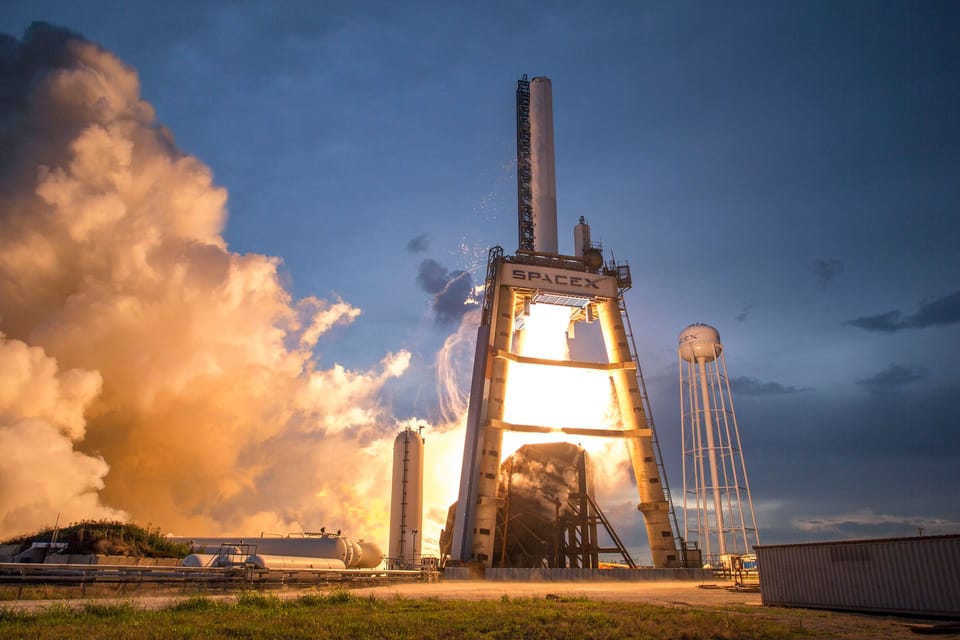
Louisiana wants Elon Musk to bring jobs to Vermilion Parish.
Elon Musk believes the world is approaching a point where people won't need jobs at all.
Somewhere between those two positions sits a $100 billion proposed investment, approximately 3,000 promised direct jobs, and an estimated $27.5 billion in state and local tax incentives.
And the people of Louisiana have every reason to ask how those numbers are supposed to work together.
This is not a question of whether artificial intelligence will replace every employee at SpaceX. Nobody can responsibly make that prediction.
It is a question of whether Louisiana is making enormous, long-term economic commitments based on an employment model that the company's own founder believes is approaching a fundamental transformation.
Two promises. One very uncomfortable timeline.
On August 25, 2026, Governor Jeff Landry's administration announced SpaceX's proposed Starbase Louisiana development in coastal Vermilion Parish.
According to Louisiana Economic Development, the project is expected to create 3,000 direct jobs over the next decade, with an average annual salary of $92,600. Another 8,100 indirect employment opportunities are projected through suppliers, contractors, and other economic activity.
Construction is expected to begin by the end of 2027, with the first launch targeted as soon as 2029.
These are projections, not jobs already delivered.
They also form a central part of the state's public argument for supporting the project.
At the August announcement, Vermilion Parish Police Jury President Chad Vallo specifically celebrated the possibility of creating employment opportunities for future generations, including grandchildren who could remain in the parish to work.
The governor's office has similarly presented Starbase Louisiana as an opportunity to create long-term careers and economic prosperity.
But there is another timeline worth examining.
In November 2025, speaking at the U.S.-Saudi Investment Forum, Musk predicted that advances in artificial intelligence and robotics could make employment optional within approximately 10 to 20 years.
He compared future employment to gardening: something people might choose to do for personal satisfaction, rather than because they need to earn a living.
During a July 2026 interview with The Economist, Musk repeated his prediction that work would become optional. He also suggested AI could outperform people across an enormous range of occupations.
When questioned about how displaced workers would survive economically, he returned to the idea of a universal high income.
But he did not present a detailed, functioning economic system capable of guaranteeing that income to displaced workers.
Consider what that means for Louisiana.
The state's employment projections extend into the middle of the 2030s.
Musk's proposed transformation of the employment market could begin unfolding during that very same period.
One timeline promises thousands of jobs.
The other predicts a world increasingly capable of functioning without human workers.
Neither outcome is guaranteed. But only one of them is being used to help justify billions of dollars in public incentives.
The $27.5 billion question
The financial stakes are considerably larger than the original job announcement might suggest.
According to a September 2026 investigation by the Louisiana Illuminator, republished by The Current, documents obtained from Louisiana Economic Development outlined a potential tax incentive package valued at approximately $27.5 billion.
The largest component was an estimated $23.8 billion in property taxes that SpaceX would not pay under a 25-year exemption arrangement.
Additional benefits included approximately $3.6 billion in projected state sales tax rebates, along with workforce and employment-related incentives.
Those figures represent estimated tax benefits over extended periods, not a $27.5 billion cash payment to SpaceX. Their ultimate value depends on future development, qualifying expenditures, and applicable program conditions.
In exchange, SpaceX has committed to significant investment, thousands of permanent jobs, and payments to local taxing authorities.
Louisiana's official project materials state that the company's payment-in-lieu-of-taxes agreement includes a $20 million upfront payment and at least $25 million annually for 25 years, with increases built into the agreement.
State officials also emphasize that the incentives are performance-based, meaning SpaceX must meet applicable requirements before earning certain benefits.
Those are meaningful protections.
But they don't fully answer the question raised by Musk's own public predictions.
What happens if a project originally designed to employ thousands of people becomes capable of operating with substantially fewer workers?
More specifically, what happens if the technology reducing that workforce is the same technology Musk has spent years championing?
The contracts contain penalties. But the public may struggle to verify the jobs.
This is where the story becomes particularly interesting.
The employment commitments are not merely promises made at a press conference.
An October investigation by The Current examined the agreement between SpaceX and the Industrial Development Board of Vermilion Parish.
The contract establishes specific employment targets, increasing from just 18 full-time workers in the first measurement year to 3,000 by the tenth year.
However, the employment compliance clock does not begin until at least 12 months after all launch-pad permits have been issued.
That means the publicly advertised ten-year development timeline and the contractual employment measurement period are not necessarily the same.
The agreement also establishes financial penalties if SpaceX misses its employment targets for two consecutive years.
The penalty is calculated using the percentage of jobs missing, multiplied by 1.8 and the company's estimated property tax savings for that calendar year. Significant shortfalls could effectively eliminate that year's tax savings.
These protections matter. They mean Louisiana has not simply accepted an employment promise without contractual consequences.
But another provision raises questions about public accountability.
Under the agreement, employment figures are supplied by SpaceX. The industrial board can request an independent audit, but the contract contains confidentiality provisions governing the information obtained.
In a November 6 investigation, The Current reported that the agreement also gives SpaceX notice of certain public records requests and an opportunity to intervene.
The industrial board's attorney maintained that employment figures would be public records, but the practical extent of public access remains contested.
Think about that arrangement.
Louisiana is asking the public to accept thousands of jobs as an important justification for an enormous tax incentive package.
The corporation determines and reports its employment figures.
And the contract contains provisions that could complicate public access to the information necessary to independently verify those figures.
Now introduce the possibility of automation.
If SpaceX eventually determines that robots, AI systems, and automated facilities can perform work previously assigned to hundreds of employees, the public has an obvious interest in knowing how those changes affect the commitments made in exchange for tax benefits.
The contractual penalties address numerical shortfalls. They do not, by themselves, answer the broader economic question of how much lasting employment will result from the development or how technological changes may alter the project's long-term value to Louisiana.
The distinction between creating wealth and creating jobs
There is another economic reality worth addressing.
A company can become more productive, more profitable, and more valuable while employing fewer people.
That is one of the fundamental economic arguments behind artificial intelligence and automation.
If one automated system can perform work previously handled by 20 employees, the company may produce more with a smaller workforce.
That increased productivity might produce additional investment, new industries, lower costs, and different kinds of employment.
But none of those outcomes guarantees that the displaced workers will receive an equivalent share of the resulting economic benefits.
Musk's predictions about universal high income depend on the idea that technological abundance will eventually reach ordinary people.
That is an economic hypothesis, not a guarantee.
And there is no established mechanism ensuring that a Louisiana worker whose position is eliminated through automation will receive a replacement income simply because the corporation responsible becomes more productive.
This is where the state's emphasis on job creation deserves scrutiny.
Corporate investment is not the same thing as household prosperity.
A $100 billion development may bring considerable economic activity to Louisiana. It could create well-paying careers, support suppliers, expand infrastructure, and stimulate the surrounding economy.
Those possibilities are real.
But they do not eliminate the need to evaluate how much of that economic activity ultimately benefits Louisiana workers and communities.
Especially when the company's founder is predicting technology that could fundamentally alter the relationship between capital and labor.
This is not an argument against SpaceX.
There are legitimate reasons to welcome aerospace development in Louisiana.
The state has an established industrial workforce, extensive experience with complex energy infrastructure, and economic advantages that could support an aerospace industry.
SpaceX also has a substantial existing workforce at its Texas launch operations. Its success in aerospace does not demonstrate that it is currently capable of running a comparable operation without human workers.
Furthermore, a launch complex requires physical construction, inspection, maintenance, emergency response, engineering, and numerous other activities that cannot simply be replaced overnight by a language model.
The suggestion that 3,000 proposed Louisiana jobs will disappear because Musk predicts a future driven by AI would be speculation.
But the opposite assumption, that those jobs will remain necessary and economically beneficial for decades regardless of technological progress, is also an assumption.
And one of those assumptions is being used to justify a tax arrangement extending 25 years into the future.
What Louisiana officials should explain
Before describing the proposed investment as a generational employment opportunity, Louisiana's economic development officials should be prepared to answer several questions.
- Did the state's economic impact analysis consider the possibility that AI and robotics could reduce SpaceX's long-term labor requirements?
- Does the economic impact projection assume the company will maintain approximately 3,000 permanent jobs after satisfying its contractual employment milestones?
- How will the state independently verify employment figures, and what information will be available to the public?
- Does the financial analysis account for the possibility that future productivity gains will increase corporate revenue without producing proportional growth in local employment?
- What provisions protect Louisiana communities if automation reduces employment while significant corporate tax benefits remain in effect?
These questions do not presume wrongdoing. They are reasonable tests of whether a major economic development agreement adequately accounts for the future it is helping finance.
The future Musk is selling is not necessarily the future Louisiana is buying.
There is a certain irony in celebrating the arrival of thousands of jobs from a billionaire who publicly predicts that traditional employment may eventually become unnecessary.
But irony alone isn't the problem.
The problem emerges when enormous public financial commitments are justified through long-term economic projections without clearly explaining how those projections account for technological changes already being anticipated by the people directing the investment.
Elon Musk may be wrong about his timeline.
Artificial intelligence and robotics may prove less transformative than he expects. Human employment may remain essential for generations.
SpaceX may deliver every promised job and maintain a substantial workforce in Vermilion Parish for decades.
Any of those outcomes is possible.
But if Musk is right, even partially, Louisiana could find itself financially committed to an economic development model built around jobs that advancing technology increasingly makes unnecessary.
That is a risk worth examining before the projected benefits are treated as established facts.
Louisiana has spent years trying to attract investment by promising corporations access to its land, resources, infrastructure, and workforce.
Now it is courting an entrepreneur who believes technology will eventually transform the economic value of that workforce.
The question isn't whether Louisiana can afford to compete for the industries of tomorrow.
It's whether Louisiana has properly accounted for a future in which those industries might need far fewer Louisiana workers than the public has been promised.
Sources and supporting records
- Louisiana Economic Development: Official SpaceX announcement, August 25, 2026
- Louisiana Economic Development: Starbase Louisiana project details, incentives and FAQ
- The Economist: Full-length interview with Elon Musk, July 2026
- Elon Musk's November 2025 prediction about optional employment
- Louisiana Illuminator: Investigation into SpaceX's estimated $27.5 billion incentive package
- The Current: SpaceX agrees to penalties if it misses employment targets, October 2, 2026
- The Current: Public records and SpaceX employment verification, November 6, 2026
- 337.NEWS Louisiana Public Records Repository
Editor's note: A social media post circulating in November 2026 attributes a three-year deadline for the end of traditional paid labor to Elon Musk. 337.NEWS could not independently verify that specific attribution and has not treated it as a direct quotation. This article relies instead on Musk's documented statements about AI, robotics, and the future of employment. Financial incentive valuations are estimates, not confirmed cash expenditures.

Member discussion
337.NEWS discussion
Join the conversation.
Sign up to comment on this story and follow the local reporting behind it.