Sasol Seeks $6.5 Million Tax Break in Calcasieu Parish. Louisiana Doesn't Require a Single New Job.
November 18, 2026 | 337.NEWS | Southwest Louisiana
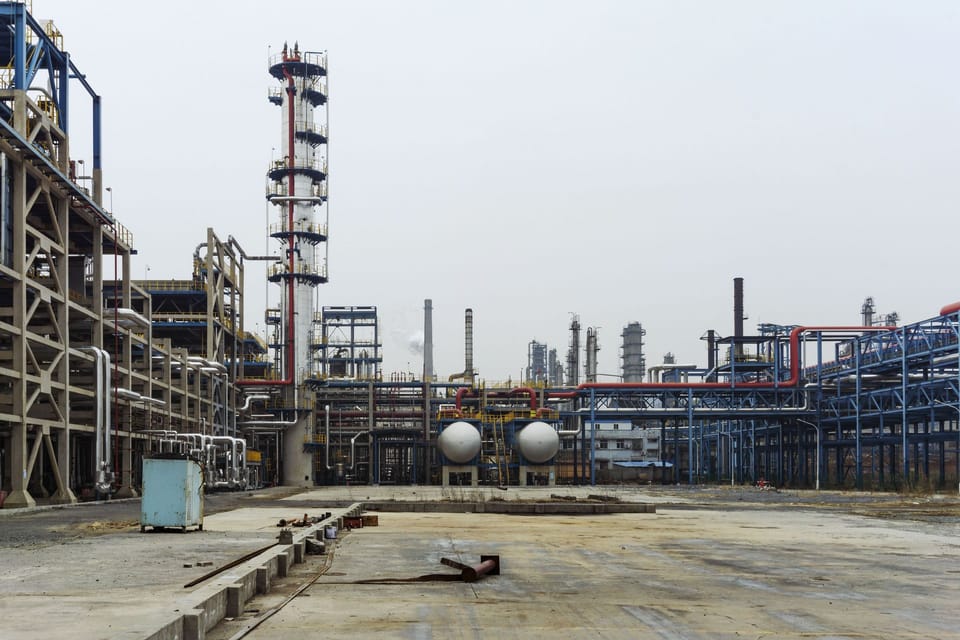
A chemical manufacturer operating in Calcasieu Parish is seeking approximately $6.5 million in property tax relief for improvements to its existing industrial facilities.
The company is Sasol Chemicals. The proposed investment is $43.5 million. And according to Louisiana's own economic development rules, the company does not have to create a single new job to qualify for the state's industrial tax exemption program.
That last detail deserves some attention.
On November 17, KPLC reported that the Calcasieu Parish Industrial Tax Exemption Board had approved Sasol's application for an 80% property tax exemption. If the exemption receives final approval and is renewed for another five years, the estimated tax savings would reach approximately $6.5 million over a decade.
The proposal isn't final. But the local approval moves it forward in a system designed to encourage industrial investment by reducing the property taxes companies would otherwise owe on qualifying equipment and improvements.
The question is whether the public receives a measurable return on that investment.
What exactly is Sasol asking for?
According to KPLC's November 17 report, Sasol is proposing $43.5 million in industrial improvements, including an Entergy substation, an electricity hub and additional supplies.
Sarah Hughes, Sasol's manager of government and public affairs, described the investments as modernization projects necessary to maintain reliability and efficiency at facilities that were constructed decades ago.
That explanation is reasonable on its face. Industrial facilities require regular upgrades. Electrical infrastructure is critical to manufacturing operations, and maintaining older facilities can protect existing jobs and economic activity.
But it raises another question.
If a company needs to modernize its existing facility to continue operating efficiently, how much public financial assistance should that modernization require?
There may be a defensible economic case for the exemption. Maintaining a large industrial operation can support employees, contractors, suppliers and the surrounding economy.
But the public should be able to examine that case before millions in potential tax revenue are waived.
Louisiana no longer requires new jobs under its current exemption rules
The Industrial Tax Exemption Program, commonly called ITEP, allows qualifying manufacturers to receive an 80% property tax exemption on eligible new investments.
An initial exemption lasts up to five years, with the possibility of renewal for another five.
Historically, industrial incentive discussions frequently centered on new investment, permanent jobs and payroll commitments.
Louisiana's current rules are different.
Louisiana Economic Development explicitly states that there are no minimum job creation or payroll requirements under the 2024 emergency rules or the 2025 ITEP rules.
That means a manufacturer can potentially receive substantial property tax relief without committing to hire additional employees.
It does not mean the investment produces no economic benefits. Nor does it establish that Sasol intends to reduce employment.
It means job creation is not a minimum eligibility requirement under the current program.
And that changes the public policy debate considerably.
If new jobs are not required, what specific measurable benefit should taxpayers expect in exchange for an exemption?
What does $6.5 million actually represent?
The estimated $6.5 million is not a direct payment from Calcasieu Parish to Sasol.
It represents property taxes the company would otherwise be expected to pay on qualifying investments if the exemption were not granted.
That difference matters.
The exemption generally does not eliminate the entire property tax obligation. Under the standard 80% arrangement, the qualifying property remains partially taxable.
But the estimated savings are still significant.
Over ten years, $6.5 million represents an average of approximately $650,000 annually, although the actual amount may vary from year to year.
Property tax revenue supports local taxing authorities, including services such as public education, law enforcement and parish government.
Forgoing that revenue does not automatically mean homeowners will receive a higher tax bill. That depends on budgets, millages, taxable assessments and other revenues.
It does, however, mean the affected taxing authorities would collect less revenue from the qualifying property than they would without the exemption.
And that creates a legitimate question about what public services or investments the forgone revenue might otherwise support.
The decision doesn't end in Calcasieu Parish
The local committee's approval is not the final authorization.
Under Louisiana Economic Development's published process, applications also proceed through state-level review, including consideration by the Louisiana Board of Commerce and Industry and final approval by the governor.
The state also allows the governor and Board of Commerce and Industry to move forward despite a local committee's recommendation.
That makes the role of local officials worth examining.
The people living in Calcasieu Parish depend on local schools, sheriff's services, roads and infrastructure. Yet the final authority over these industrial tax exemptions extends beyond those local taxing bodies.
The broader question is how much influence communities should have over property tax revenues generated within their own boundaries.
Sasol is not the only company raising this question
Southwest Louisiana is entering a period of substantial industrial and infrastructure development.
LNG projects, chemical manufacturers, proposed data centers and new industrial ventures are all competing for capital, power, land and public cooperation.
And tax incentives are becoming a central part of that conversation.
In neighboring Cameron Parish, discussions involving Commonwealth LNG have already raised questions about how much local property tax revenue industrial developments should retain and how much should be exempted.
More recently, the proposed SpaceX development in Vermilion Parish has brought additional attention to alternative tax arrangements, including payments in lieu of taxes.
These are not necessarily the same incentive programs. The legal structures, tax obligations and public benefits can differ substantially.
But they share a central policy question:
How much public revenue should Louisiana surrender to attract, retain or expand private industrial investment?
There is no automatic answer.
A tax incentive that preserves hundreds of jobs, protects a major employer or produces additional long-term revenue may be economically justified.
An incentive that would have been granted to a company undertaking the same investment regardless presents a different calculation.
The challenge is determining which situation applies before the tax benefit is awarded.
What taxpayers still need to know
Sasol's reported application leaves several questions that deserve documented answers:
- How many existing jobs, if any, does the proposed $43.5 million modernization directly protect?
- Would Sasol undertake these improvements without the tax exemption?
- Which local taxing authorities would forgo revenue, and how much would each lose?
- What is the projected financial benefit to Calcasieu Parish over the proposed ten-year exemption period?
- Which assets are included in the application, and how was their eligibility determined?
- What accountability measures apply if the company does not deliver the economic benefits presented to officials?
- How much property tax relief has Sasol already received under previous industrial exemption agreements?
Those are not accusations of wrongdoing.
They are basic questions that should accompany a multimillion-dollar public incentive.
Economic development for whom?
Southwest Louisiana has benefited enormously from industrial investment. Chemical manufacturers, refineries, LNG facilities and the contractors supporting them provide employment and economic activity throughout the region.
The argument is not that industry should stop investing.
It is that economic development should be evaluated by its public return, not simply by the size of the investment announced.
A $43.5 million modernization project sounds impressive. A $6.5 million tax exemption sounds substantial.
Neither figure, standing alone, tells residents whether the arrangement is beneficial.
That requires examining the actual costs, the alternatives, the commitments and the expected outcomes.
Louisiana has chosen to make industrial tax exemptions available without minimum job creation requirements.
Now the burden falls on the officials approving those exemptions to demonstrate what the public receives in return.
Because an investment can be good for a company without every proposed tax incentive automatically being good for the taxpayer.
Sources
- KPLC: Calcasieu Parish board approves Sasol tax exemption application, November 17, 2026
- Louisiana Economic Development: Industrial Tax Exemption Program
- Louisiana Economic Development: 2025 ITEP Rules
- The Current: When Industry Knocks, What Say Do Coastal Communities Get?
- 337.NEWS Public Records Repository
Editor's note: This is a developing examination of Louisiana's industrial tax exemption system. The reported financial estimates are preliminary and depend on final approval, qualifying property assessments and potential renewal. The underlying Sasol application and local committee minutes have not yet been independently reviewed by 337.NEWS.



Member discussion
337.NEWS discussion
Join the conversation.
Sign up to comment on this story and follow the local reporting behind it.