Entergy Wants to Buy a Texas Power Plant. Its Own Louisiana Regulators Say Data Centers Should Pay.
337.NEWS | INVESTIGATION | NOVEMBER 18, 2026
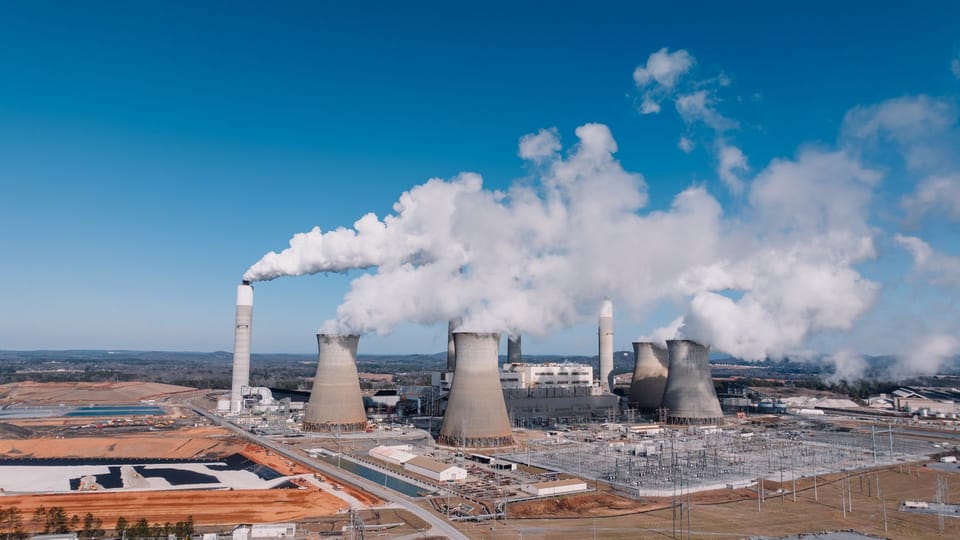
Entergy Louisiana wants approval to buy a 22-year-old natural gas plant in Texas for about $1.8 billion and recover the cost from its Louisiana customers.
The Louisiana Public Service Commission's own staff consultant says the plant is not needed for general customer growth. He says the need is driven by Meta's data center in Richland Parish, and the cost should fall on the customers creating the demand, not on every household on Entergy's system.
The proceeding is unresolved. A hearing is scheduled for February 2027.
The deal
In December 2025, Entergy Louisiana filed an application with the Public Service Commission, Docket U-37801, seeking approval and a certificate of public convenience and necessity to acquire the Cottonwood combined-cycle combustion turbine facility in Deweyville, Texas.
The plant is 1,263 megawatts. It entered commercial service in 2003.
According to Entergy's quarterly filing with the U.S. Securities and Exchange Commission, filed November 2, 2026, the filing seeks findings that the costs of the acquisition, including an approximately $1.5 billion purchase price and $309.3 million in capital upgrades and maintenance items, are eligible for recovery in customer rates.
The upgrades are described in the filing as items needed to bring Cottonwood into alignment with Entergy Louisiana's fleet standards for operations and safety.
The seller is Cottonwood Energy Company LP, an affiliate of Atlas Holdings, a Connecticut-based private equity firm.
What the commission's own expert found
In June 2026, the commission staff filed direct testimony raising objections to the transaction as presented. The testimony came from R. Lane Sisung, president of United Professionals Company, retained by the commission to review the application.
Sisung's central finding is about what is driving the need. His analysis concluded that the near-term capacity shortfall Entergy relies on to justify Cottonwood is not driven by general system load growth. He wrote that the shortfall is predominantly attributable to the Meta-related load additions and the timing of those additions.
He tested that conclusion by removing the Meta load from Entergy's own planning analysis. Under Entergy's assumptions, he found the company could still serve its other projected industrial loads with its other planned resources, and would hold substantial capacity surpluses in nearly every planning year evaluated.
On the price, Sisung found that Louisiana customers are being asked to fund approximately $1.43 billion for Cottonwood alone, plus about $80 million in transaction and contingency costs and more than $300 million in rehabilitation capital. The total approaches $1.82 billion.
He also found that the purchase price produces an acquisition adjustment approaching $1 billion, and that under Entergy's own projections about $672 million of acquisition-related investment would remain unrecovered at the end of the plant's assumed operating life, before additional post-acquisition capital spending.
His conclusion, in his own words, was that Cottonwood "is not a prudent acquisition for general system customers." He recommended against certifying it as a general system resource whose costs and risks would be borne by Entergy Louisiana's general body of customers.
A $600 million portfolio, sold back piece by piece
Sisung also examined the plant's recent ownership history. Affiliates of Atlas Holdings acquired the entire Cleco Cajun generation portfolio in 2024 for approximately $600 million. The portfolio included fourteen generating units, including Cottonwood, totaling about 3,379 megawatts.
Less than three years later, Sisung wrote, Louisiana customers are being asked to fund approximately $1.43 billion for Cottonwood alone and invest at least $300 million more in rehabilitation capital, while the same ownership group separately pursues long-term capacity agreements for other assets from that same portfolio, Bayou Cove and Big Cajun.
Sisung wrote that the level of value being extracted through the Cottonwood acquisition, together with the separate monetization of other assets from the same portfolio, "far exceeds" the limit on scarcity value that captive regulated customers should reasonably be required to bear. He noted that he is not suggesting asset owners should be denied a profit, and that generation asset values can rise. His point was that the commission must still determine whether the price bears a reasonable relationship to the value customers receive.
Public Service Commissioner Eric Skrmetta, speaking to The Advocate in June, called the sale price "taking advantage of the moment" and said he saw no reason to approve it unless Meta pays.
What it would cost a household
The bill impact is stated in Entergy's own filings in the docket. According to reporting by The Advocate in June 2026, a customer using 1,250 kilowatt-hours a month, roughly the Louisiana average, would pay $8.65 a month more if the acquisition is approved. A customer using 2,000 kilowatt-hours a month would pay nearly $13 more a month, with higher charges in summer as consumption rises.
Ratepayer advocate Logan Burke, of the Alliance for Affordable Energy, told The Advocate that customers would shoulder the $672 million in stranded costs, money still owed when the plant is no longer operational.
Entergy disputes the framing. The company says Cottonwood is needed to meet urgent demand regardless of Meta, and that customers would pay more in the long run without it. It points to a 2023 resource plan forecasting a 510 megawatt shortfall in 2027, growing to more than 5,000 megawatts in the 2040s.
In its economic analysis, Entergy says acquiring Cottonwood would produce a net benefit of approximately $167 million to $270 million compared with building two new combined-cycle plants that would enter service in 2031. Sisung reviewed that analysis and concluded that correcting its treatment of asset life, operating costs, and replacement-capacity values changes the result from a claimed customer benefit to a substantial customer cost.
Entergy filed rebuttal testimony in July 2026. Its witnesses argued that the company's need for Cottonwood predates Meta's announcement, that the company had pursued a Cottonwood transaction before the data center projects, and that new-build plants are not practically feasible until 2031 because of supply chain constraints and craft labor availability.
The plant itself
Cottonwood is not a new plant. It entered service in 2003 and is now about 22 years old. It has four power blocks, each with a General Electric combustion turbine, a heat recovery steam generator, and a steam turbine.
Entergy's own due diligence, summarized in Sisung's testimony, identified equipment condition issues, major rehabilitation projects, and historical reliability concerns. Two of the facility's four units experienced catastrophic generator step-up transformer failures in 2025, severe enough to result in catastrophic outage declarations. The heat recovery steam generators were identified as one of the most significant areas of concern in the diligence process.
Sisung wrote that the concern is not whether the problems can be fixed. Entergy says replacement transformers have been procured and the issues can be addressed. His concern is that a substantial portion of the value Entergy attributes to Cottonwood depends on the successful execution of an extensive and costly rehabilitation program whose benefits have not yet been realized.
Meta says it pays its own way
Meta disputes Sisung's analysis. Meta spokesperson Francis Brennan called it "inaccurate speculation" in June, said Entergy planned to acquire the facility before Meta decided to build in Louisiana, and said Meta pays its own way.
The dispute matters because of the framework already in place for Meta's power. Meta's Hyperion data center campus in Richland Parish is now described by the company as a roughly $50 billion, 5 gigawatt build. The commission approved the first package of generation for it in August 2025, in Docket U-37425, on the understanding that Meta would pay the incremental cost of serving its load.
Sisung's testimony points out that Entergy's own witness, Ryan Jones, testified in that earlier proceeding that when a new customer requires additional investment, the company may require contributions, minimum bills, or facilities charges, and that a reasonable limit exists on the costs the company should incur to serve a new customer so existing customers are not unfairly burdened.
The governor weighed in, then the case paused
In June 2026, Governor Jeff Landry posted on social media that Entergy had promised him it would not pass costs to ratepayers, and that the commission should not allow anyone to take advantage of power markets at the expense of ratepayers.
On June 25, 2026, Landry signed an executive order directing the state to develop new requirements for data centers claiming state incentives, and making the case that data center developers should pay for their own energy costs. The order does not affect the commission's regulation of Entergy's generation plans.
In early August 2026, Entergy asked the administrative law judge in the case to suspend the procedural schedule, postponing a hearing that had been set for September. The company said it needed additional time because of complex and fact-intensive issues in the case. Entergy spokesperson Brandon Scardigli said the company was working with commission staff and other parties to identify ways to lessen the initial bill impacts of the proposed acquisition.
The pause did not end the case. According to Entergy's November 2, 2026 quarterly filing, discovery is ongoing, Entergy filed rebuttal testimony in July 2026, and a hearing is scheduled for February 2027. Entergy's third-quarter earnings presentation puts the hearing start at February 23, 2027. The acquisition is targeted to close in the first or second quarter of 2027, subject to regulatory approvals and other conditions to closing.
What happens next
The commission has not decided the case. The February hearing will be before an administrative law judge, who typically makes a recommendation to the full five-member commission, which then votes to approve or reject the deal.
The question before the commission is the one Sisung framed in his testimony: if the capacity need is being created primarily by a specific large customer, who should bear the costs and risks of satisfying it.
Sources
- Entergy Corporation, Form 10-Q for the quarterly period ended September 30, 2026, filed November 2, 2026 (U.S. Securities and Exchange Commission)
- Direct Testimony of R. Lane Sisung on behalf of the Staff of the Louisiana Public Service Commission, LPSC Docket No. U-37801, June 5, 2026
- The Advocate, Sam Karlin, "Entergy wants to charge customers $8 a month to buy a gas plant. Should Meta pay instead?", June 18, 2026
- The Times-Picayune / NOLA.com, Sam Karlin, "Entergy pauses Cottonwood proceedings as cost, data center questions mount", August 4, 2026
- Louisiana Illuminator, Wesley Muller, "Landry signs order to protect utility customers as he promotes more data center development", June 26, 2026
- Entergy Corporation, Third Quarter 2026 earnings presentation, November 2, 2026
- 337.NEWS public-records repository
Editor's note: The $1.5 billion purchase price is Entergy's figure in its SEC filing. The $1.43 billion customer-funded acquisition amount, the $80 million in transaction costs, and the $1.82 billion total are from the commission staff consultant's testimony. The $8.65 and $13 monthly bill figures are from Entergy's filings in the docket, as reported by The Advocate. The proceeding is unresolved, and the hearing date is subject to change.


Member discussion
337.NEWS discussion
Join the conversation.
Sign up to comment on this story and follow the local reporting behind it.