$36.5 Million Contract Awarded to Dredge Calcasieu Ship Channel and Rebuild Coastal Marsh

Westlake-based Mike Hooks LLC won a federal contract to maintain 12 miles of the Calcasieu River Ship Channel while placing excavated sediment into designated marsh-creation areas at Sabine National Wildlife Refuge.
The federal government has awarded a dredging contract with a base-and-options value of $36.49 million for part of the Calcasieu River Ship Channel, an industrial shipping route connecting Southwest Louisiana's ports and energy facilities to the Gulf.
But the project involves more than clearing sediment from a commercial waterway.
Under the contract, material removed from the channel will be directed into designated marsh-creation areas within Sabine National Wildlife Refuge, tying navigation maintenance to coastal restoration efforts in Cameron Parish.
The U.S. Army Corps of Engineers awarded contract W912P826CA058 to Mike Hooks LLC of Westlake on September 29, 2026. SAM.gov lists its base and all options value as $36,492,037; that figure does not establish how much will ultimately be paid.
Six contractors submitted bids ranging from $36,492,037 to $85,187,000.
The winning bid was also the lowest.
The project raises two questions about a major piece of Southwest Louisiana infrastructure: How much work is required to keep the shipping channel operational, and how much coastal restoration can be accomplished using the material removed?
A 12-mile stretch of an economically important waterway
The contract covers maintenance dredging between mile 5.0 and mile 17.0 of the Calcasieu River Ship Channel, within Calcasieu and Cameron parishes.
The larger Calcasieu River and Pass navigation system extends approximately 68 miles, from south of Interstate 10 in Lake Charles to the Gulf of Mexico.
According to the Army Corps, the inland ship channel is authorized to a depth of 40 feet and a width of 400 feet. The offshore bar channel has different authorized dimensions.
These are authorized design dimensions, not a guarantee that every part of the channel currently maintains that depth.
Sediment continually accumulates in navigable waterways. Without maintenance dredging, that accumulation can reduce available depth and impose operating restrictions on vessels.
The Corps describes maintenance of this particular stretch as part of its recurring navigation program.
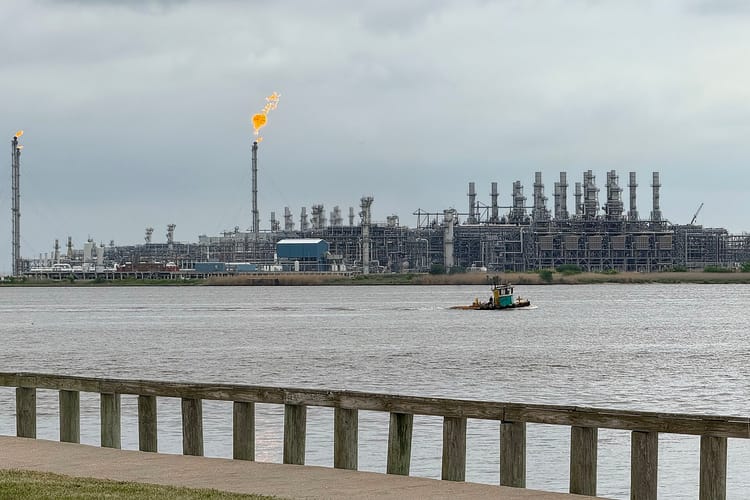
The river is essential to the Port of Lake Charles and an industrial corridor that includes refineries, petrochemical facilities, marine terminals, and LNG-related infrastructure. For a related Cameron Parish LNG project, see our reporting on Commonwealth LNG's tax-exemption request.
Maintaining authorized channel dimensions helps preserve access for the commercial vessels serving those operations.
However, the award record does not establish that particular tankers are currently experiencing draft restrictions, or that this contract will independently increase authorized vessel drafts.
Those conclusions would require current hydrographic surveys and navigation restrictions.
Six contractors competed for the work
The Corps opened bids on September 18, 2026, under solicitation W912P826BA023.
The signed bid abstract identifies six contractors and their proposed prices.
| Contractor | Bid |
|---|---|
| Mike Hooks LLC | $36,492,037 |
| Great Lakes Dredge & Dock Company LLC | $40,978,761 |
| Orion Marine Construction Inc. | $44,258,131 |
| Inland Dredging Company LLC | $59,374,881 |
| Callan Marine Ltd. | $69,125,100 |
| Weeks Marine Inc. | $85,187,000 |
The difference between the lowest and highest bids was approximately $48.69 million.
Mike Hooks' proposal was also approximately $4.49 million below the second-lowest bid, submitted by Great Lakes Dredge & Dock.
Those differences illustrate the wide range of prices contractors submitted for the same federal procurement.
Dredging bids can vary based on equipment, mobilization requirements, material-handling methods, disposal logistics, and assumptions about construction conditions.
The bid abstract alone does not identify which factors account for the differences in these particular proposals.
It also does not establish that the government saved $48.69 million by choosing the lowest bidder. The highest competing bid was not an amount the government had previously committed to spend.
What the records establish is that Mike Hooks submitted the lowest offer and subsequently received the contract.
A local company won the federal contract
The award is particularly relevant to Southwest Louisiana because Mike Hooks LLC is based in Westlake.
The company's location means the contract was awarded to a contractor headquartered within the region served by the navigation channel.
That is a tangible local business opportunity associated with federal infrastructure spending.
However, a local contractor receiving an award with a $36.49 million base-and-options value does not necessarily mean the entire amount becomes income for local households.
Construction costs include equipment, fuel, materials, subcontracting, labor, insurance, and other expenses. Some may be incurred outside the region.
The available award record does not provide a breakdown of how much contract revenue will ultimately flow to local workers or suppliers.
The agreement nevertheless places a substantial federal construction contract with an established Southwest Louisiana marine business.
The dredged material has another purpose
The most interesting component of the project may be what happens to the sediment after it leaves the channel.
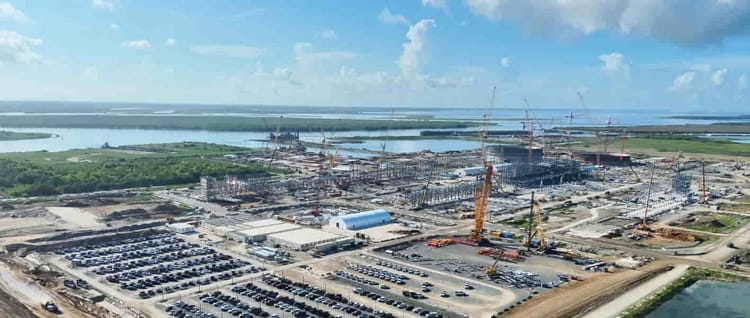
The solicitation requires material to be placed in designated marsh-creation areas within Sabine National Wildlife Refuge and adjacent to the Calcasieu River and Pass.
Those areas are associated with the Coastal Wetlands Planning, Protection and Restoration Act, commonly known as CWPPRA.
The project refers specifically to Sabine Cycle 6 marsh-creation areas.
Louisiana has a long history of using dredged sediment for coastal restoration.
Instead of treating all excavated material strictly as waste requiring disposal, suitable sediment can be placed in areas where additional material is needed to establish or restore marsh elevations.
Coastal marshes provide wildlife habitat and contribute to the landscape that buffers inland areas from coastal conditions.
The method also allows navigation maintenance and restoration work to share some of the same excavation and material-handling operations.
That doesn't mean every dredging project automatically creates successful marsh habitat.
The quantity and quality of sediment, final elevations, containment design, vegetation, and long-term environmental conditions all affect the outcome.
Building marsh requires more than pumping mud
The federal specifications describe construction activities beyond removing sediment.
The contracted work includes retention dikes, surveys, staging and other operations associated with placement areas.
Retention dikes help contain material within designated project boundaries while it settles.
The solicitation also includes optional ditching and draining of disposal areas and optional material removal near Devil's Elbow.
The published description estimates 300 calendar days to complete the base work after the contractor receives a notice to proceed.
That is a construction-duration estimate, not a verified completion date.
The September 29 award establishes that the contract was issued. It does not, by itself, establish when dredging began, how much material has already been removed, or whether all optional work was ordered.
What will $36.5 million actually deliver?
The contract amount is public. Several important outcome measurements remain to be established. For another recent federal waterway project, see our report on the completed Vermilion Parish dredging job.
First is the total volume of sediment removed from the channel.
That figure matters because dredging contracts typically account for excavation quantities, material handling, and other work items.
Second is the amount of sediment successfully placed within the designated marsh-creation areas.
Those figures may differ depending on the contract specifications, dredging conditions, and placement requirements.
Third is the final condition of the channel.
Post-dredging surveys should establish whether the completed work achieved its required navigational dimensions.
Finally, the restoration component needs its own accounting.
How many acres of marsh will receive material? What are the required elevations? How will the project be monitored after placement? And what conditions will determine whether the restoration work is successful?
The contract's name identifies a marsh-creation purpose, but the public award notice does not establish a verified final acreage or environmental outcome.
Those measurements should be available through the project's detailed plans, construction records, and monitoring documentation.
Commercial shipping and coastal restoration share the same project
The Calcasieu River Ship Channel supports an industrial economy heavily dependent on maritime transportation.
Sabine National Wildlife Refuge represents another major regional asset, protecting coastal wetlands and wildlife habitat.
This contract brings those interests into the same construction project.
Commercial navigation requires that accumulated sediment be removed.
Coastal restoration can benefit from suitable sediment placed in areas experiencing wetland loss or degradation.
The federal procurement is designed to address both objectives.
Whether it ultimately achieves them will depend on the actual construction results, not simply the amount awarded.
The next question is performance
The bidding process is complete.
Six contractors competed. A Westlake company submitted the lowest bid. The federal government awarded contract W912P826CA058 on September 29, with a listed base-and-options value of $36,492,037.
The work is intended to maintain a 12-mile stretch of one of Louisiana's important industrial waterways while providing sediment for designated coastal marsh-creation areas.
Those are established facts in the federal records.
What remains to be documented is the physical outcome: the cubic yards removed, the channel depths achieved, the sediment placed, and the marsh habitat created or restored.
For Southwest Louisiana, the value of this project will ultimately be measured in two places: the navigable channel beneath commercial vessels and the coastal wetlands receiving the material removed from it.
Sources and public records
U.S. Army Corps of Engineers, New Orleans District
Calcasieu River and Pass Operations and Maintenance
Official description of the 68-mile navigation project, authorized channel dimensions, dredging cycles, and local sponsor.
Federal contracting records
SAM.gov — Contract Award W912P826CA058
Official September 29, 2026 award to Mike Hooks LLC; the notice lists a $36,492,037 base-and-options total contract value.
SAM.gov — Original Solicitation W912P826BA023
Project scope, contractor requirements, plans, specifications, and procurement amendments.
September 18, 2026 bid record identifying the six contractors and their prices.
Reporting Note
This report is based on federal procurement records and published Army Corps project descriptions. The contract award is confirmed; construction progress, final payment, dredging quantities, and completed marsh-restoration outcomes have not been independently established.
Author Disclosure
The author of 337.NEWS is also a licensed Louisiana real estate agent affiliated with NextHome Bayou Pines. All reporting, opinions, and editorial content are produced independently and do not necessarily reflect the views, positions, or opinions of NextHome Bayou Pines, its broker, or its affiliated agents.



Member discussion
337.NEWS discussion
Join the conversation.
Sign up to comment on this story and follow the local reporting behind it.