Entergy’s $600M Grid Plan Could Raise Bills — But Key Project Locations Aren’t Public
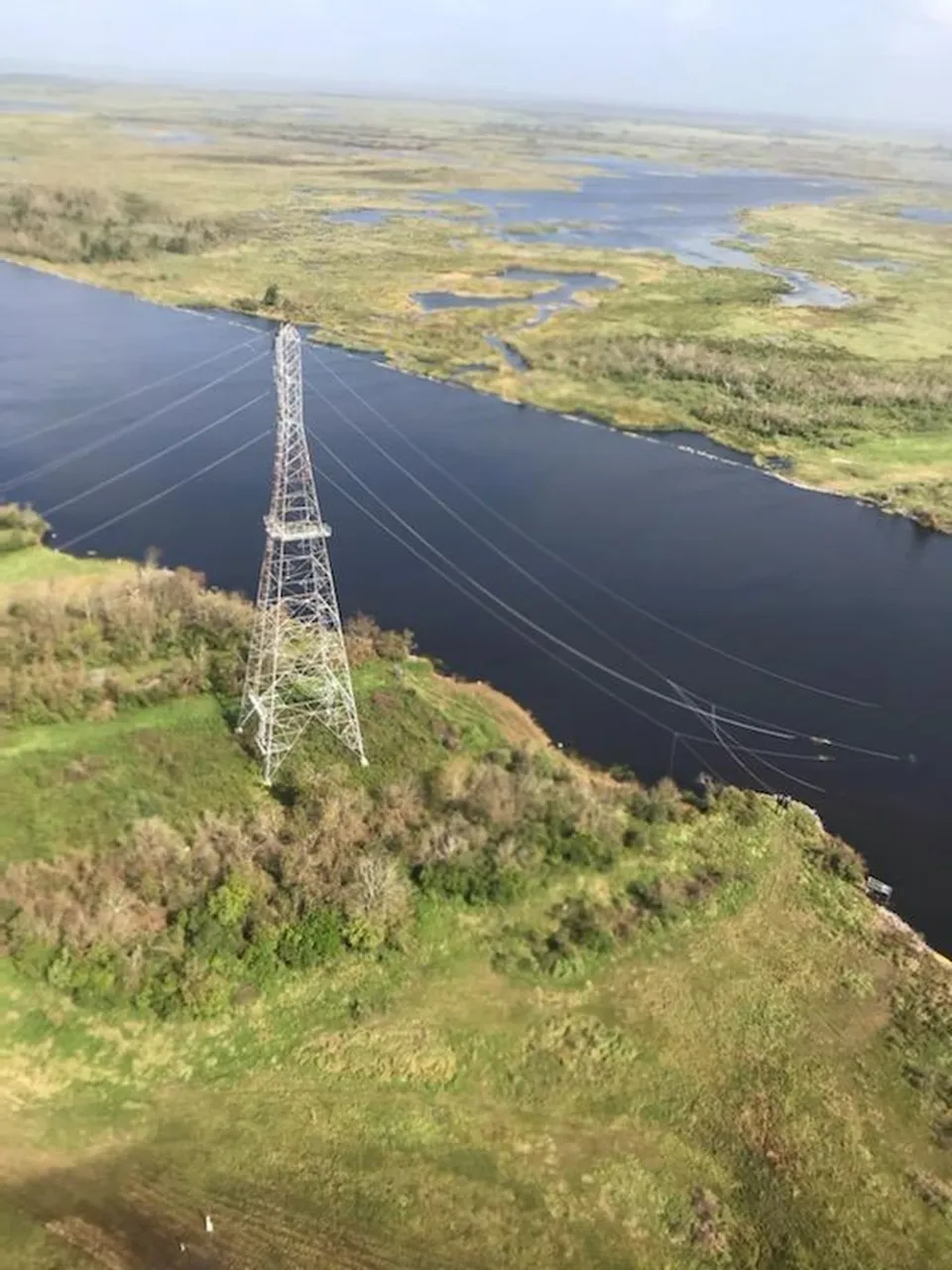
The proposed four-year extension would harden thousands of structures and add seven transmission projects. Entergy says a typical residential customer could eventually pay about $2.11 more per month. What remains hidden is exactly where much of the money will be spent.
Entergy Louisiana is asking state regulators to approve another approximately $600 million in electric-grid hardening projects between 2027 and 2030.
For Southwest Louisiana, the interesting part is not simply the size of the request.
It is what the public filing does not show.
Entergy's proposed Phase IA Future Ready Resilience Plan contains 87 transmission and distribution projects across its Louisiana service territory. The company says those projects would harden roughly 9,000 structures and continue work already underway under the first phase of its resilience program.
But the detailed project list, including the information needed to determine exactly how much of that investment is headed to Calcasieu, Cameron or other Southwest Louisiana parishes, was filed as Highly Sensitive Protected Materials.
The public gets a general description.
The detailed list does not.
That distinction matters in a region where the electric grid is being asked to serve both ordinary residential customers and one of the largest concentrations of industrial load in Louisiana.
Seven transmission projects, but the locations are not public
Most of Phase IA appears to be distribution work.
Entergy says more than 8,000 distribution poles would be replaced in communities along the Interstate 10 corridor and south of Lake Pontchartrain, with additional projects in the Monroe region.
The plan also contains seven transmission projects.
According to testimony from Entergy executive Chris Gremillion, those projects would replace wood transmission structures with non-wood structures capable of better withstanding hurricane-force winds.
What the public testimony does not identify is where those seven projects are located or how much each one costs.
The detailed Phase IA project list is contained in HSPM Exhibit CG-2. A separate public exhibit is described as showing only the projects' general locations.
That leaves a fairly important Southwest Louisiana question unanswered:
How much of the $600 million is actually being invested in the transmission network serving Calcasieu and Cameron Parish?
There is also a second question.
How much of that work is connected, directly or indirectly, to the enormous industrial loads clustered around Lake Charles, Westlake, Sulphur and the Cameron Parish LNG corridor?
The current public filing does not provide enough project-level information to answer it.
Entergy itself points to Lake Charles as the example
Southwest Louisiana does appear prominently in Entergy's argument for why transmission hardening works.
In his testimony, Gremillion points to the Lake Charles Transmission Project, which was completed shortly before Hurricane Laura struck in 2020.
Entergy says that project was constructed specifically to support industrial expansion in the Lake Charles industrial area.
When Laura passed directly over the system with winds Entergy estimated at more than 125 mph, the newer transmission structures survived with minimal damage. Entergy says that portion of the system was ready to move electricity within a day or two, while damaged older infrastructure took longer to repair.
That is a meaningful example.
It is also important not to confuse it with the projects now before the Louisiana Public Service Commission.
The Lake Charles Transmission Project is being used as evidence for the effectiveness of modern transmission construction. The public testimony does not establish that it is one of the seven Phase IA projects or that the new seven-project transmission portfolio is concentrated in Southwest Louisiana.
For now, that remains unknown.
There are no new substation-hardening projects in Phase IA
That is another important distinction.
Despite the scale of the proposal, Entergy says no substation-hardening projects were selected for Phase IA.
The company is already performing several substation-hardening projects through the previously approved Phase I program. Those projects can include strengthening substation roofs against wind and constructing floodwalls to protect equipment from storm surge.
Phase IA instead emphasizes lower-cost overhead hardening.
Entergy says undergrounding was considered but generally produced less favorable benefit-cost ratios because of the higher cost and complexity involved. The company concluded that it could harden more infrastructure with the available money by concentrating on overhead systems.
So the new $600 million proposal should not be read as a $600 million package of new substations and major transmission facilities.
It is a portfolio dominated by distribution hardening, with seven transmission projects layered into it.
This comes on top of nearly $2 billion already approved
Phase IA is not the beginning of Entergy's resilience program.
In 2024, the LPSC approved the first phase of the Future Ready Resilience Plan.
According to Entergy's testimony, that included approximately $1.9 billion in grid-hardening projects between 2024 and 2028, plus approximately $88 million in transmission dead-end structure projects.
The original portfolio covered more than 2,000 individual hardening projects before Entergy consolidated them into larger funding and construction groups.
Phase IA is intended to serve as a bridge.
Entergy expects Phase I field work to conclude in 2028. Beginning the new work in 2027 would allow contractors and construction crews to move from one program into the next while the LPSC continues developing rules that will influence a future Phase II.
Entergy is seeking a regulatory decision by July 2027. Its investor filing describes the new proposal as an incremental $600 million investment principally occurring from 2027 through 2030.
The $600 million does not simply appear on electric bills all at once
This is where the financing gets more complicated.
Entergy wants to recover the investment through its existing Resilience Plan Cost Recovery Rider, or RPCR.
A rider is essentially a separate rate mechanism used to recover a defined category of utility costs without waiting for those costs to be handled entirely through a traditional base-rate case.
Under the existing RPCR, Entergy recalculates its resilience revenue requirement every six months.
The rider includes depreciation, capital-related costs and other amounts associated with eligible resilience investments. Distribution resilience investments currently use a 3% annual depreciation rate, while transmission resilience investments use 2%.
Entergy's Phase IA filing also proposes prospective recovery of certain asset-removal costs.
In other words, customers would not receive a bill for their share of $600 million.
The investment moves through a regulatory formula over time.
Entergy projects about $2.11 per month for a typical residential customer
Entergy has already modeled the eventual rate effect.
Company witness Patrick Sullivan testified that the incremental retail revenue requirement associated with Phase IA is projected to peak at approximately $63 million in the first-quarter 2031 RPCR filing.
Under the current allocation formula, Entergy estimates the corresponding Phase IA rider rate at approximately:
- 1.6% for customers served at transmission voltage
- 4.3% for customers served at distribution voltage
For a residential customer using 1,000 kilowatt-hours per month, Entergy calculates an incremental bill impact of approximately $2.11 per month.
The 4.3% number should not be interpreted as a 4.3% increase in the customer's entire electric bill.
The RPCR tariff calculates its factors as percentages of applicable base-rate revenue.
Entergy also argues that future load growth could reduce that estimated residential impact.
Its testimony offers a hypothetical in which applicable base revenues increase by 30%. Under that scenario, the estimated effect on a 1,000-kWh residential customer falls from approximately $2.11 to roughly $1.60 per month.
That is a projection, not a guaranteed future bill.
Where a project is built is not necessarily where its cost is collected
This may be the most important part of the filing for understanding the Southwest Louisiana impact.
The RPCR does not appear to allocate costs according to parish.
It allocates them according to customer class and voltage level.
Under the approved tariff, transmission-voltage customers are assigned 16% of the distribution revenue requirement along with their 12-coincident-peak share of the transmission revenue requirement.
The remainder is then allocated through percentage factors applied to distribution-voltage customers.
That means a resilience project built in one part of Louisiana is not simply paid for by customers living next to it.
Likewise, customers in Southwest Louisiana may contribute toward projects constructed elsewhere in Entergy's system, while customers elsewhere can contribute toward approved projects built here.
That makes the undisclosed geographic breakdown important.
If a substantial amount of Phase IA is ultimately concentrated in Southwest Louisiana, the benefits are geographically significant while the recovery mechanism is substantially broader.
If very little of it is located here, Southwest Louisiana customers would still participate in the rider.
Industrial growth complicates the equation
There is another wrinkle buried in Entergy's testimony.
The company acknowledges that Louisiana's rapidly growing large-load customer base could produce more RPCR revenue than the current mechanism anticipated.
Entergy says it and LPSC staff are already examining potential overcollections from new large-load customers in a separate proceeding, Docket U-37882.
According to Sullivan's testimony, changes resulting from that case could allow some of those additional collections to reduce the resilience revenue requirement collected from other customers.
That issue deserves attention in Southwest Louisiana.
Entergy reported this year that its industrial electricity sales were rising, with increased demand from sectors including petroleum refining and petrochemicals. The company is simultaneously planning billions of dollars in generation and transmission investment across Louisiana.
For ratepayers, the issue is not whether an industrial customer uses electricity.
It is how costs created by a rapidly changing grid are assigned between those large new loads and the existing customers who were already connected to the system.
The resilience rider is one piece of that equation.
Entergy says the projects will produce billions in avoided outage costs
Entergy's argument for the program is straightforward: spending money before the storm should reduce both damage and the much larger economic costs of prolonged outages after one.
The company estimates that Phase IA's approximately $600 million in projects would reduce future storm-restoration costs by about $200 million over 50 years.
It also models a reduction of approximately 6 billion customer-minutes of interruption.
Using the U.S. Department of Energy's Interruption Cost Estimate methodology, Entergy translates those avoided outages into approximately $4.3 billion in reduced economic outage costs over 50 years, assuming an above-average frequency of storms.
There is an important limitation to that figure.
Entergy itself notes that the DOE calculator was developed to estimate outage costs generally and does not measure the specific economic impact of an individual outage on a particular customer. The company extrapolated the model to longer-duration storm outages when evaluating the resilience projects.
So $4.3 billion is a modeled economic benefit, not $4.3 billion that Entergy expects to return directly to customers.
Entergy also explicitly acknowledges that no amount of grid hardening can eliminate storm outages or eliminate the possibility of future storm-recovery charges.
The missing number for Southwest Louisiana
There is a defensible argument for hardening the electrical system in Southwest Louisiana.
Hurricane Laura provided the case study.
Entergy's own testimony says a modern transmission project built for Lake Charles industrial expansion survived the storm while older interconnected facilities required substantially more repair.
What cannot yet be determined from the public Phase IA filing is how much of this next $600 million is coming back to the region that supplied that example.
The filing establishes 87 projects.
It establishes seven transmission projects.
It establishes the projected customer cost.
It establishes how that cost will be collected.
But the document needed to answer the most basic local question — which projects are here, and what do they cost? — is not publicly available.
For Calcasieu and Cameron Parish, that is the next number worth finding.
Sources
Primary documents reviewed for this report include Entergy Louisiana testimony filed in LPSC Docket U-38082, Entergy's current Resilience Plan Cost Recovery Rider, the LPSC docket record and Entergy's Phase IA investor filing summary. The LPSC lists Docket U-38082 as open.
About the Author
Dalton Barron covers real estate, infrastructure, development, public records and the underlying numbers shaping Southwest Louisiana for 337.NEWS.
Barron is also a licensed Louisiana real estate agent.
Dalton Barron
NextHome Bayou Pines
Jeremy Jones, Broker/Owner
C. 337.764.1754
O. 337.202.1018
Licensed by the LREC
Main Office: DeRidder, LA
Each office is independently owned and operated.

Member discussion