Six Days After SpaceX Announced Starbase Louisiana, ONE Nuclear Unveiled a 2.88 GW Power Project
By Dalton Barron
A little-known energy developer is now planning a 5 GW Louisiana portfolio spanning natural gas, grid-scale batteries, a potential hyperscale data center and a 1 GW small modular reactor campus. The projects are still in development, but the timing puts them directly inside Louisiana’s new race for power.
LOUISIANA — Six days after Louisiana announced that SpaceX would build a $100 billion launch complex in Vermilion Parish, another company announced that it had secured site control for a massive new energy project elsewhere in Louisiana.
The company was ONE Nuclear Energy.
The project was called Project Cayman.
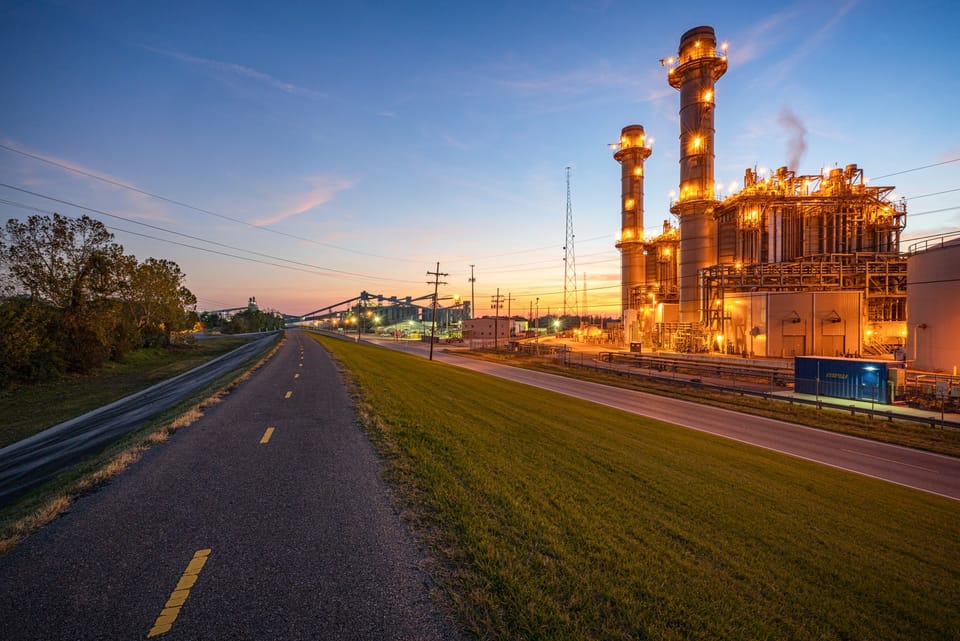
And the initial plan was not small: 2.88 gigawatts of natural-gas generation, a 700-megawatt battery system capable of storing 2.88 gigawatt-hours of energy, and a potential high-capacity data center on the same campus.
ONE Nuclear announced Cayman on Aug. 31 after executing what it described as a binding letter of intent with an unnamed Louisiana landowner group. The agreement gives the company site control for development of the project near the RiverPlex MegaPark and northeast of SpaceX’s newly announced Louisiana operation.
By Sept. 10, Cayman was no longer a standalone proposal.
ONE Nuclear had rolled it into a three-project Louisiana portfolio approaching 5 gigawatts of planned generation, adding a second gas-and-battery campus called Barracuda and a proposed 1-gigawatt small modular nuclear reactor project called Amberjack.
The reviewed disclosures describe all three projects as proposals in development, with no construction start announced.
The company’s announcements reviewed for this article do not identify SpaceX as a customer or disclose a SpaceX power-purchase agreement or commercial relationship.
But the timing and the infrastructure problem they are both addressing are difficult to ignore.
Louisiana has spent much of 2026 announcing projects that consume extraordinary amounts of electricity. SpaceX is one of the largest. Data centers are another. Advanced manufacturing adds more.
The state is now facing the less glamorous part of those announcements:
Where does all of that power come from?
SpaceX already said Louisiana will need new power
When Louisiana Economic Development announced Starbase Louisiana on Aug. 25, the project was described as SpaceX’s largest launch site and a planned $100 billion investment in Vermilion Parish.
At full buildout, the site is expected to include five launch complexes with two launch pads apiece, propellant farms, a propellant production facility, vehicle-processing infrastructure, housing and power generation.
The state’s own Starbase Louisiana FAQ goes further.
Louisiana Economic Development says new generation and transmission infrastructure will be required to serve the project. It also says SpaceX will pay for the new generation and infrastructure upgrades needed for its operations so existing ratepayers are not left carrying those costs.
That matters because Starbase Louisiana is not being presented as an isolated launch pad.
Louisiana’s announcement explicitly ties the site to SpaceX’s broader technology platform, including Starship, Starlink, Grok, large-scale compute infrastructure and future missions intended to help build orbital data centers.
In other words, the project lands at the intersection of aerospace, artificial intelligence, data centers and energy infrastructure.
Six days later, ONE Nuclear announced Cayman.
Louisiana Economic Development announced Starbase Louisiana on Aug. 25, 2026.
Project Cayman starts with gas and batteries, not nuclear
The name ONE Nuclear can be misleading in this particular case.
Project Cayman does not currently include nuclear generation.
According to the company’s Aug. 31 announcement filed with the Securities and Exchange Commission, Cayman is being developed around 2.88 GW of natural-gas generation and a 700 MW / 2.88 GWh battery energy storage system.
The company also says the site could include a co-located high-capacity data center campus.
ONE Nuclear describes the location only in broad terms. It says the project is near the RiverPlex MegaPark and northeast of SpaceX’s recently announced Louisiana expansion. The exact property, acreage and landowner group have not been publicly identified.
The company says the project is intended to support growing industrial and technology loads in a region where utilities are also investing in new transmission capacity.
ONE Nuclear CEO Richard Taylor explicitly connected that demand to two major Louisiana announcements: SpaceX’s Starbase project and Hyundai’s $5.8 billion steel mill.
That is a connection made by ONE Nuclear itself.
It is not the same thing as saying either company has agreed to buy power from Cayman.
The Aug. 31 and Sept. 10 disclosures reviewed by 337.NEWS do not identify a signed SpaceX power contract, power-purchase agreement or other customer agreement for the project.
ONE Nuclear’s Project Cayman announcement was filed with the SEC on Aug. 31.
The battery component is almost as important as the gas plant
Cayman’s planned battery system is enormous on its own.
At 700 megawatts with 2.88 gigawatt-hours of storage, the project is designed around approximately four hours of discharge at its rated power.
That does not replace the gas plant.
It does something different.
Battery systems can absorb electricity when supply is available and discharge it rapidly when demand spikes, generation trips offline or the grid needs short-duration support. That makes storage increasingly useful around data centers and other large industrial loads that place a premium on reliability.
The pairing also shows how the energy conversation has changed.
The debate is no longer simply gas versus nuclear versus solar.
Developers serving large new loads are increasingly assembling combinations of generation and storage based on what each technology can do, how quickly it can be deployed and whether the customer can tolerate interruptions.
Cayman represents the fast end of that strategy: dispatchable gas generation backed by grid-scale storage.
ONE Nuclear’s next Louisiana announcement went in the opposite direction.
Eight days later, ONE Nuclear moved a Louisiana nuclear project forward
On Sept. 8, ONE Nuclear announced Project Amberjack, a separate Louisiana project targeting as much as 1 gigawatt of small modular reactor generation.
The company says it has achieved site control and has begun moving Amberjack into site-specific technical and environmental evaluation.
The location has not been publicly disclosed.
ONE Nuclear says upcoming work includes land and geotechnical studies, environmental field work, cooling-water analysis, transmission and interconnection studies, logistics work, reactor-technology screening and engagement with the U.S. Nuclear Regulatory Commission.
The reviewed announcements identify no selected reactor vendor.
The company says its preliminary work does not constitute a reactor license.
It says that work also does not constitute NRC site approval.
ONE Nuclear itself makes those limitations clear in its filings.
The project is therefore better understood as a preliminary development proposal than as a nuclear plant that has been approved for construction.
Still, the move is significant.
Louisiana now has a developer publicly claiming site control for a new multi-unit SMR campus that could eventually reach 1 GW.
ONE Nuclear announced Project Amberjack on Sept. 8, 2026.
A new reactor would also mean a new spent-fuel question
If Amberjack progresses all the way to construction and operation, Louisiana would eventually have to confront the same spent-fuel issue attached to every commercial nuclear plant in the country. The linked 337.NEWS article provides related analysis of Louisiana waste policy, not evidence about Amberjack’s licensing.
The Nuclear Regulatory Commission recognizes two primary methods for storing spent commercial reactor fuel: pools and dry casks.
Fuel is initially stored underwater at reactor sites for cooling and shielding. Older fuel can later be moved into sealed dry-storage systems made from steel, concrete and other shielding materials.
For decades, that has meant that much of America’s spent nuclear fuel remains stored at the reactor sites where it was produced while the country continues to lack an operating permanent geologic repository for commercial spent fuel.
That does not mean a future Amberjack site is already a nuclear-waste storage facility.
It means that if the SMR project eventually becomes an operating reactor campus, fuel handling and provisions for spent-fuel storage would become part of its licensing and infrastructure story. The details would depend on the reactor technology and approved fuel-management plan.
That is years away, if the plant is built at all.
But it is one reason the exact Amberjack site will matter when ONE Nuclear finally discloses it.
The NRC explains current spent-fuel pool and dry-cask storage practices here.
Then came Barracuda
Two days after the Amberjack announcement, ONE Nuclear disclosed the full Louisiana portfolio.
The third project is Barracuda Energy Park and Technology Campus.
ONE Nuclear says Barracuda is being master-planned around:
- approximately 1.2 GW of modular natural-gas generation
- approximately 300 MW / 1.2 GWh of battery storage
- up to approximately 1 GW of critical IT data-center capacity
Unlike Cayman, the company’s Sept. 10 announcement does not identify even a broad public location for Barracuda.
Taken together, Cayman and Barracuda represent approximately 4.08 GW of planned natural-gas generation.
Amberjack adds a target of up to 1 GW of nuclear generation.
That is how ONE Nuclear arrives at a Louisiana development portfolio of roughly 5 GW.
The battery systems and data-center capacity sit on top of those generation figures rather than being added to them.
The company also cautions that these are planning-level development targets.
Final capacity will depend on engineering, interconnection studies, fuel availability, environmental review, permits, financing, commercial agreements and customer demand.
ONE Nuclear disclosed the full Cayman-Amberjack-Barracuda portfolio on Sept. 10.
This is what the data-center boom looks like from the power side
Much of the public conversation about Louisiana’s newest industrial projects has focused on investment totals.
There are good reasons for that.
The dollar amounts are enormous.
But the number that increasingly matters underneath those announcements is megawatts.
AI data centers do not simply need a connection to the grid. They need very large quantities of electricity delivered continuously, with redundancy and room to expand.
SpaceX will require new generation and transmission in Vermilion Parish.
Louisiana’s largest data-center developments are creating new load in other parts of the state.
Advanced manufacturing projects add still more demand.
ONE Nuclear’s stated business model is built around that exact bottleneck.
In SEC filings, the company describes itself as a development-stage independent power producer focused on behind-the-meter energy parks for large data centers and industrial customers. Its strategy is to use natural gas for faster deployment while advancing small modular nuclear reactors for longer-term baseload generation.
That model is revealing even if none of the Louisiana projects is ultimately built exactly as proposed.
The first phase of the AI infrastructure boom was about land, fiber and tax incentives.
The next phase is about electricity.
ONE Nuclear is still a development-stage company
The scale of the Louisiana announcements makes another part of the record especially important.
ONE Nuclear is not Entergy, NextEra or another established utility with a fleet of operating power plants.
Its August proxy statement and prospectus described it as a development-stage company with nominal assets, no operating history or revenue to date, and no developments then under construction.
The company has said it does not expect its first project to become operational before 2028.
As of this Sept. 18 review, ONE Nuclear’s current newsroom still describes its business combination with Hennessy Capital Investment Corp. VII as proposed. The Sept. 10 announcement anticipated a close in the second half of 2026, subject to closing conditions. No completion announcement was identified in the company newsroom reviewed.
Hennessy shareholders approved the transaction on Aug. 24, one day before Louisiana announced Starbase. The proposed transaction uses a $1 billion base purchase price for ONE Nuclear and is expected to result in the combined company trading under the ticker ONEN, subject to the remaining closing conditions.
That does not make the Louisiana projects fictional.
Site control, engineering, environmental work and interconnection studies are real parts of developing a power project.
It does mean there is a large distance between announcing 5 GW of planned development and actually financing, permitting and constructing 5 GW of generation.
ONE Nuclear acknowledges that distance repeatedly in its own disclosures.
What we know, and what we still do not
The public record now establishes several things.
ONE Nuclear has a binding site-control agreement for Cayman.
It says Amberjack has also reached site control.
It is master-planning Barracuda as a third Louisiana energy and data-center campus.
The company is explicitly positioning its Louisiana portfolio around surging electricity demand from data centers, manufacturing and other large industrial projects.
And ONE Nuclear itself has cited SpaceX’s Starbase Louisiana project as one of the developments driving the regional demand it wants to serve.
What remains unknown is just as important.
The exact Cayman property has not been disclosed.
The exact Amberjack property has not been disclosed.
Barracuda’s location has not been disclosed.
The project disclosures reviewed by 337.NEWS do not identify SpaceX as a customer of any of the three projects.
Those disclosures do not identify a hyperscale data-center customer for Cayman or Barracuda.
Those disclosures do not announce final investment decisions or construction starts for the Louisiana portfolio.
ONE Nuclear says it plans additional community outreach and a public information meeting in October as the projects move through development.
Those meetings could begin filling in some of the missing geography.
Louisiana’s next infrastructure problem is power
The SpaceX announcement made Louisiana’s new industrial scale easy to see.
Five launch complexes. Ten launch pads. Propellant production. New roads. New transmission. New generation.
ONE Nuclear’s announcements show the same transformation from the other side.
Cayman proposes nearly 3 GW of gas generation and a 700 MW / 2.88 GWh battery system.
Barracuda is being designed around another 1.2 GW of generation and as much as 1 GW of data-center load.
Amberjack would add an entirely different layer: a new Louisiana nuclear site built around small modular reactors.
None of that is guaranteed to happen.
But the proposals are no longer abstract.
There are site-control agreements, SEC filings, project names, planning targets and a company explicitly tying its strategy to the extraordinary amount of new electricity demand entering Louisiana.
The most interesting thing about the state’s newest technology projects may eventually be less about what sits on the property than what has to be built behind it to keep the lights on.
And right now, companies are beginning to position themselves for that part of the buildout.
Sources & Records
- ONE Nuclear — Project Cayman SEC filing, Aug. 31, 2026
- ONE Nuclear — Louisiana 5 GW portfolio SEC filing, Sept. 10, 2026
- ONE Nuclear — Project Amberjack announcement, Sept. 8, 2026
- ONE Nuclear / Hennessy — SEC proxy statement and prospectus
- Louisiana Economic Development — Starbase Louisiana announcement
- Louisiana Economic Development — SpaceX Louisiana FAQ
- U.S. Nuclear Regulatory Commission — Storage of Spent Nuclear Fuel
- U.S. Department of Energy — Spent nuclear fuel and interim storage
- U.S. Energy Information Administration — Energy storage for electricity generation
- ONE Nuclear — Current newsroom and transaction disclosure, checked Sept. 18, 2026
Stay informed
Get useful 337.NEWS reporting in your inbox. Subscribe free.
About the Author
Dalton Barron is an investigative reporter and Louisiana-licensed real estate salesperson affiliated with NextHome Bayou Pines.
His reporting focuses on public records, real estate, development, infrastructure, business, government, and local data across Southwest Louisiana.
Dalton Barron
NextHome Bayou Pines
Jeremy Jones, Broker/Owner
416 N. Pine St.
DeRidder, LA 70634
C: 337.764.1754
O: 337.202.1018
Licensed by the LREC
Each office is independently owned and operated.
Dalton’s real estate activities are separate from the editorial operations of 337.NEWS. The brokerage information above is included for transparency where reporting may intersect with real estate, development, property ownership, land use, infrastructure, or related industries.
About 337.NEWS
337.NEWS is an independent Southwest Louisiana publication built around a simple idea: some local stories deserve more than the first answer.
We follow land, money, development, public records, business and local government—especially when the pieces don't quite fit together at first glance.
Sometimes that means reading the deed. Sometimes it means finding the company behind the company, tracing who controls the land, or going back through years of records to understand what is happening now.
We don't need every story to become a scandal.
We just want to know what the record actually says.



Member discussion